Plant Overview
Known as the "Mabel Grey" geranium, Pelargonium citronellum is the undisputed royalty of scented foliage. Originating from the rocky slopes of South Africa, this plant doesn't just smell faintly of citrus—it releases an intense, sharp lemon zest aroma that can fill a small greenhouse or patio with a single brush of its leaves. It’s a sensory powerhouse that bridges the gap between a decorative ornamental and a fragrant herb.
🔍 How to Identify
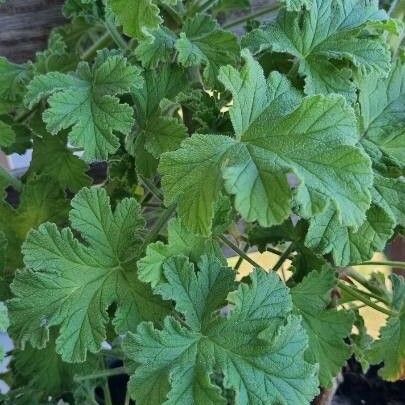
- 🍃 Angled Foliage: The leaves are large, stiff, and deeply "palmate" (hand-shaped) with sharp, pointed lobes that give it a more architectural look than other geraniums.
- 🤚 Rough Texture: Unlike the velvety feel of a Rose Geranium, Mabel Grey has a distinctly sandpapery or "scabrous" texture on both sides of the leaf.
- 🌸 Bicolor Blooms: It produces clusters of dainty, five-petaled flowers. The two upper petals are larger and feature dramatic, dark purple-pink veins that act as "landing strips" for pollinators.
🏡 In Your Garden
- 🌞 The Sun Lover: This plant is a sun worshiper. To keep its growth compact and its oils potent, it needs at least six hours of direct light. In lower light, the stems become "leggy" and lose their structural beauty.
- ✂️ Woody Habit: Unlike common bedding geraniums, this species becomes woody very quickly. Frequent "pinching" of the new growth is essential to prevent it from becoming a lanky, bare-bottomed shrub.
- 🌬️ Air Circulation: Because of its dense, hairy leaves, it appreciates good airflow to prevent powdery mildew, especially if you live in a humid climate.
⚠️ Safety & Toxicity
- 🐾 Pet Warning: Like most Pelargoniums, this plant is toxic to dogs, cats, and horses. It contains geraniol and linalool, which can cause vomiting, lethargy, or skin rashes if chewed or rubbed against.
- 👶 Child Safety: Generally safe for children to touch, though the rough, bristly hairs on the leaves can occasionally cause mild mechanical skin irritation for those with very sensitive skin.
✨ Fun Fact
In the Victorian era, the leaves of the Pelargonium citronellum were frequently placed in crystal finger bowls at high-society dinner parties. Guests would dip their fingers in the water to release the lemon oils, using them as a natural, refreshing cleanser between courses.

Detailed Care Instructions
| Humidity | Normal |
| Lighting | Part Sun |
| Difficulty | Medium |
| Hibernation | Cold Period |
| Hardiness Zones | 9 - 12 |
To grow Pelargonium Citronellum, also known as citronella geranium, follow these steps:
- Choose the right location: Select a spot that receives full sunlight for at least 6 hours a day. Pelargonium Citronellum prefers warm temperatures and cannot tolerate frost, so choose a location that remains frost-free.
- Prepare the soil: Ensure the soil is well-draining and loamy. If your soil is heavy or clayey, amend it by adding organic matter like compost or well-rotted manure. This will improve drainage and provide nutrients.
- Planting: Either sow seeds directly into the soil or start with young plants from a nursery. If starting from seeds, sow them indoors 8-10 weeks before the last expected frost, and transplant them outside after the frost danger has passed. Space the plants 12-18 inches apart.
- Watering: Water regularly to keep the soil evenly moist, but avoid overwatering as it can lead to root rot. Allow the top inch of soil to dry out between waterings.
- Fertilizing: Feed the plants with a balanced slow-release fertilizer or a liquid fertilizer every 4-6 weeks during the growing season. Follow the package instructions for application rates.
- Pruning: Regularly pinch back the tips of the plant to encourage bushier growth. This will also promote more abundant blooms.
- Pest control: Pelargonium Citronellum is generally resistant to pests and diseases. However, keep an eye out for common pests like aphids or spider mites. If infested, treat with organic insecticidal soap or neem oil.
- Overwintering: Before the first frost, cut back the plant to about half its height. Dig up the plant carefully and pot it in a container. Place it in a sunny spot indoors, such as a south-facing window. Reduce watering and allow soil to dry out slightly between waterings. Resume regular watering and move the plant back outside in spring when all frost danger has passed.
By following these steps, you can successfully grow Pelargonium Citronellum and enjoy its fragrant leaves throughout the summer months.

Place in a window with dappled sun or a spot in the middle of a room. Or directly in a window facing west or east.

This plant likes to be watered thoroughly but allow the soil to slightly dry out in between waterings. Make sure the pot has good drainage and avoid letting the plant sit in standing water. Only water the soil and avoid getting water on the leaves. During cooler months, water less frequently.
To provide optimal nutrition for a certain plant species, it is recommended to use a balanced fertilizer with equal amounts of nitrogen, phosphorous, and potassium. For this plant, applying the fertilizer every 2-3 months during the growing season is recommended. It is important to follow the instructions on the fertilizer label carefully, as over-fertilization can harm the plant. Additionally, watering the plant before and after fertilizing can help prevent any negative effects on the roots.
Pelargonium citronellum requires a well-draining soil that is rich in nutrients and has a slightly acidic pH level. A good soil mixture for this plant would consist of equal parts of sand, perlite, and loam. The sand and perlite aid with drainage while the loam provides essential nutrients and water retention. The soil should be kept moist but not waterlogged, as overwatering can lead to root rot. The addition of organic matter, such as compost or peat moss, can also improve the soil quality and promote healthy growth of the plant.
To propagate this plant, take a stem cutting that is at least 3 inches long. Remove the bottom set of leaves and any flowers or buds. Dip the cutting in rooting hormone and plant it in well-draining soil, making sure to keep it moist but not overly wet. Place the cutting in a location with bright, indirect light and keep it out of direct sunlight. Within a few weeks, the cutting should start to develop roots and grow new leaves. After a few more weeks, the cutting can be transplanted into a larger pot or, if desired, directly into the garden.








