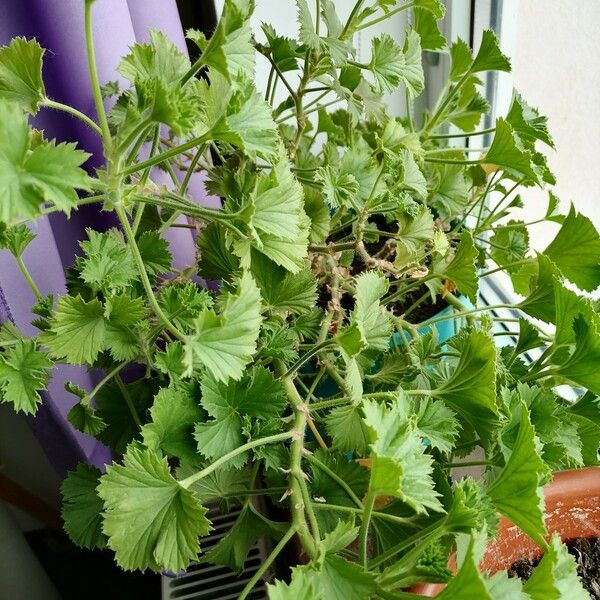
Plant Overview
Often called the "Regal Geranium" or the "Martha Washington Geranium," this plant is the sophisticated aristocrat of the Pelargonium family. Unlike its more common cousins, the Regal Geranium is prized for its massive, ruffled blooms that look remarkably like giant pansies or orchids. Originating from the Cape Provinces of South Africa, it has graced Victorian conservatories for centuries and remains a favorite for those seeking a dramatic "wow factor" on their patio.
🔍 How to Identify
- 🌸 The Blooms: Features large, trumpet-shaped flowers (up to 2 inches across) often displaying "eyes"—dark, velvety blotches of burgundy or purple in the center of the petals.
- 🍃 The Foliage: The leaves are distinctively fan-shaped with sharply toothed or serrated edges. They are stiffer and more "crinkly" to the touch than the rounded leaves of a standard Zonal Geranium.
- 🌿 Growth Habit: It maintains an upright, bushy form that becomes increasingly woody at the base as the plant matures, making it look almost like a small shrub.
🏡 In Your Garden
- 🌡️ The Chill Factor: Unlike most summer flowers, Regals are "cool-season" bloomers. They actually require a period of nighttime temperatures below 50°F (10°C) during the winter to trigger their spectacular flower show in the spring.
- ☀️ Sun & Air: While they love the sun, they are prone to heat stress. If your summer gets sweltering, move them to a spot with morning sun and afternoon shade to prevent the plant from going dormant.
- 💧 Thirsty but Picky: They enjoy consistent moisture but hate "wet feet." Ensure your pot has excellent drainage, as their woody stems are susceptible to rot if the soil remains soggy.
⚠️ Safety & Toxicity
- 🐾 Pet Warning: Like all Pelargonium species, the Regal Geranium is toxic to dogs, cats, and horses.
- 🤢 The Details: The plant contains geraniol and linalool, which can cause skin irritation (dermatitis) upon contact for sensitive skin, or vomiting and loss of appetite if ingested by curious pets.
- 👶 Child Safety: While not life-threatening to humans, the sap can cause mild skin rashes. It is best kept on high pedestals or tables out of reach of toddlers.
✨ Fun Fact
Despite being called "Geraniums" in common speech, these plants are botanically different from true hardy Geraniums (Cranesbill). The name Pelargonium comes from the Greek word pelargos, meaning "stork," because the plant's long, pointed seed pods look exactly like a stork’s beak!

Detailed Care Instructions
| Color | Vary From Creamish-White To Pink |
| Soil Ph | 6-8 |
| Lighting | Full Sun |
| Toxicity | Non-Toxic |
| Soil Type | Well-Drained Soil |
| Bloom Time | Summer |
| Plant Type | Tender Perennial Or Annual |
| Mature Size | Around 3 Feet By 3 Feet |
| Native Area | South Africa |
| Sun Exposure | Full Sun To Light Shade |
| Hardiness Zones | 9-11 |
To grow Pelargonium grandiflorum, also known as geraniums, you can follow these steps:
- Choose a suitable location: Geraniums prefer full sun, so find a spot with at least 6-8 hours of direct sunlight per day. They can tolerate partial shade but might produce fewer flowers.
- Prepare the soil: The soil should be well-draining while retaining some moisture. Amend the soil with organic matter, such as compost, to improve its texture and fertility.
- Start with seeds or cuttings: You can grow Pelargonium grandiflorum from seeds or propagate from cuttings. Seeds should be sown indoors a few weeks before the last frost, while cuttings can be taken during the growing season.
- Sowing seeds: If starting from seeds, sow them in small pots filled with moist seed-starting mix. Cover the seeds lightly and keep the soil consistently moist but not soggy. Place the pots in a warm location (70-75°F or 21-24°C) for germination.
- Propagating from cuttings: If using cuttings, take 3-4 inch (7-10 cm) stem cuttings from healthy plants. Remove the lower leaves, leaving only a few on the top. Dip the cut ends in rooting hormone and plant them in a well-draining potting mix. Keep the soil slightly moist and provide indirect light until new growth appears.
- Transplanting: After seedlings or rooted cuttings have developed a few sets of true leaves and the weather is warm enough, transplant them outdoors. Space them about 12-18 inches (30-45 cm) apart.
- Watering: Geraniums prefer evenly moist soil but can tolerate some dryness. Water when the top inch or so of soil feels dry. Avoid overwatering, as it can lead to root rot.
- Fertilizing: Feed geraniums every 4-6 weeks with a balanced fertilizer or a specific geranium fertilizer. Follow the instructions on the product label for proper dosage.
- Pruning: Regularly pinch or trim back the plant to encourage bushier growth and more flower production. Pinch off spent flowers to promote continuous blooming.
- Winter care: In colder climates, Pelargonium grandiflorum is typically grown as an annual. However, if you want to overwinter the plant, bring it indoors before the first frost. Place it near a sunny window and reduce watering. Trim back leggy growth if necessary.
By following these steps, you should be able to successfully grow Pelargonium grandiflorum and enjoy its beautiful blooms.

Place in a window with dappled sun or a spot in the middle of a room. Or directly in a window facing west or east.

Pelargonium Grandiflorum plant requires regular watering to thrive. As a general rule, the soil should be kept moist but not water-logged. Over-watering can cause root rot, which can lead to the death of the plant. It is crucial to water the plant deeply and allow the soil to dry out slightly between watering sessions. Make sure to water the plant early in the morning or late in the evening, as watering during the midday heat can cause the leaves to scorch or burn. Additionally, it is essential to avoid getting water on the leaves and flowers, as this can cause fungal diseases. Finally, it is advisable to fertilize the plant during the growing season with a balanced fertilizer to support healthy growth.
First, select a high-quality fertilizer that contains a balanced blend of nitrogen, phosphorus, and potassium. Next, mix the fertilizer with water according to the package instructions. Then, apply the fertilizer to the soil around the base of the plant, avoiding contact with the leaves. Repeat this process every 4-6 weeks during the growing season, starting in early spring. Be sure to water the plant before and after fertilizing to encourage proper absorption.
The ideal soil for this plant should be well-draining and rich in nutrients, with a slightly acidic pH level. It is recommended to use a mixture of equal parts garden soil, peat moss, and perlite or vermiculite for best results. This will provide the plant with adequate moisture and drainage, while also allowing air to circulate around the roots. Adding compost or organic fertilizer to the soil once a year will also help to maintain the plant's health and vitality.
To propagate this particular plant, you can take a stem cutting from a mature plant during the summer months when the plant is actively growing. Make sure the cutting is at least three inches long and has several leaves on it. Remove the lower leaves from the stem and dip the cut end in rooting hormone. Plant the cutting in a well-draining potting mix and keep the soil moist. Place the pot in a bright, warm location but out of direct sunlight. You can cover the pot with plastic to create a humid environment. After a few weeks, root growth should appear, and you can transplant the new plant into a larger pot or outdoors.
Common pests of the regal storksbill include Spider mites, fungus gnats, aphids, whiteflies. Make a habit of checking your regal storksbill frequently for pests so that any infestations can be caught and managed early.








