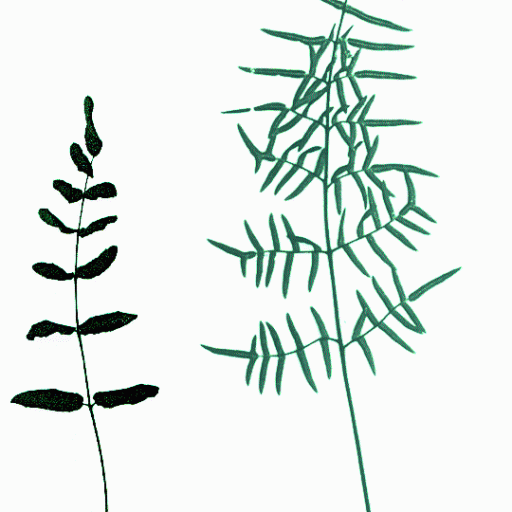
Plant Overview
Often referred to as the Purple-stemmed Cliffbrake, this resilient fern is a true survivor of the plant world. Unlike its lush, moisture-loving cousins that hide in damp swamps, Pellaea atropurpurea is a rugged mountaineer, frequently found clinging to limestone cliffs and rocky crevices. Its striking contrast of dark, wiry stems and leathery, blue-green foliage makes it a sophisticated choice for rock gardens and minimalist indoor displays.
🔍 How to Identify
- 💜 The Stems: Its most distinctive feature is its dark, purplish-black to mahogany stems (stipes), which are wiry, stiff, and slightly hairy.
- 🌿 The Fronds: The leaves are leathery and range from a cool grayish-green to a deep blue-green. They are divided into small, oval, or lance-shaped segments (pinnae).
- 🌑 The Spores: If you flip a mature leaf over, you’ll see the edges rolled inward to protect the dark brown spore cases (sori), creating a neat, "hemmed" appearance.
🏡 In Your Garden
- 🪨 The Limestone Lover: This fern is a "calciphile," meaning it craves alkaline conditions. If planting in a pot or garden, adding a bit of crushed limestone or eggshells to the soil will make it feel right at home.
- 💧 Drainage is Vital: Because it naturally grows on vertical rock faces, it has zero tolerance for "wet feet." Ensure your potting mix is gritty and fast-draining to prevent the delicate rhizomes from rotting.
- ☀️ Light Nuance: While many ferns demand deep shade, the Purple-stemmed Cliffbrake can handle more brightness than most, though it prefers indirect light or "dappled" sun rather than harsh midday rays.
⚠️ Safety & Toxicity
- ✅ Safe Status: Pellaea atropurpurea is generally considered non-toxic to humans, cats, and dogs. It is a "friendly" fern for a household with curious pets.
- 🧤 Skin Sensitivity: While not poisonous, the stiff, wiry stems can be somewhat sharp or abrasive. It is always a good idea to wear gloves when pruning or repotting to avoid minor skin irritation.
✨ Fun Fact
This fern is a master of "Apogamy." In the wild, it often skips the traditional "fertilization" step of plant reproduction, producing new ferns directly from its spores without needing water for sperm to swim to an egg. This evolutionary shortcut allows it to thrive in much drier, rockier environments than other ferns!

Detailed Care Instructions
To grow a Pellaea atropurpurea plant, also known as purple cliff-brake fern, you can follow these steps:
- Select a suitable location: Pellaea atropurpurea prefers a partially shaded area with indirect sunlight. It grows well in well-draining soil that is rich in organic matter.
- Prepare the soil: Ensure the soil is loose and well-draining. If the soil is heavy clay or compacted, amend it with organic matter like compost or peat moss to improve drainage.
- Propagation: You can propagate Pellaea atropurpurea through spores or division.
- Propagation by spores: Collect mature spores from an existing plant by removing the fronds with spore cases. Place the spores in a plastic bag and allow them to fully ripen for a few days. Sow the spores on a tray filled with a mixture of peat moss and perlite. Keep the tray covered to maintain humidity and water it regularly but avoid overwatering. After a few weeks, small green shoots will appear, and once they grow larger, they can be transferred into individual pots.
- Propagation by division: Choose a mature Pellaea atropurpurea plant. During early spring or early fall, gently dig around the plant's base to expose the roots. Carefully separate the rootball into smaller sections, ensuring each section has healthy fronds and its own set of roots. Plant these divisions into pots or directly into the ground.
- Propagation by spores: Collect mature spores from an existing plant by removing the fronds with spore cases. Place the spores in a plastic bag and allow them to fully ripen for a few days. Sow the spores on a tray filled with a mixture of peat moss and perlite. Keep the tray covered to maintain humidity and water it regularly but avoid overwatering. After a few weeks, small green shoots will appear, and once they grow larger, they can be transferred into individual pots.
- Planting: Dig a hole slightly larger than the rootball of your Pellaea atropurpurea. Gently place the plant in the hole and backfill with soil, gently firming it around the roots. Ensure the crown of the plant (where the fronds emerge) is level with the soil surface.
- Watering: Water the newly planted Pellaea atropurpurea thoroughly and keep the soil consistently moist but not waterlogged. Ferns typically prefer more moisture than many other plant varieties, so regular watering is important, especially during dry periods.
- Mulching: Apply a layer of organic mulch around the base of the plant to help retain moisture and suppress weed growth. Avoid piling mulch against the crown or fronds of the fern.
- Care: Pellaea atropurpurea has relatively low care requirements. Maintain consistent moisture levels, especially during dry spells. Fertilizer is generally not needed, as ferns are moderate feeders and can obtain their nutrients from the surrounding soil. However, if growth appears weak or pale, consider applying a balanced fertilizer during the growing season.
- Pruning: Remove any dead or damaged fronds as necessary to maintain the overall appearance of the plant. New fronds will continue to emerge throughout the growing season.
By following these steps, you should be able to successfully grow a Pellaea atropurpurea plant.

Place in a bright room that is sun drenched almost all day. Or directly in a south-facing window.

Pellaea Atropurpurea plant prefers to grow in moist soil, but not waterlogged. To water this plant, you need to check the soil's moisture level before watering. To check the moisture level, insert your finger into the soil, and if it feels dry up to the first inch, then it's time to water the plant.
When you water the plant, make sure to give it a good soak. To do this, water the plant until the excess water starts to drain out from the bottom of the pot. Wait for a few minutes and then empty the saucer at the bottom to prevent waterlogging.
It's best to water the plant in the morning, so it has enough time to absorb the water before the hot sun starts to evaporate it. Avoid watering the plant in the late afternoon or evening to prevent waterlogged soil and fungal infections.
During the winter months or when the plant is in its dormant phase, reduce the watering frequency and let the soil dry out a bit between watering. Overall, maintaining consistent moisture levels but avoiding waterlogging will keep your Pellaea Atropurpurea plant healthy and thriving.
To fertilize this plant, use a well-balanced and slow-release fertilizer with an equal ratio of nitrogen, phosphorus, and potassium. Apply the fertilizer during the growing season, from spring to fall, every four to six weeks. Make sure to dilute the fertilizer according to package instructions and apply it to the soil rather than the leaves. Avoid over-fertilization, as this can cause damage to the plant.
The ideal soil for this plant should be well-draining and moderately fertile. It should be slightly acidic with a pH range of 5.5 to 6.5. The soil should have a good amount of organic matter, such as compost or leaf mould, to retain moisture and provide nutrients for the plant. It should also have good aeration to prevent waterlogging and promote root growth. Avoid using heavy clay soils as they are poorly draining and can cause root rot. A mix of peat moss, perlite, and vermiculite can be a good option for growing this plant.
To propagate this plant, you will need to wait until the spores are mature and ripe. This usually occurs in late summer or early fall. Once you see the spores on the undersides of the fronds, you can carefully collect them and place them on a tray lined with moist peat moss. Cover the tray with plastic wrap and keep it in a warm, well-lit location.
After a few weeks, you should see tiny green plants emerging from the spores. Once they are large enough to handle, you can carefully separate them and plant them in small pots filled with a well-draining soil mix. Keep them moist and in a warm, bright location, and they should grow into healthy plants over time.








