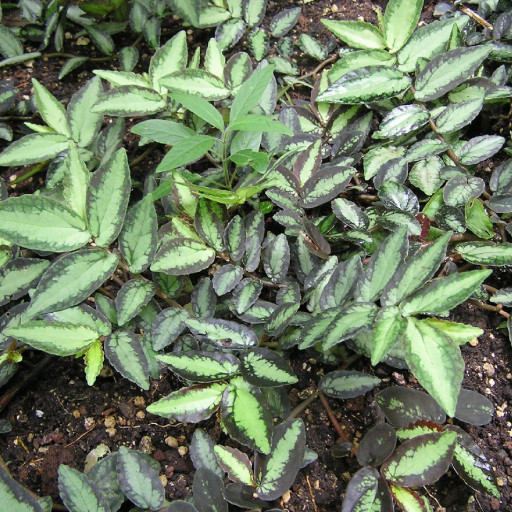
Plant Overview
Commonly known as the Trailing Watermelon Begonia or Polynesian Ivy, this plant is a master of disguise. Despite its nicknames, it is neither a Begonia nor an Ivy—it actually belongs to the Nettle family (Urticaceae). Native to the lush rainforests of Southeast Asia, it is prized for its dramatic, deep-toned foliage that looks like it was hand-painted by an artist.
🔍 How to Identify
- 🍃 Foliage Patterns: The leaves feature a striking contrast, with dark bronze or deep olive-green edges and a pale, silvery-green center that resembles the rind of a watermelon.
- 〰️ Leaf Texture: Each leaf is slightly asymmetrical and has a "wavy" or crinkled texture, giving the plant a lush, three-dimensional appearance.
- 🌱 Growth Habit: It has a "repens" (creeping) nature, meaning it grows horizontally along the ground or cascades beautifully over the edges of a pot.
🏡 In Your Garden
- 💧 Humidity Lover: Because of its jungle origins, this plant thrives in high humidity. It is one of the best candidates for a closed terrarium, where it can enjoy a constant "steamy" atmosphere.
- ☀️ Light Sensitivity: It is quite sensitive to the sun; direct rays will quickly bleach the beautiful dark pigment from its leaves. It prefers the "dappled shade" feel of a bright room away from the window.
- 🪴 Soft Stems: The stems are somewhat succulent and brittle. It’s best to place it in a spot where it won’t be frequently bumped, as the trailing vines can snap easily.
⚠️ Safety & Toxicity
- ✅ Pet Friendly: Good news for pet parents! Pellionia repens is generally considered non-toxic to cats, dogs, and horses.
- 👶 Human Safety: It is safe for children as well, though it’s always best to discourage nibbling on any houseplants to avoid mild stomach upset.
✨ Fun Fact
Even though it is in the Nettle family, you don’t have to worry about a "sting." Unlike its famous stinging nettle cousins, the Trailing Watermelon Begonia has lost its stinging hairs over evolutionary time, making it perfectly soft to the touch!

Detailed Care Instructions
| Humidity | Normal |
| Lighting | Full Sun |
| Difficulty | Easy |
| Temperature | 22°C - 35°C |
| Hardiness Zones | 10 - 12 |
To grow a Pellionia Repens plant, you can follow these steps:
- Propagation: Pellionia Repens can be propagated from stem cuttings or by dividing the plant. It is generally easier to propagate from stem cuttings. Take a healthy cutting from the parent plant, preferably with at least two sets of leaves.
- Prepare the cutting: Trim the cutting just below a node (the point where the leaves attach to the stem). Remove any lower leaves, leaving only a few sets of leaves at the top.
- Rooting medium: Fill a small pot or tray with a well-draining potting mix. A mixture of peat moss, perlite, and vermiculite is ideal for rooting Pellionia Repens. Moisten the potting mix slightly before planting the cutting.
- Planting: Make a small hole in the potting mix and insert the cutting into the hole. Gently press the soil around the base of the cutting to stabilize it.
- Placement: Place the pot or tray in a warm and bright location, away from direct sunlight. Ensure that the temperature remains consistently between 65-75°F (18-24°C).
- Humidity and watering: Pellionia Repens prefers high humidity, so it is recommended to place a plastic bag or a humidity dome over the cutting to create a mini greenhouse. This will help retain moisture and promote root growth. Mist the cutting regularly and water when the top inch of soil feels dry.
- Root development: After a couple of weeks, roots should start forming. You can carefully tug on the cutting to check for resistance, which indicates the presence of roots. Once roots have developed, remove the plastic bag or humidity dome.
- Transplanting: When the roots have filled the small pot or tray, usually after 6-8 weeks, you can transplant the Pellionia Repens to a larger pot with regular potting soil. Be sure to choose a well-draining pot with drainage holes.
- Care: Provide the potted plant with bright, indirect light. Avoid direct sunlight as it can scorch the leaves. Keep the soil evenly moist but not waterlogged. Mist the foliage regularly to increase humidity.
- Maintenance: Pellionia Repens is a trailing plant, so it may benefit from occasional pruning to encourage bushiness. Pinch off the growing tips to promote lateral growth. Regularly check for pests and treat them accordingly.
By following these steps, you should be able to successfully grow a Pellionia Repens plant.

Place in a window with dappled sun or a spot in the middle of a room. Or directly in a window facing west or east.

To water this plant, first check the soil moisture by touching the top inch of soil with your finger. If it feels dry, water the plant thoroughly until water starts to drain out of the bottom of the pot. Make sure to use room temperature water and avoid getting water on the leaves, as it can cause damage. Allow the soil to dry out slightly before watering again, as overwatering can lead to root rot. Additionally, this plant prefers high humidity, so misting with a spray bottle or placing a humidifier nearby can be beneficial.
To fertilize the Pellionia Repens plant, use a balanced liquid fertilizer diluted to half strength, and apply monthly during the growing season. Water the plant thoroughly before fertilizing, and avoid getting the fertilizer on the leaves or stem. Additionally, be sure to remove any debris or dead leaves from around the plant to prevent the buildup of harmful bacteria or fungi.
The preferred type of soil for Pellionia Repens plant is a well-draining, nutrient-rich soil that is moist but not waterlogged. The soil should be slightly acidic with a pH range of 5.5-6.5. The plant will thrive in soil that is rich in organic matter, such as compost or peat moss, as this will help to retain moisture and provide essential nutrients. It is important not to use soil that is too heavy or dense, as this will prevent proper drainage and could lead to root rot. As it is a plant that grows in a tropical or subtropical climate, it is also important to ensure that the soil is kept warm, and to avoid exposing the plant to cold temperatures or draughts.
To propagate this plant, first, take stem cuttings from a healthy and mature plant. Make sure the cutting is at least 3-4 inches long and has several leaves attached to it. Remove the bottom leaves from the cutting and dip the cut end in rooting hormone.
Next, plant the cutting in a moist potting mix, making sure the rooting hormone-covered cut is inserted about an inch deep into the soil. Water the cutting and place it in a humid and shaded area, such as a greenhouse or under a plastic bag.
Keep the soil moist and monitor the cutting for the next few weeks, making sure it does not dry out or rot. Once roots have developed, the cutting can be transferred to a larger pot or planted in the ground.
Common pests of the polynesian ivy include Mealybugs, spider mites, aphids, whiteflies. Make a habit of checking your polynesian ivy frequently for pests so that any infestations can be caught and managed early.








