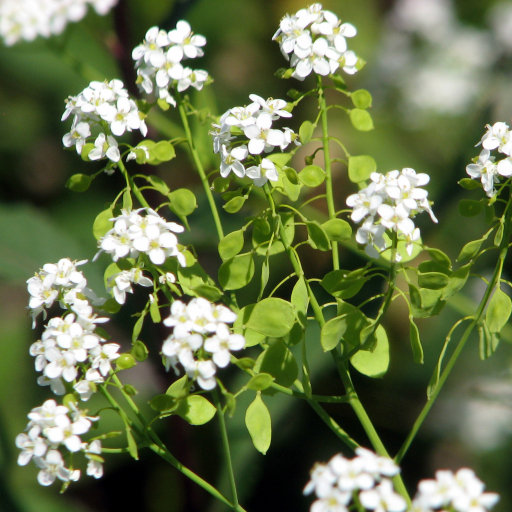
Plant Overview
Known as the "Garlic Cress" or "Shieldwort," this charming perennial herb is a culinary secret hidden in plain sight. Originating from the rocky slopes of Southeastern Europe, it is beloved by foragers for providing a punchy garlic flavor long before traditional garlic bulbs are ready for harvest. Its name comes from the unique, shield-shaped seed pods that rattle softly in the summer breeze.
🔍 How to Identify
- 🍃 The Foliage: The leaves are smooth, slightly heart-shaped at the base, and a vibrant grayish-green. When crushed, they release an unmistakable, pungent aroma of fresh garlic.
- 🌼 The Blooms: In late spring, the plant produces airy clusters of tiny, four-petaled white flowers that give the garden a delicate, "baby's breath" appearance.
- 🛡️ The Seed Pods: Perhaps its most distinct feature, the seed pods are flat, circular, and papery, resembling miniature shields or ancient coins hanging from the stems.
🏡 In Your Garden
- 🌱 Growth Habit: Unlike many culinary herbs that are finicky, Garlic Cress is a hardy perennial. It spreads slowly via underground rhizomes, making it an excellent "edible groundcover" for those looking to fill gaps in a forest garden or herb border.
- 🌦️ Sun & Soil: It is remarkably adaptable. While it thrives in full sun, it is one of the few herbs that maintains its flavor and lushness in partial shade. It prefers well-drained soil but isn't picky about pH levels, making it a low-maintenance favorite for beginners.
⚠️ Safety & Toxicity
- ✅ Status: Generally safe and non-toxic.
- 🥗 For Humans: The leaves are edible and frequently used in salads, pestos, and sandwiches. However, the flavor can become quite bitter once the plant begins to flower, so harvest early for the best taste.
- 🐾 For Pets: While not listed as a toxic plant, the high mustard-oil content (glucosinolates) common in the Brassicaceae family can cause mild stomach upset in dogs or cats if consumed in very large quantities.
✨ Fun Fact
The genus name Peltaria comes from the Greek word "pelte," which was a small, crescent-shaped shield used by ancient light infantry. If you look closely at the seed pods after the flowers fade, you’ll see the resemblance to these historic shields!

Detailed Care Instructions
To grow Peltaria Alliacea plant, also known as garlic vine or false garlic, follow these steps:
- Choose a sunny location: Peltaria Alliacea grows best in full sun with some partial shade. Ensure the area has well-draining soil.
- Prepare the soil: Amend the soil with organic matter such as compost or well-rotted manure to improve soil fertility and drainage. Work the organic matter into the top 6-8 inches of soil.
- Propagation: Peltaria Alliacea can be grown from seeds, stem cuttings, or root divisions. If starting from seeds, sow them in small pots or trays in a well-draining seed starting mix. Place the seeds 1/4 inch deep and keep the soil consistently moist. Transplant the seedlings outdoors after they develop a few sets of true leaves.
- Planting: If using stem cuttings or divisions, choose healthy shoots or clumps and plant them directly in the garden. Dig a hole slightly larger than the root ball, place the plant in the hole, and backfill with soil. Space multiple plants at least 24 inches apart.
- Watering: Peltaria Alliacea prefers moderate watering and dislikes overly wet conditions. Water the plant deeply, allowing the soil to dry out slightly between waterings. Avoid overwatering, which can lead to root rot.
- Fertilizing: Use a balanced fertilizer, such as a 10-10-10 or 14-14-14, during the growing season. Follow the package instructions for application rates. Additionally, apply compost or organic mulch around the base of the plant to provide nutrients and help retain moisture.
- Pruning: Peltaria Alliacea can become leggy with time, so occasional pruning is beneficial. Trim back any long, straggly stems to maintain a compact and bushy shape. Pruning can also encourage more branching and better flower production.
- Pests and diseases: Peltaria Alliacea is relatively pest and disease-free, but keep an eye out for common garden pests like aphids or spider mites. Use insecticidal soap or organic pest control methods if necessary.
- Cold protection: Peltaria Alliacea is a tropical plant that can be damaged by frost or freezing temperatures. If you live in a cold climate, consider growing it in containers that can be moved indoors during winter or protect it with frost cloth during cold snaps.
- Regular care: Maintain regular care by watering, fertilizing, and monitoring for pests or diseases. Enjoy the beautiful white or purple flowers and the garlic-like scent emitted by the foliage.
By following these steps, you can successfully grow Peltaria Alliacea in your garden or container.

Place in a bright room that is sun drenched almost all day. Or directly in a south-facing window.

1. Observe the soil moisture: The first step in watering Peltaria Alliacea is to observe the soil moisture level. Poke your finger into the soil about 1-2 inches deep to check if it is dry or moist.
2. Water when the soil is dry: If the soil feels dry to the touch, it's time to water the plant. Water it deeply and gently from the top until the water starts to drain out from the bottom of the pot.
3. Do not overwater: Overwatering can harm the Peltaria Alliacea plant. So, wait until the soil has dried out before watering it again. Also, make sure to empty the saucer under the pot after watering.
4. Use room temperature water: Make sure to use room temperature water to avoid any temperature shock to the plants. Cold water can damage the roots, while hot water can kill the plant.
5. Water at the base: When watering the Peltaria Alliacea plant, make sure to water at the base and avoid watering the leaves or flowers. This will prevent any fungal growth on the leaves and flowers.
6. Avoid watering in direct sunlight: It is best to water the plant in the morning or late afternoon when the sunlight is less intense. Watering in direct sunlight can cause the water droplets to act as magnifying glasses and scorch the plant.
7. Use a pot with good drainage: Peltaria Alliacea plant requires good drainage to prevent water from stagnating at the roots. Use a pot with drainage holes and a well-draining potting mix.
To fertilize this plant, use a balanced fertilizer with equal amounts of nitrogen, phosphorus, and potassium. Apply it every three weeks during the growing season. Dilute the fertilizer in water and apply it to the soil around the base of the plant, taking care not to get any on the leaves. Water the plant immediately after fertilizing to help the nutrients absorb into the soil. Avoid over-fertilizing, as this can lead to excessive growth and reduced plant health.
The most suitable kind of soil to use with this plant is a soil that is well-draining and has good air circulation. It should have a pH level that is slightly acidic to neutral, usually around 6 to 7.5. The soil should also be fertile and rich in nutrients, including phosphorus, potassium, and nitrogen. It is recommended to amend the soil with organic matter such as compost or well-rotted manure. The plant prefers a soil that is moist but not waterlogged. It is important to avoid using heavy clay soils, which can hold too much water and suffocate the roots. Similarly, sandy soil may not retain enough moisture for the plant to thrive.
To propagate this plant, start by taking stem cuttings from a healthy adult plant. Make sure the cuttings are at least 3-4 inches long and have several sets of leaves. Trim any lower leaves off the cutting to reduce moisture loss and encourage the growth of new roots.
Next, dip the end of the cutting in rooting hormone and plant it in a well-draining potting mix. Keep the soil moist but not waterlogged and place the cutting in a bright area with indirect sunlight.
Over time, the cutting will develop roots and new growth. Once the new plant is established, it can be transplanted into a larger pot or outdoors in a suitable location.
It's important to note that this plant prefers a cool and moist environment, so be sure to keep it in a location with high humidity and consistent moisture levels.








