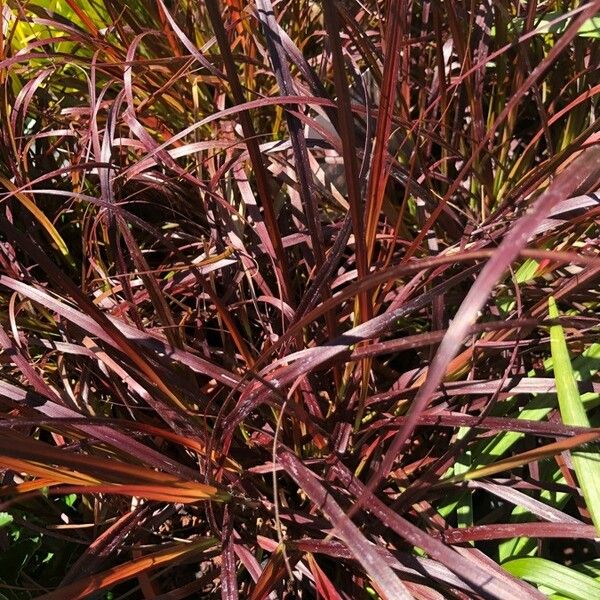
Plant Overview
Often called the Purple Fountain Grass, this ornamental powerhouse is a favorite for adding drama, movement, and deep color to any landscape. Its cascading burgundy foliage mimics a botanical firework frozen in time, swaying gracefully with the slightest breeze. While it looks like a high-maintenance exotic, it is surprisingly resilient and serves as the perfect "thriller" plant for large patio containers or garden borders.
🔍 How to Identify
- 🌿 The Foliage: Look for narrow, arching leaves that transition from a deep burgundy to a rich purple-red. In lower light, the color may fade to a bronzy green.
- 🌾 The Plumes: It produces soft, fuzzy flower spikes that resemble long caterpillars or bottle brushes. These plumes are typically pinkish-purple, fading to a tan color as they mature.
- 📏 The Habit: It grows in a distinct "fountain" shape, with leaves radiating outward from a central clump, reaching about 3 to 5 feet in height.
🏡 In Your Garden
- ☀️ The Sun-Color Connection: To keep that stunning purple hue, this grass needs full sun. If tucked into a shady corner, the plant will lose its "glow" and the foliage will turn a muddy green.
- ❄️ The Winter Reality: Unlike many hardy grasses, Pennisetum advena is a tender perennial. In colder climates (below Zone 9), it is usually treated as an annual because it cannot survive a hard frost. Many gardeners choose to bring it indoors or simply replant fresh in the spring.
- ✂️ Low-Mess Beauty: This grass is highly valued because it is a sterile cultivar. It won't drop seeds and take over your garden or the local ecosystem, making it a responsible choice for eco-conscious hobbyists.
⚠️ Safety & Toxicity
- 🐾 Pet Friendly: Good news for pet owners—this grass is generally considered non-toxic to cats, dogs, and horses.
- 🔪 Sharp Edges: Like many ornamental grasses, the edges of the blades can be slightly sharp. While not "dangerous," it is wise to wear gloves when pruning or dividing the plant to avoid tiny "grass cuts" on your hands.
✨ Fun Fact
Because this specific variety is sterile and cannot reproduce by seed, every Purple Fountain Grass you see in gardens across the world is a "clone" of the original plant, propagated through root division by nurseries!

Detailed Care Instructions
To grow Pennisetum advena, also known as purple fountain grass, follow these steps:
- Choose a suitable location: Select a spot with full sun exposure, as these plants thrive in bright sunlight. Make sure the soil is well-draining, as they do not tolerate wet or waterlogged conditions.
- Prepare the soil: Before planting, loosen the soil and remove any weeds or rocks. Enrich the soil with organic matter like compost or aged manure to improve fertility and drainage.
- Plant the grass: Dig a hole that is slightly larger than the root ball of the plant. Place the plant in the hole and backfill with soil, ensuring that the crown is level with the soil surface. Gently pat down the soil to remove air pockets.
- Water thoroughly: After planting, water the grass thoroughly to settle the soil. Keep the soil moisture consistent during the growing season, but avoid overwatering, as this can lead to root rot.
- Mulch the area: Apply a layer of organic mulch around the base of the plant to help retain moisture, suppress weed growth, and regulate soil temperature.
- Fertilize occasionally: Pennisetum advena generally doesn't require much fertilization. However, you can apply a slow-release granular or liquid fertilizer formulated for ornamental grasses once or twice during the growing season for optimal growth.
- Prune as needed: In early spring, before new growth begins, cut back any dead or damaged foliage to about 6-8 inches from the crown. This encourages new growth and helps maintain the plant's shape.
- Protect from winter frost: Pennisetum advena is frost-tender and may not survive in colder regions. In such cases, you can dig up the plants and store them in a frost-free location, or grow them as annuals and replant new ones each year.
With these care tips, your Pennisetum advena plant should grow and thrive, adding vibrant color and texture to your garden or landscape.
To water this plant, thoroughly saturate the soil around the base of the plant ensuring it is not sitting in standing water. Watering should be done once the soil has dried out slightly but before it becomes completely dry. Take care not to overwater as this can lead to root rot. If the plant is in a container, it is important to ensure there are drainage holes. In hot and dry weather, it may require more frequent watering. If the plant is outdoors, ensure it receives adequate rainfall or water it manually to supplement natural rainfall.
To fertilize this plant, apply a balanced fertilizer once a month during the growing season, from spring to fall. Use a slow-release fertilizer or dilute a liquid fertilizer to half the recommended strength. Apply the fertilizer evenly around the base of the plant and water it well. Avoid applying too much fertilizer, as it can burn the roots and damage the plant. Monitor the growth and adjust the fertilization as needed to promote healthy growth and flowering.
The ideal soil for this plant should be well-drained and fertile, with a pH balance around 6.0 to 7.5. It requires a soil that is rich in organic matter, providing the necessary nutrients for healthy growth. The soil texture should be loamy, not too sandy nor too clayey, allowing for good aeration and moisture retention. It is recommended to add compost or other organic amendments to the soil prior to planting to improve its quality. The plant prefers slightly moist soil, but it should not be waterlogged, as it can lead to root rot. Finally, it is important to avoid using any soil that has been contaminated with chemical fertilizers or pesticides, as these can be harmful to the plant's health and growth.
To propagate this plant, you can start by collecting its seeds or separating its offsets. If using seeds, soak them in warm water for 24 hours before sowing them in a seed tray filled with a well-draining potting mix. Keep the soil moist and warm until the seeds germinate, then transplant them into individual pots.
If using offsets, gently dig up the parent plant and separate the young shoots with their roots intact. Plant each offset in a pot filled with a well-draining potting mix, and keep the soil moist until new growth emerges.
Ensure the newly propagated plants receive bright, indirect light and keep the soil consistently moist. Fertilize regularly with a balanced fertilizer, and watch for any signs of pests or diseases.








