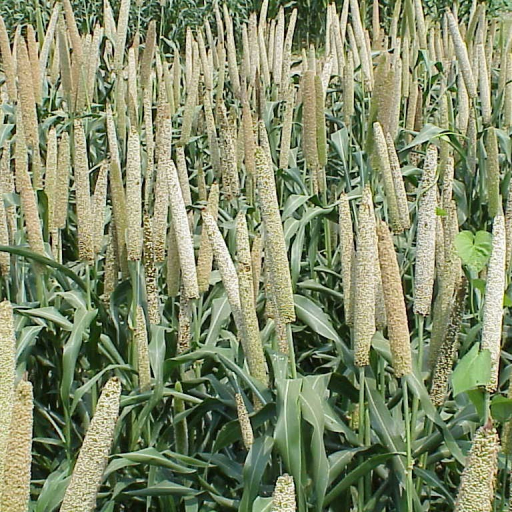
Plant Overview
Often called "Pearl Millet" or "Bajra," this resilient grass is a true survivor that has fed civilizations for over 4,000 years. While it originated in the scorching Sahel region of Africa, it has recently transitioned from a humble cereal crop to a high-fashion garden favorite, especially the striking purple-leaved varieties. Whether you are growing it for its architectural beauty or to provide a feast for local birds, its "cattail" seed heads are an unmistakable summer icon.
🔍 How to Identify
- 🌾 The Seed Heads: The most iconic feature is the dense, cylindrical flower spike that can grow up to 12 inches long. It looks remarkably like a fuzzy cigar or a giant cattail, turning from green or purple to a tawny gold as seeds ripen.
- 🍃 The Foliage: The leaves are broad and strap-like, similar to corn stalks. Depending on the variety, they can range from a bright, grassy green to a deep, dramatic burgundy-black.
- 📏 Growth Habit: This is a tall, upright grass that doesn't flop over. It grows in sturdy clumps, reaching anywhere from 3 to 10 feet high, making it a perfect "back-of-the-border" plant.
🏡 In Your Garden
- ☀️ The Heat Lover: Because of its African heritage, this plant thrives in "oven-like" conditions where other plants wilt. It needs full sun to develop its deep colors; if kept in the shade, purple varieties will often turn green and lose their luster.
- 💧 Thirst for Establishment: While extremely drought-tolerant once mature, it has a sensitive root system during its youth. It dislikes being moved once planted, so choose its "forever home" carefully to avoid transplant shock.
- 🐦 A Bird Buffet: If you leave the dried seed heads standing through the fall, you will turn your garden into a sanctuary. Goldfinches and sparrows are particularly fond of the nutrient-dense "pearls" hidden within the spikes.
⚠️ Safety & Toxicity
- ✅ Status: Non-toxic and safe.
- 🐾 Details: Pennisetum glaucum is a major food crop for humans and livestock globally. It is non-toxic to dogs, cats, and horses. In fact, it is a gluten-free grain often used in health foods. Just be aware that the dried bristles on the seed heads can sometimes be a minor mechanical irritant if stuck in a pet's fur or throat.
✨ Fun Fact
Pearl Millet is a "climate-smart" superhero; it can produce a reliable harvest in soil so sandy and dry that even corn and wheat would perish. It is essentially the cactus of the cereal world!

Detailed Care Instructions
| Color | Dependent On Cultivar. Green-To Purple |
| Soil Ph | Neutral Soils |
| Humidity | Dry |
| Lighting | Part Sun |
| Toxicity | Non-Toxic |
| Soil Type | Evenly Moist, Well-Draining |
| Bloom Time | July To September |
| Difficulty | Easy |
| Plant Type | Ornamental Grass/ Food Crop |
| Mature Size | 4-6 Ft. |
| Native Area | Africa |
| Temperature | 32°C - 35°C |
| Sun Exposure | Full Sun |
| Hardiness Zones | 2-11 |
To grow Pennisetum glaucum (also known as Pearl Millet), follow these steps:
- Climate and Soil: Pearl Millet thrives in warm climates with temperatures ranging between 80-100°F (27-38°C). It requires full sun exposure. The plant can tolerate any type of well-drained soil but prefers sandy or loamy soil. Make sure the soil pH is neutral to slightly alkaline, between 6.0 and 7.5.
- Planting: Start planting the seeds after the last frost in spring when the soil temperature reaches at least 65°F (18°C). Sow the seeds directly into the ground about 1 inch (2.5 cm) deep and 12-18 inches (30-45 cm) apart. If you prefer, you can start the seeds indoors 4-6 weeks before the last frost and transplant them outside when the weather is suitable.
- Watering: Water the plants consistently, keeping the soil moist but not waterlogged. Once established, the plant is somewhat drought-tolerant.
- Fertilizer: Use a balanced fertilizer or organic compost at the time of planting to provide essential nutrients to the growing plant. Side-dress with nitrogen-rich fertilizer or compost every few weeks during the growing season to support healthy growth.
- Maintenance: Remove weeds around the plants as they compete for nutrients. Pearl Millet doesn't have a significant pest or disease problem, but it's always good to monitor your plants for any signs of trouble. Support taller plant varieties with stakes if needed.
- Harvesting: Pearl Millet is usually harvested for its seeds, which are used as grain or as bird feed. Harvest the seed heads when they turn golden brown and the seeds become hard. Cut the seed heads and hang them upside down in a well-ventilated area to dry. Once fully dry, remove the seeds by threshing them.
- Saving seeds: If you want to save seeds for the next growing season, keep the seeds in a cool, dry place in a sealed container.
Remember to check any local restrictions or recommendations regarding growing Pearl Millet, especially as an agricultural crop.

Place in a bright room that is sun drenched almost all day. Or directly in a south-facing window.

To properly water this plant, it is important to consider its soil and environmental conditions. This plant requires well-draining soil with a moderate amount of moisture. Overwatering can lead to root rot, so it is important to allow the soil to dry slightly between waterings.
To water, slowly pour water into the soil until it reaches a depth of about 6 inches. Avoid getting water on the leaves or stem to prevent disease. The frequency of watering will depend on the temperature, humidity, and the amount of sunlight the plant is receiving. As a general rule of thumb, water this plant every 2-3 days during the growing season and reduce watering during the winter months.
It is also important to consider the fertilization needs of this plant. A balanced, water-soluble fertilizer can be applied every 6-8 weeks during the growing season to promote healthy growth and blooms.
To fertilize this particular plant, use a balanced fertilizer with equal parts nitrogen, phosphorus, and potassium. Apply the fertilizer once every two weeks during the growing season and avoid over-fertilizing as it can burn the plant's roots. Water the plant before and after fertilizing to ensure the fertilizer reaches the plant's roots. Consider using organic fertilizer options to avoid chemical buildup in the soil.
When planting Pennisetum Glaucum, it is important to choose a well-drained soil that is rich in nutrients. The soil should be loamy with a pH range of 6.0 to 7.5. The texture of the soil can be sandy, loamy or clay, as long as it is well-drained. It is recommended to amend the soil with compost or organic matter before planting to improve soil structure and provide adequate nutrients. It is also important to avoid overwatering, as Pennisetum Glaucum prefers a dry soil environment.
To propagate this plant, you will need to gather mature seeds that have fallen naturally from the parent plant. Before planting the seeds, soak them in water for 24 hours to help soften the outer shell. Fill a tray or container with a well-draining soil mixture, and spread the seeds evenly on top. Cover the seeds with a light layer of soil, about 1/4 inch deep. Keep the soil moist but not waterlogged, and place the tray in a warm, sunny location. Germination should occur within 1-2 weeks, and once the seedlings have established, you can transplant them to their permanent location. Alternatively, you can divide mature clumps of the parent plant when they become overcrowded, which can be done in early spring. Dig up the clump, and gently separate it into smaller sections, each with their own roots and foliage. Replant the sections in their new location, and water thoroughly.
Common pests of the indian millet include Thrips. Make a habit of checking your indian millet frequently for pests so that any infestations can be caught and managed early.








