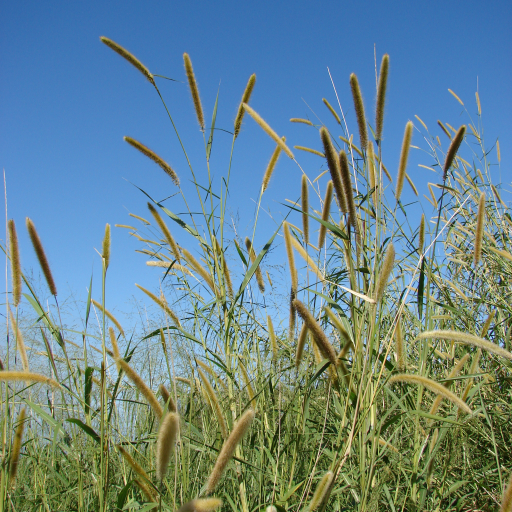
Plant Overview
Known as the "Elephant Grass" or "Napier Grass," this towering African native earned its name because it is a favorite snack for elephants in the wild. It is a fast-growing, robust perennial that brings a dramatic, architectural flair to any landscape, often reaching heights that make it look more like bamboo than a standard garden grass.
🔍 How to Identify
- 🍃 Blade Texture: The leaves are long, broad, and lance-shaped with a prominent white midrib running down the center.
- 🌾 Bottlebrush Blooms: It produces striking, bristly flower spikes (panicles) that are typically yellow-tawny or tinged with purple, resembling a fuzzy cattail.
- 🎋 Bamboo-like Stems: The stalks are thick, solid, and woody at the base, capable of growing over 10 feet tall in ideal conditions.
🏡 In Your Garden
- 🧱 Living Privacy Screen: Because of its immense height and dense growth habit, it is an excellent choice for a "green wall" to block out noise or unsightly views.
- ☀️ Sun & Space: This plant is a sun-worshiper that requires plenty of room to spread; it develops a deep root system that makes it incredibly resilient against wind and heat.
- ✂️ Management: It is a vigorous grower. To keep it looking tidy in a garden setting, it’s best to cut it back significantly in late winter to allow for fresh, vibrant green growth in the spring.
⚠️ Safety & Toxicity
- ✅ General Safety: Pennisetum purpureum is non-toxic to humans, dogs, cats, and horses. In fact, it is one of the most important forage crops for livestock globally.
- ⚔️ Sharp Edges: Be cautious when handling the foliage; the leaf margins can be quite sharp and may cause small skin abrasions or "grass cuts" if you brush against them too quickly.
✨ Fun Fact
Elephant Grass is a champion of "Push-Pull" farming. Farmers plant it around the perimeter of their cornfields to "pull" away destructive stem-borer moths, protecting their food crops naturally without the need for chemical pesticides!

Detailed Care Instructions
To grow Pennisetum purpureum (also known as Napier grass or elephant grass), follow these steps:
- Choose a suitable location: Napier grass prefers full sun and well-draining soil. Select an area with adequate space for the plant to grow as it can reach heights of up to 10 feet (3 meters) tall.
- Prepare the soil: Ensure the soil is fertile and has good drainage. Till or loosen the soil to a depth of at least 6 inches (15 cm) to remove any weeds or debris. Incorporate organic matter or compost to enhance the soil's fertility.
- Planting: Napier grass can be grown from seeds or vegetatively from stem cuttings. If using seeds, sow them 1/4 inch (0.6 cm) deep in well-prepared soil. Space the seeds or cuttings about 1-2 feet (30-60 cm) apart.
- Watering: Keep the soil evenly moist during the establishment period, especially if grown from seeds. Once established, Napier grass is drought-tolerant and requires watering only during prolonged dry spells.
- Fertilization: Apply a balanced slow-release fertilizer at the time of planting and again during the growing season to promote healthy growth. Follow the manufacturer's instructions for the appropriate dosage.
- Weed control: Regularly remove weeds around the base of the plant, taking care not to damage the roots. Mulching around the plant can help suppress weed growth.
- Pruning: Trim the plants back to a desirable height after they have reached their maximum growth. This promotes vigorous regrowth and prevents the plants from becoming too tall and unmanageable.
- Propagation: If you wish to expand your Napier grass population, divide mature clumps or take stem cuttings from established plants. Make sure each division or cutting has roots attached and plant them in well-prepared soil.
- Pest and disease control: Monitor the plant for pests like aphids, leaf beetles, or grasshoppers. Apply appropriate organic or chemical controls if necessary. Additionally, be aware of common diseases like rust or fungal infections and take preventive measures such as ensuring good air circulation and avoiding excess moisture on the leaves.
- Harvesting: Napier grass can be harvested after 3-4 months of growth. Cut the grass above ground level and allow it to regrow. It is often cut multiple times per year, providing a continuous source of forage or biomass.
Remember to check if Napier grass is a permitted or invasive species in your area before planting, as it can spread rapidly and outcompete native plants in certain regions.
To water this plant, it is important to ensure that the soil is not completely dry before watering. Before watering, it is necessary to check the moisture level of the soil by feeling it with your finger or using a moisture meter. The soil should be moist but not waterlogged.
Once the moisture level is determined, water the plant slowly and deeply to ensure that the water reaches the roots. Avoid getting water on the leaves as it can promote fungal growth. It is also important to ensure that the water drains well and that there is not excess water in the saucer or tray beneath the plant.
In general, it is better to water this plant less frequently but deeply rather than frequently with small amounts of water. A good rule of thumb is to water when the top 1-2 inches of soil are dry. Additionally, avoid watering during the hottest part of the day, as water can evaporate before the plant has a chance to absorb it.
To fertilize this plant, you will need to apply a balanced fertilizer that includes nitrogen, phosphorus, and potassium. It is best to use a slow-release fertilizer that will gradually release nutrients over time. You should apply the fertilizer in the early spring, before new growth appears, and again in early summer. Avoid fertilizing too late in the growing season, as this can encourage soft growth that is prone to winter damage. Be sure to follow the manufacturer's instructions for application rate and frequency, and water the plant thoroughly after fertilizing.
When planting a certain species of grass with large, reddish-purple leaves, it's important to choose the right soil to ensure optimal growth and health. This particular plant prefers well-draining soil with a neutral pH that has good organic matter content. It thrives in fertile soil that is rich in nutrients, with adequate amounts of nitrogen, phosphorous, and potassium. A sandy soil with good drainage is also beneficial as it allows the plant's roots to breathe and prevents waterlogging. When planting, it's best to amend the soil with compost or other organic matter to improve its quality and provide a nutrient-rich growing environment. It's important to avoid compacted or poorly-drained soils, as they can cause the plant's roots to rot and lead to plant failure.
Propagation of this plant can be done through stem cuttings or division of the root system. For stem cuttings, select a healthy and mature stem with some leaves and cut it at a 45-degree angle. Remove the lower leaves and plant the cutting in well-draining soil. Keep the soil moist and place the cutting in a warm and bright area but out of direct sunlight.
For division, dig up the plant carefully and separate the root system into smaller sections, ensuring each section has some roots and foliage. Replant the divided sections in well-draining soil and water them thoroughly. Keep the new plants in a warm and bright area but out of direct sunlight until they establish new roots.
Both methods of propagation can take a few weeks to several months for the new plant to grow and establish.








