Plant Overview
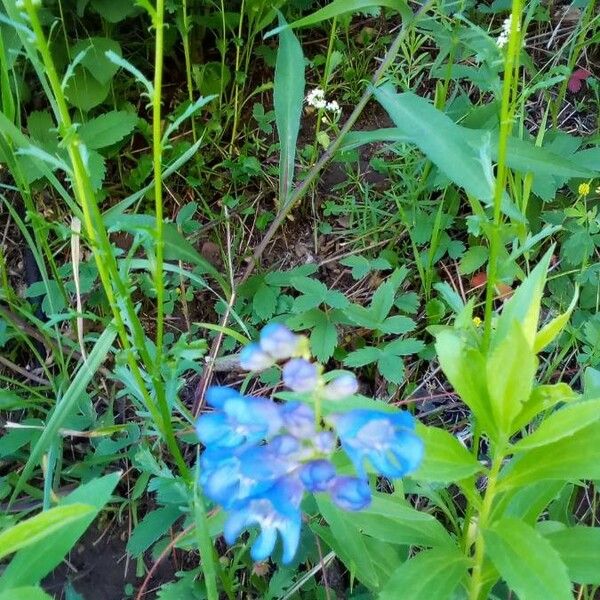
Known as the Wasatch Beardtongue, this mountain native is a showstopper famous for its "electric blue" flowers that seem to glow against the rugged landscapes of the American West. It is a favorite for high-altitude rock gardens and water-wise landscaping, bringing a piece of the wild, subalpine wilderness into the home garden. This perennial is particularly beloved by hummingbirds, who find its tubular blossoms irresistible.
🔍 How to Identify
- 🌸 Floral Spikes: Densely packed clusters of tubular, bell-shaped flowers that transition from soft violet buds to a brilliant, deep azure blue.
- 👅 The "Beard": If you peer inside the flower, you will find a sterile stamen covered in tiny, stiff yellow hairs, which looks remarkably like a fuzzy tongue.
- 🍃 Waxy Foliage: The leaves are smooth, slightly leathery, and often have a bluish-green tint (glaucous), growing in neat opposite pairs along the upright stems.
🏡 In Your Garden
- ⛰️ Drainage is Key: Because this plant evolved in mountain canyons and rocky slopes, it "hates wet feet." It requires gritty, well-draining soil; in heavy clay, the roots will likely rot during the winter.
- ☀️ Sun and Space: It thrives in full sun, which intensifies the blue pigment of the petals. Avoid overcrowding, as it appreciates good air circulation to prevent leaf spots.
- 🚫 Taproot Troubles: The Wasatch Beardtongue develops a deep, sturdy taproot to find water in dry climates. Because of this, it is notoriously difficult to transplant once established—pick its "forever home" carefully!
⚠️ Safety & Toxicity
- 🐾 Non-Toxic: Penstemon cyananthus is generally considered safe and non-toxic for dogs, cats, and horses.
- 🦋 Pollinator Magnet: While safe for pets, it is "toxic" only in the sense that it is addictive to bees and hummingbirds, making it an excellent choice for a wildlife-friendly garden.
✨ Fun Fact
The name Penstemon is derived from the Greek words "pente" (five) and "stemon" (stamen). While most plants in its family have four stamens, Penstemons have a fifth, sterile one that does nothing but grow "hair" to help guide pollinators into the flower!

Detailed Care Instructions
To grow Penstemon Cyananthus, you can follow these steps:
- Choose a suitable location: Penstemon Cyananthus prefers full sun to partial shade. Select a location in your garden that receives at least six hours of direct sunlight each day.
- Prepare the soil: The plant thrives in well-draining soil. If your garden's soil is heavy clay or sandy, amend it by adding organic matter such as compost or well-rotted manure. This will improve the soil's drainage and nutrient content.
- Planting: Dig a hole that is slightly larger than the root ball of the plant. Place the Penstemon Cyananthus in the hole and backfill it with soil, gently firming it around the roots. Make sure the crown of the plant (where the roots meet the stem) is level with the soil surface.
- Watering: Water the plant thoroughly after planting. Penstemon Cyananthus requires regular watering during its establishment period. After that, it is somewhat drought-tolerant, but it's still important to provide supplemental water during prolonged dry spells.
- Mulching and weed control: Apply a layer of organic mulch, such as wood chips or straw, around the base of the plant. This will help retain moisture, suppress weed growth, and regulate soil temperature.
- Pruning: Penstemon Cyananthus doesn't require extensive pruning. However, you can trim off any dead or damaged stems in early spring to encourage new growth. Additionally, deadhead the spent flowers to promote more blooms.
- Fertilizing: Penstemon Cyananthus generally doesn't need much fertilization. However, you can apply a balanced, slow-release fertilizer in early spring to provide some extra nutrients.
- Pests and diseases: This particular variety of Penstemon is generally not prone to major pest or disease issues. However, monitor your plant for any signs of aphids, slugs, or snails. If you spot any, take appropriate measures to control them, such as handpicking or using organic insecticidal soap.
- Overwintering: Penstemon Cyananthus is typically hardy in USDA zones 5-9. If you live in a colder zone, consider providing some protection in winter, such as a layer of mulch around the base of the plant, or covering it with burlap during extreme cold spells.
By following these steps, you should be able to successfully grow Penstemon Cyananthus in your garden. Happy gardening!

Place in a bright room that is sun drenched almost all day. Or directly in a south-facing window.

To water this plant, one should first check the soil moisture level by inserting a finger about an inch into the soil. If it feels dry, it is time to water. The plant prefers to be watered deeply but infrequently, rather than getting frequent light watering. One should water around the base of the plant, avoiding getting water on the foliage as it can lead to fungal diseases. Additionally, it is best to water in the morning to allow excess moisture to evaporate and prevent the plant from sitting in damp soil overnight. In general, this plant prefers well-draining soil and moderate watering.
To fertilize this plant, use a balanced fertilizer with equal ratios of nitrogen, phosphorus, and potassium. Apply the fertilizer in early spring before new growth appears, and again in midsummer after the first flush of flowers has faded. Use caution not to over-fertilize, as this can damage the roots and foliage. Water thoroughly after fertilizing to ensure that the nutrients are absorbed by the roots.
Penstemon Cyananthus prefers well-drained soil with a neutral to slightly alkaline pH. A soil mix that is rich in organic matter and has a light, sandy texture is ideal for this plant. It should not be planted in soil that is too compact or heavy, as this can cause drainage problems and lead to root rot. The soil should also be able to hold moisture well, as Penstemon Cyrnanthus requires consistent watering during the growing season. Adding compost or other organic matter to the soil before planting can help improve the soil structure, increase water retention, and provide essential nutrients for the plant's growth. It is important to avoid using fertilizers that are high in nitrogen, as this can promote lush foliage growth at the expense of flower production. Instead, a slow-release fertilizer that is low in nitrogen and high in phosphorus and potassium can be applied twice a year to promote healthy growth and abundant flower production.
Propagating this plant can be achieved in several ways, including using seed, stem cuttings, or by division of established plants. To propagate Penstemon Cyananthus using stem cuttings, select healthy and mature stems that are free from disease or damage. Cut a length of stem approximately 4 to 6 inches long, making a clean and slanted cut just below a leaf node.
Remove all the leaves from the bottom half of the stem, leaving only a few leaves at the top. Dip the cut end of the stem into rooting hormone, and plant it into a pot filled with a well-draining soil mix. Water the cutting well and cover it with a plastic bag or a clear plastic container to create a humid environment. Place the container in a warm, bright area, but away from direct sunlight.
Check the cutting regularly to make sure the soil is moist and mist the leaves if they appear dry. After a few weeks, new growth should appear, indicating that the cutting has taken root and can be transferred to a larger pot or planted outside in a suitable location.
Propagation by division involves digging up an established plant and separating it into smaller sections, each with a healthy root system. This can be done in the spring when the plant is coming out of dormancy and before new growth begins. Plant the divided sections separately in prepared soil, water thoroughly, and care for them as you would an established plant.
Propagating Penstemon Cyananthus from seed involves collecting mature seeds from an established stem. Allow the seeds to dry, and then plant them in well-draining soil mix. Keep the soil consistently moist but not saturated, and provide the seeds with ample sunlight. Once the seedlings have grown and established a root system, they can be transplanted into their permanent location.








