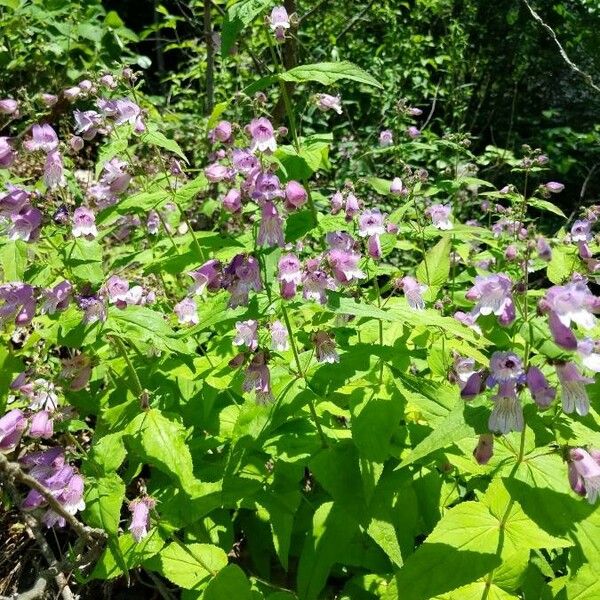
Plant Overview
Known affectionately as Small’s Beardtongue, this southeastern gem brings the wild beauty of the Blue Ridge Mountains straight into your backyard. It is a standout in the Penstemon family for its vibrant, orchid-like flowers and its hardy, semi-evergreen foliage that shifts colors with the seasons. If you are looking to create a sanctuary for hummingbirds while adding a touch of Appalachian charm, this plant is a perfect choice.
🔍 How to Identify
- 🌸 The "Throat" Patterns: Look for clusters of tubular, bell-shaped flowers in shades of lavender-pink to deep purple. The interior of the bloom is white with distinct purple "nectar guides"—striking lines that lead pollinators directly to the goods.
- 🍃 Toothed Foliage: The leaves are lance-shaped with noticeably serrated (saw-toothed) edges. They grow opposite each other along the stem and are often glossy, providing a lush backdrop for the blooms.
- 🎨 Stem and Leaf Tints: Unlike many other garden perennials, the stems of Small's Beardtongue are often a deep reddish-maroon. In the autumn and winter, the green leaves frequently take on a beautiful bronze or burgundy hue.
🏡 In Your Garden
- 🪨 The "Dry Feet" Philosophy: This plant is a rock-garden superstar. It evolved to grow on rocky slopes and cliffs, meaning it absolutely demands excellent drainage. If planted in heavy, soggy clay, its roots may rot during the winter. It is much better to underwater this plant than to overwater it.
- ✂️ Reseeding Strategy: Small's Beardtongue is a relatively short-lived perennial (usually 3–5 years), but it is an excellent self-seeder. If you want a permanent colony, leave the spent flower stalks in place so the seeds can drop. If you prefer a tidy look, "deadheading" the old flowers will often encourage a second, smaller flush of blooms.
⚠️ Safety & Toxicity
- ✅ Pet and Child Friendly: Penstemon smallii is generally considered non-toxic to humans, dogs, and cats. It is a safe choice for high-traffic family gardens and "catio" environments.
- 👐 Skin Sensitivity: While not poisonous, the fine hairs on the stems and the "beard" inside the flower can occasionally cause very mild mechanical irritation for those with ultra-sensitive skin. Wearing gloves while pruning is a simple precaution.
✨ Fun Fact
The name "Beardtongue" isn't just a quirky nickname; it’s a literal description! Inside the flower, there is a sterile fifth stamen (called a staminode) that is covered in tiny, stiff yellow hairs, making it look exactly like a fuzzy little tongue sticking out of the flower's mouth.

Detailed Care Instructions
To grow Penstemon Smallii, also known as Small's penstemon, follow these steps:
- Choose the right location: Penstemon Smallii prefers full sun to partial shade. Make sure the spot you select receives at least 6 hours of direct sunlight per day. It also needs well-draining soil.
- Prepare the soil: Penstemon Smallii prefers soil that is slightly acidic to neutral (pH 6.0-7.0). If your soil is heavy clay or poorly draining, amend it with organic matter like compost or peat moss to improve drainage.
- Planting: Dig a hole slightly larger and deeper than the root ball of the plant. Place the plant in the hole and backfill with soil, gently pressing around the base to secure it. Space multiple plants approximately 12-18 inches apart.
- Watering: Water the plant thoroughly after planting to settle the soil around the roots. Penstemon Smallii prefers moderate moisture, so water deeply when the top inch of soil feels dry. Avoid overwatering, as it can lead to root rot.
- Mulching: Apply a layer of organic mulch, such as wood chips or straw, around the base of the plant to help retain moisture, suppress weeds, and regulate soil temperature.
- Fertilizer: Penstemon Smallii generally doesn't require heavy feeding. A light application of a balanced slow-release fertilizer in spring can help promote healthy growth. Avoid excessive nitrogen fertilizers, as they may stimulate excessive foliage growth at the expense of flowers.
- Pruning: In early spring, before new growth emerges, you can cut back the stems to about 4-6 inches in height to encourage bushier growth and more flowers. Deadheading spent flowers can also promote continuous blooming.
- Protect from pests and diseases: Penstemon Smallii is generally not prone to major pest or disease issues. However, you should regularly inspect the plant for signs of pests like aphids or spider mites. If necessary, treat with an appropriate insecticide or remove pests manually.
- Winter care: Penstemon Smallii is a hardy perennial that can survive winter in USDA hardiness zones 5-9. In colder areas, apply a layer of mulch around the base of the plant to insulate roots.
With proper care and maintenance, your Penstemon Smallii plant should thrive and produce beautiful flowers.

Place in a bright room that is sun drenched almost all day. Or directly in a south-facing window.

1. Check the soil moisture: Before watering the plant, it's important to check the soil moisture. Push your finger about 1 inch deep into the soil around the plant and see if it feels dry or moist.
2. Water deeply: When it's time to water, make sure to give the plant a deep watering. This means watering the soil around the base of the plant until the water reaches the roots. It's better to water deeply once a week rather than shallowly every day.
3. Avoid getting the foliage wet: Penstemon Smallii plants don't like to have their foliage wet for too long, as this can lead to diseases and fungal growth. So, it's best to water the soil around the base of the plant and avoid getting water on the leaves.
4. Use a watering can: A watering can is ideal for watering Penstemon Smallii plants, as it gives you more control over the amount and direction of water flow. You can also use a hose with a gentle nozzle attachment.
5. Water in the morning: Watering in the morning allows the plant to absorb the moisture it needs before the heat of the day sets in. This also gives the foliage time to dry off, reducing the risk of fungal growth and disease.
6. Monitor the weather: During periods of heavy rain or extended periods of high humidity, you may not need to water your Penstemon Smallii plant at all. Be mindful of the weather and adjust your watering schedule accordingly.
To fertilize the plant, use a balanced fertilizer with equal parts nitrogen, phosphorus and potassium. Apply the fertilizer in early spring or late fall when the plant is actively growing. Follow the manufacturer's instructions for dosage and application. Water the soil thoroughly after fertilizing. Avoid fertilizing during the hot summer months or in periods of drought.
Penstemon Smallii plant prefers well-draining soil that is slightly acidic with a pH level between 5.5 to 6.5. The ideal soil type for this plant is sandy or loamy soil. It does not tolerate heavy clay or poorly drained soils. To improve soil drainage, add organic matter such as compost or peat moss and ensure good air circulation around the roots. It also prefers a moderately fertile soil, so you may want to add a slow-release fertilizer when planting. Additionally, regular watering is important for the health of Penstemon Smallii plant, so ensure the soil does not dry out completely between waterings.
- The first step to propagate this plant is to select a healthy parent plant with strong stems and healthy leaves.
- Take a stem cutting from the parent plant using sharp, clean scissors or pruning shears. Cut a stem that is approximately 6 inches in length.
- Remove the lower leaves from the stem cutting, leaving only the top leaves intact.
- Dip the cut end of the stem into rooting hormone powder to encourage root growth.
- Place the stem cutting into a container filled with moist potting soil. Gently press the soil around the stem to secure it in place.
- Cover the container with a plastic bag to create a mini greenhouse environment. This will help to keep the soil moist and increase the chances of success.
- Place the container in a warm, bright location out of direct sunlight.
- Check the soil moisture regularly and mist the stem cutting with water if it appears dry.
- After 4-6 weeks, check for root growth by gently tugging on the stem. If it resists, it has likely rooted and can be transplanted into a larger container or outside in a garden.








