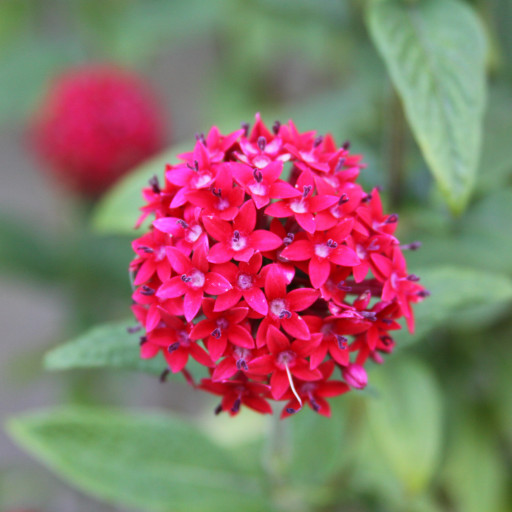
Plant Overview
Known affectionately as the Egyptian Starcluster, the Pentas lanceolata is a vibrant, sun-loving champion of the summer garden. Native to East Africa and Yemen, these plants are famous for their dense clusters of star-shaped blossoms that seem to sparkle against their lush green foliage. They are a top choice for gardeners who want to turn their backyard into a bustling airport for colorful pollinators.
🔍 How to Identify
- ⭐ The Flowers: Look for tight, rounded clusters (umbels) of small, five-petaled flowers. They typically come in brilliant shades of red, pink, lilac, and white.
- 🍃 The Foliage: The leaves are "lanceolate" (spear-shaped), featuring deep, prominent veins and a slightly fuzzy, dark green texture that feels soft to the touch.
- 🌿 Growth Habit: It grows as a woody-based subshrub, usually reaching about 2 to 3 feet in height, maintaining a neat, mounded shape that looks organized even when wild with blooms.
🏡 In Your Garden
- 🦋 The Pollinator Magnet: Pentas are one of the best nectar sources available. If you plant these, expect a daily parade of swallowtail butterflies and hummingbirds, as the deep tubes of the star-flowers are perfectly designed for their long tongues.
- ☀️ Heat Resilience: Unlike many flowering plants that wilt in the mid-summer "dog days," Pentas thrives in high heat and humidity. However, they are thirsty plants; because they work so hard to produce nectar and blooms, they require consistent moisture to prevent the lower leaves from yellowing.
- ✂️ Deadheading Nuance: To keep the "star show" going all season, pinch off the faded flower clusters. This signals the plant to divert its energy into new buds rather than seed production.
⚠️ Safety & Toxicity
- ✅ Pet & Child Friendly: Pentas lanceolata is generally considered non-toxic to dogs, cats, and humans.
- 🌱 Skin Sensitivity: While not poisonous, the fine hairs on the leaves can occasionally cause very mild skin irritation for people with highly sensitive skin during heavy pruning.
✨ Fun Fact
In the language of flowers, Pentas often symbolizes "successful struggle" because of its ability to bloom beautifully even in the harshest, most oppressive summer heat where other flowers fail.

Detailed Care Instructions
| Color | Red, Pink, Lavender, Or White |
| Soil Ph | Mildly Acidic |
| Humidity | Normal |
| Lighting | Full Sun |
| Soil Type | Fertile With Good Drainage |
| Bloom Time | Summer |
| Difficulty | Medium |
| Plant Type | Perennial |
| Mature Size | 24–36 Inches |
| Native Area | Africa |
| Temperature | 18°C - 25°C |
| Sun Exposure | Full Sun To Partial Shade |
| Hardiness Zones | 6–11 |
To grow Pentas Lanceolata (also known as Egyptian star cluster or Egyptian star flower), follow these steps:
- Choose the right location: Pentas requires full sun to part shade. Select an area in your garden or a pot where it can receive at least 4-6 hours of direct sunlight per day.
- Soil preparation: Pentas prefers well-draining soil. Amend heavy clay or compacted soil by adding organic matter like compost or well-rotted manure. Ensure the soil pH is around 6.0-7.5.
- Propagation: Pentas can be grown from seeds or cuttings.
- From seeds: Sow the seeds directly in the garden or seed trays in late winter or early spring. Cover them lightly with soil and keep the soil consistently moist. Seedlings should emerge within 7-14 days.
- From cuttings: Take 4-6 inch stem cuttings from an established plant. Remove the lower leaves and dip the cut end in rooting hormone. Plant the cuttings in moist potting soil and keep them in a warm, bright location. Ensure the soil remains moist until roots develop, which usually takes 3-6 weeks.
- Planting: If starting from seeds, thin the seedlings to allow 6-12 inches between each plant. If using cuttings, transplant them once roots have developed. Place them in the ground or pots, ensuring the soil is firm around the root ball. Water the plants well after planting.
- Watering and fertilizing: Provide regular water to keep the soil consistently moist but not soaking wet. Avoid overhead watering to prevent fungal diseases. Fertilize the plants every 4-6 weeks during the growing season with a balanced fertilizer or a slow-release granular fertilizer according to the package instructions.
- Pruning: Pinch back the growing tips of young plants to promote bushier growth and more flowers. Remove spent blooms to encourage continuous flowering and prevent the plant from going to seed. Cut back leggy or overgrown stems in late winter or early spring to rejuvenate the plant.
- Pest and disease control: Pentas is generally pest and disease resistant. However, keep an eye out for common garden pests like aphids, mealybugs, or spider mites. Treat infestations with insecticidal soap or neem oil according to the product instructions.
- Winter care: If you live in a frost-prone area, protect your Pentas from freezing temperatures. Move potted plants indoors or cover the garden plants with a frost cloth or mulch. Pentas can be prone to root rot in excessively cold and wet conditions, so ensure the soil is well-draining.
Following these steps should help you successfully grow Pentas Lanceolata and enjoy its beautiful clusters of star-shaped flowers.

Place in a bright room that is sun drenched almost all day. Or directly in a south-facing window.

To water this plant, you should first ensure that the soil is completely dry before watering. It is recommended to water deeply to encourage deeper root growth. You can either water the plant from the base or water the soil around the plant.
Another method is to submerge the entire pot or container in water for about 5-10 minutes, then allow the excess water to drain out. This method ensures that the soil absorbs water more evenly.
Finally, make sure not to overwater the plant as it can lead to root rot and other diseases. Check the soil moisture level regularly and adjust the watering accordingly.
To fertilize this plant, use a balanced fertilizer with equal parts of nitrogen, phosphorus, and potassium. Apply the fertilizer every month during the growing season, which is typically from spring to fall. Mix the fertilizer according to the packaging instructions and apply it directly to the soil around the base of the plant. Water the plant thoroughly after fertilization to help distribute the nutrients evenly. Avoid over-fertilizing, as this can lead to plant burn or nutrient deficiencies.
The ideal soil for Pentas Lanceolata should be well-draining and rich in organic matter. It is recommended to use a mixture of loamy soil, sand, and compost in a 1:1:1 ratio for optimum growth. The soil should have a pH level between 6.0 and 7.5, which is slightly acidic to neutral. The soil should also be able to retain moisture but not be waterlogged, as too much water can lead to root rot. It is also advisable to add some slow-release fertilizer to the soil before planting, to ensure adequate nutrients for the Pentas Lanceolata plant.
Pentas Lanceolata is a plant that can be propagated using a few different methods. One common method is by taking stem cuttings from an existing plant. To do this, select a stem that is healthy and mature, and cut it off just below a node (the point on the stem where leaves grow). Remove any leaves from the bottom half of the stem, and dip the cut end in rooting hormone powder. Plant the cutting in moist soil, and keep it in a warm, humid location until new growth appears.
Another way to propagate Pentas Lanceolata is by dividing an existing plant. This can be done by carefully digging up the plant and separating the roots into smaller sections. Each section should have several stems and a healthy root system. Replant the sections in moist soil, and water them well.
Finally, Pentas Lanceolata can also be grown from seed. To do this, collect seeds from an existing plant and sow them into moist soil. Keep the soil moist and warm until the seeds germinate and new growth appears.
Common pests of the egyptian starcluster include Spider mites, aphids, whiteflies. Make a habit of checking your egyptian starcluster frequently for pests so that any infestations can be caught and managed early.








