Plant Overview
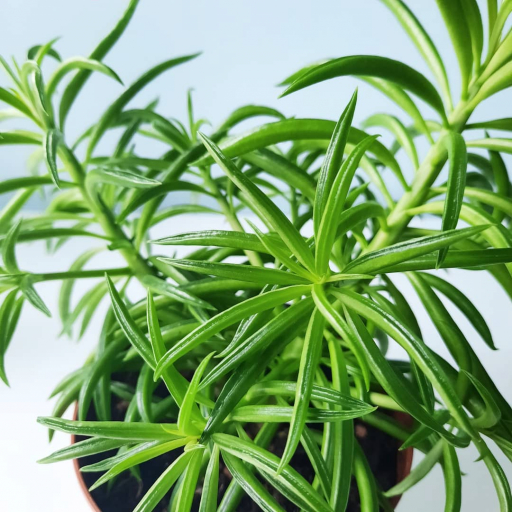
The Peperomia ferreyrae, affectionately known as the "Happy Bean" or "Pincushion Peperomia," looks more like a cluster of fresh snap peas than a traditional indoor plant. Hailing from the dry, rocky valleys of the Peruvian Andes, this semi-succulent is a master of disguise, blending the rugged survival skills of a desert plant with the compact, charming aesthetics of a tabletop companion. Its unique "bean" shape is actually a clever evolutionary tactic to conserve moisture in high-altitude environments.
🔍 How to Identify
- 🌱 Leaf Shape: The leaves are bright lime-green, fleshy, and elongated with a deep groove down the center, making them look exactly like green bean pods.
- 🪟 Epidermal Windows: Along the top of each "bean" is a translucent, darker green strip. This is a specialized window that allows sunlight to enter the interior of the leaf.
- 📏 Growth Habit: It typically grows in an upright, bushy fashion on thick, pale green stems, rarely exceeding 12 inches in height.
🏡 In Your Garden
- 💧 Drought Strategy: Because this Peperomia stores so much water in its leaves, it hates "wet feet." It is best to wait until the soil is almost entirely dry before watering, as the plant is highly susceptible to root rot if the soil remains soggy.
- ☀️ Lighting Nuance: While it craves bright light to keep its compact shape, the "windows" on its leaves can actually magnify intense direct sun, leading to leaf scorch. It performs best in bright, filtered light near a south or east-facing window.
⚠️ Safety & Toxicity
- ✅ Non-Toxic: The Peperomia ferreyrae is considered non-toxic and safe for homes with curious pets and children.
- 🌿 Gentle Nature: While it won't hurt your cat or dog if they take a nibble, the leaves are quite brittle and can snap off easily, so it is best kept on a high shelf to maintain its symmetry.
✨ Fun Fact
The translucent "windows" on the top of the leaves are a brilliant survival mechanism. In the wild, if the plant becomes partially covered by wind-blown sand or dust, it can still photosynthesize because the windows funnel light down to the chlorophyll-rich cells deep inside the leaf!

Detailed Care Instructions
| Color | Green Or Brown |
| Soil Ph | Slightly Acidic; 5.0 To 6.0 |
| Humidity | Normal |
| Lighting | Part Sun |
| Soil Type | Average Potting Soil To Rich Loam; Good Drainage |
| Bloom Time | Insignificant Blooms In Summer |
| Difficulty | Medium |
| Plant Type | Houseplant Or Tender Perennial |
| Hibernation | Cold Period |
| Mature Size | Six Inches Tall Trailing To Three Feet |
| Native Area | Mexico, South America, And West Indies |
| Temperature | 18°C - 24°C |
| Sun Exposure | Medium To Bright Light |
| Hardiness Zones | 10, 11, And 12 |
To grow a Peperomia Ferreyrae plant, here are some steps you can follow:
- Choose the right location: Place the plant in a spot that receives bright, indirect sunlight. Avoid direct sunlight as it can scorch the leaves.
- Optimal temperature: Keep the plant in a warm environment with temperatures between 65-80°F (18-27°C). Avoid exposing it to temperatures below 50°F (10°C).
- Watering: Water the plant thoroughly when the top inch of soil feels dry, but make sure to not overwater. Peperomias prefer slightly dry conditions, so allow the soil to dry out between watering sessions.
- Humidity: Peperomia Ferreyrae plants prefer moderate humidity levels. You can mist the leaves occasionally or place a tray with water near the plant to increase humidity.
- Soil: Use a well-draining potting mix that is rich in organic matter. Peperomia Ferreyrae plants like a mix of peat moss, perlite, and sand.
- Fertilizing: Feed the plant with a balanced, water-soluble fertilizer once a month during the growing season (spring and summer). Follow the label instructions for dosage.
- Pruning: Prune the plant to maintain its shape and remove any dead or yellowing leaves.
- Repotting: Repot the plant when it outgrows its current container. Use a pot that is only slightly larger and ensure it has drainage holes.
Remember, every plant is unique, and it's important to monitor your Peperomia Ferreyrae's specific needs and adjust care accordingly.

Place in a window with dappled sun or a spot in the middle of a room. Or directly in a window facing west or east.

Peperomia Ferreyrae plant should be watered once every two weeks. Before watering, make sure that the soil is completely dry to touch. When you water it, pour water slowly and make sure that the water does not accumulate in the soil. Do not water too much, as this plant is sensitive to overwatering. You can also mist the leaves occasionally to increase humidity around the plant.
To fertilize this plant, mix a balanced, water-soluble fertilizer at half strength. Apply the fertilizer once a month during the growing season, which typically runs from spring to early fall. Water the plant before applying the fertilizer to prevent roots from burning. Avoid over-fertilizing, as it can damage the plant.
For Peperomia Ferreyrae plant, it is recommended to use a well-draining soil mix that is rich in organic matter. The pH level of the soil should be slightly acidic to neutral.
A suitable soil mix for this plant could consist of a balanced mixture of peat moss, perlite, and coarse sand. These components will provide the plant with adequate drainage, aeration, and water retention, allowing the roots to grow healthily.
It is important to avoid using heavy, compacted soil, as this can lead to waterlogging and root rot. Additionally, the soil should not be too dense, as this can cause inadequate drainage and create an environment that is susceptible to disease.
Overall, the goal is to provide the Peperomia Ferreyrae plant with a soil mix that is light, porous, and well-draining, while also providing adequate support and nutrients for healthy growth.
- Decide on the method of propagation: Peperomia Ferreyrae can be propagated through leaf cutting or stem cutting.
- Choose a healthy mother plant: Select a mature Peperomia Ferreyrae plant that is healthy and disease-free. Avoid plants that show signs of pests, diseases, or stress.
- Prepare the equipment: Have a sharp, sterilized pair of scissors or pruning shears, a clean cutting surface, and a rooting hormone on hand.
- Take a stem or leaf cutting: For stem cutting, select a healthy stem with at least two nodes and cut it just below a node with a clean, sharp pair of scissors. For leaf cutting, select a mature leaf from the mother plant and cut it at the base, leaving a small stem. Make sure that the cutting is at least 2-3 inches long.
- Prepare the cutting for rooting: Dip the cuttings in rooting hormone powder to promote root growth. Let the hormone powder stick to the cut end of the stem or the leaf. Shake off excess powder.
- Prepare the rooting medium: Peperomia Ferreyrae prefers well-draining soil. Use a mix of perlite, sand, and peat moss or soilless mix as the rooting medium.
- Plant the cutting: Insert the stem cutting or the leaf cutting into the rooting medium and tamp it down gently. Keep the soil moist but not too wet.
- Provide appropriate conditions: Keep the cutting in bright, indirect light and protect it from direct sunlight. Maintain the humidity level around the plant by covering it with a plastic bag or placing it in a terrarium. Regularly water the cutting, but avoid overwatering.
- Wait for signs of growth: After about 4-6 weeks, roots should start to form. When new growth appears, it is a sign that the cutting has rooted and is ready to be potted up.
- Pot up the new plants: Once rooted, transplant the new plants to their own pots filled with well-draining soil. Keep the soil evenly moist but not too wet and continue to provide bright, indirect light.
Common pests of the pincushion peperomia include Mealybugs, fungus gnats. Make a habit of checking your pincushion peperomia frequently for pests so that any infestations can be caught and managed early.








