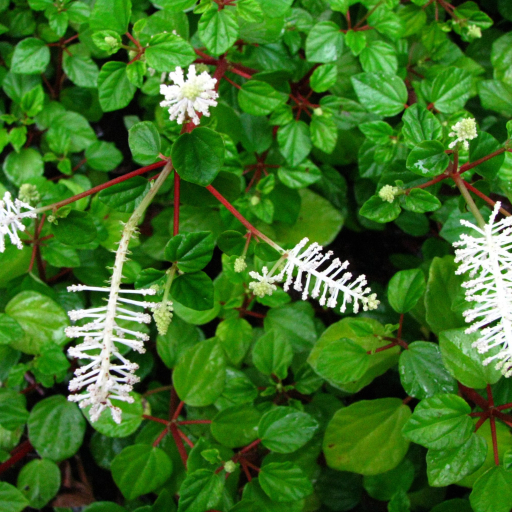
Plant Overview
Known as the Flowering Peperomia or Ivy Peperomia, this Ecuadorian gem breaks the mold of its plant family. While most Peperomias are grown strictly for their foliage, Peperomia fraseri is famous for its striking, bottle-brush white flowers that tower above its leaves like tiny birthday candles. It’s a sophisticated addition for those who love the "succulent-lite" lifestyle of Peperomias but want a bit of floral drama.
🔍 How to Identify
- 🍃 The Foliage: Small, heart-shaped (cordate) leaves with a deep emerald green hue and a slightly rippled, quilted texture.
- 🕯️ The Blooms: Tall, upright spikes (inflorescences) that are densely packed with tiny, fragrant white flowers, resembling a miniature candelabra.
- 🔴 The Stems: Look closely at the base; the plant features reddish-tinted stems that provide a beautiful contrast to the dark green leaves.
🏡 In Your Garden
- 💧 Storage Strategy: Because the leaves are semi-succulent, this plant is an expert at storing water. It hates "wet feet," so the most common mistake is overwatering; let the soil dry out significantly before giving it a drink.
- ☀️ Light for Blooms: While many of its cousins thrive in low light, Peperomia fraseri needs bright, indirect light to produce those signature white spires. If it stays too dark, it will remain a leafy bush without ever flowering.
- 🪴 Humidity Lover: Originating from the cloud forests of the Andes, it appreciates a bit more humidity than your average succulent, making it a perfect candidate for a well-lit bathroom or a terrarium.
⚠️ Safety & Toxicity
- 🛡️ Pet Friendly: Like most members of the Peperomia family, this plant is considered non-toxic to cats, dogs, and horses.
- 👶 Kid Safe: It is generally safe for households with curious children, though the delicate flower spikes can be easily snapped off if handled roughly.
✨ Fun Fact
Despite its delicate, ornamental look, Peperomia fraseri is a distant relative of the plant that produces black peppercorns (Piper nigrum). If you crush a leaf, you might catch a very faint, spicy scent!

Detailed Care Instructions
To grow Peperomia Fraseri plant, follow these steps:
- Choose a healthy plant: Select a small, well-established plant from a reputable nursery or garden center.
- Pot selection: Use a well-draining pot with a size appropriate for the size of the plant. Ensure the pot has drainage holes.
- Potting mixture: Use a well-draining potting mix that consists of a blend of peat moss, perlite, and/or vermiculite. This will provide moisture retention while allowing excess water to drain.
- Planting: Carefully remove the plant from its current pot and gently loosen the roots. Place it in the new pot and fill in with the potting mix, ensuring it is firmly in place.
- Light requirements: Peperomia Fraseri prefers bright but indirect light. Place it near a window where it can receive filtered sunlight or provide fluorescent lighting if natural light is not sufficient.
- Temperature and humidity: Peperomia Fraseri thrives in average room temperatures of around 65-75°F (18-24°C). Maintain humidity levels of around 40-50% to provide ideal conditions.
- Watering: Water the plant when the top inch of soil feels dry. Avoid overwatering or letting the plant sit in standing water, as this can cause root rot. Allow excess water to drain from the pot.
- Fertilizing: Use a balanced liquid fertilizer every 3-4 weeks during the growing season (spring and summer). Dilute the fertilizer according to the instructions on the packaging.
- Pruning: Trim off any yellow or damaged leaves to maintain the plant's appearance. Pinching back the stems can help encourage bushier growth.
- Propagation: Peperomia Fraseri can be propagated through stem cuttings. Simply take a cutting from a healthy stem, remove the lower leaves, and place it in a small pot with moist potting mix. Keep the soil consistently moist until the cutting establishes roots.
- Pest control: Monitor the plant for signs of pests like mealybugs or spider mites. If detected, treat them immediately using an appropriate insecticidal spray or soap.
Following these steps should help you successfully grow and care for your Peperomia Fraseri plant.

Place in a dark room with little light, like a dark bedroom or a spot far away from a window or directly in a north-facing window.

To water the plant commonly referred to as Peperomia Fraseri, you should first determine the moisture level of the soil by using a moisture meter or by inserting your finger into the soil up to the second knuckle. If the soil feels dry, it's time to water the plant.
Water the plant slowly and carefully, ensuring that the water is distributed evenly throughout the soil and doesn't pool on the surface or run off the sides of the pot. Allow the soil to drain completely before returning the plant to its normal location.
It's important not to overwater this plant, as it can be susceptible to root rot if left sitting in waterlogged soil for too long. As a general rule, water the Peperomia Fraseri plant only when the top inch of soil feels dry to the touch.
It's also a good idea to mist the leaves of the plant occasionally, as this can help increase humidity levels around the plant and prevent it from drying out. Avoid spraying the leaves directly, as this can cause water spots or damage to the foliage.
To fertilize your Peperomia Fraseri plant, follow these instructions:
- Choose a balanced, water-soluble fertilizer suitable for houseplants. Look for a fertilizer with equal proportions of nitrogen (N), phosphorus (P), and potassium (K).
- Dilute the fertilizer according to the package instructions. Typically, a concentration of ½ to ⅓ of the recommended strength is appropriate for Peperomia Fraseri.
- Water the plant thoroughly before applying fertilizer. This helps prevent root burn and allows nutrients to absorb effectively.
- Pour the diluted fertilizer solution evenly onto the soil around the base of the plant. Avoid directly applying it to the leaves or stems.
- Ensure that the excess fertilizer drains out from the bottom of the pot. Do not let the plant sit in standing water.
- Avoid fertilizing your Peperomia Fraseri during the winter months when the plant is often in a dormant phase.
- Repeat the fertilization process every 4 to 6 weeks during the active growing season (usually spring and summer). However, be cautious not to over-fertilize, as it may lead to nutrient buildup.
- Regularly monitor the plant for signs of nutrient deficiency or excess. Adjust the fertilization frequency or concentration accordingly based on the plant's response.
Remember to always follow the specific instructions provided with the fertilizer you choose, as different brands might have varying application rates.
Peperomia Fraseri plant prefers well-draining soil with a pH range of 6.0 to 7.0. It does best in soil that is rich in organic matter. A good soil mix for this plant can be made by combining equal parts of peat moss, perlite, and coarse sand. This ensures good drainage and aeration for the roots while also holding moisture to prevent drying out. It's best to avoid heavy, clay-like soils or those that retain water for too long, as this can lead to root rot. You can also mix in some slow-release fertilizer pellets into the soil to provide the plant with nutrients over time.
Peperomia Fraseri is a type of plant that can be easily propagated through various methods. Here is a detailed guide on how to propagate this plant:
- Select a healthy parent plant: Look for a mature and healthy Peperomia Fraseri plant with strong stems and vibrant foliage. It is important to choose a parent plant that is disease-free and free from any pests.
- Choose a suitable propagation method: There are several methods that can be used to propagate Peperomia Fraseri, including stem cuttings, leaf cuttings, and division.
- Stem cuttings: This is the most common and easiest method of propagation. Select a healthy stem, preferably with at least two leaf nodes present. Using a sterilized and sharp knife or scissors, make a clean cut just below a leaf node. The cutting should be around 3-5 inches long. Remove the lower leaves and place the cutting in a glass of water or a well-draining potting mix. Ensure that at least one leaf node is submerged or buried in the soil.
- Leaf cuttings: This method is suitable for Peperomia Fraseri with succulent leaves. Select a healthy leaf and cut it into sections, with each section containing a vein. Place the leaf sections on a well-draining potting mix, ensuring that the veins are in contact with the soil. Gently press the soil around the leaf sections to secure them in place.
- Division: This method involves separating the parent plant into smaller sections. Carefully remove the plant from its pot and gently separate the rootball into individual sections, ensuring that each section has roots and foliage. Plant these sections in separate pots with well-draining soil.
- Provide optimal growing conditions: Once you have planted the cuttings or divisions, ensure they are placed in an area with bright, indirect sunlight. Peperomia Fraseri prefers temperatures between 60-75°F (15-24°C). Maintain moderate humidity levels, as excess moisture can cause root rot. Water the cuttings or divisions when the top inch of soil feels dry, being careful not to overwater. Avoid exposing the new plants to direct sunlight, as it may cause leaf burn.
- Maintain proper care: As the new plants establish their root systems, it is essential to provide them with proper care. Fertilize them with a balanced liquid fertilizer every 2-4 weeks during the growing season. Regularly monitor for pests such as mealybugs or spider mites, and treat them promptly if needed. Prune any leggy or unhealthy growth to encourage bushier and more compact growth.
By following these steps, you can successfully propagate Peperomia Fraseri and expand your collection of these beautiful plants.
Common pests of the mignonette peperomia include Mealybugs, fungus gnats. Make a habit of checking your mignonette peperomia frequently for pests so that any infestations can be caught and managed early.








