Plant Overview
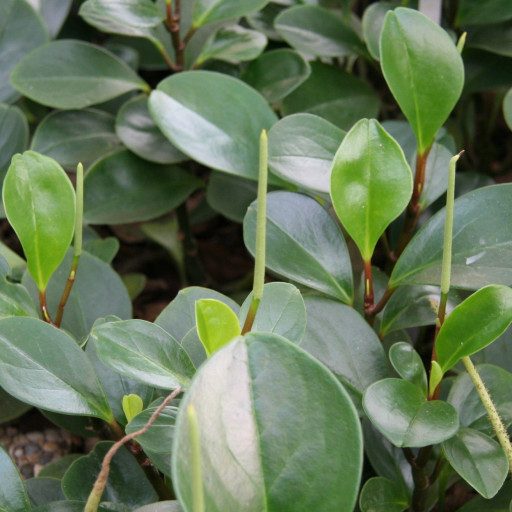
The Peperomia Magnoliifolia, widely known as the "Spoonleaf Peperomia," is a lush tropical gem native to the Caribbean and Central America. Often mistaken for its cousin, the Baby Rubber Plant, this species is named for its thick, glossy leaves that mimic the foliage of a Magnolia tree. It is a sturdy, low-maintenance companion that brings a sense of calm and structure to any indoor plant collection.
🔍 How to Identify
- 🍃 The Leaves: Look for thick, waxy, and succulent-like leaves that are broadly ovate or "spoon-shaped." They have a deep, vibrant green color with a polished sheen.
- 🌿 Growth Habit: It features a compact, upright growth pattern with stout, fleshy stems that can store water, making the plant feel sturdy to the touch.
- 🌾 Spike Flowers: Like most Peperomias, its "flowers" aren't traditional blooms but rather curious, greenish-white spikes that resemble rat tails or tiny wands.
🏡 In Your Garden
- ☁️ Humidity & Water: Because it is semi-succulent, it prefers its soil to dry out significantly between waterings; however, it appreciates a boost in ambient humidity to mimic its rainforest origins.
- 🪴 Small Root Systems: This plant has a very shallow root system and thrives when kept in smaller pots. It hates being over-potted, as excess soil holds too much moisture, leading to root rot.
- ☀️ Light Preferences: It performs best in bright, filtered light. If the leaves start to lose their deep green luster or stretch out, it’s likely asking for a bit more sunshine.
⚠️ Safety & Toxicity
- 🐾 Pet Friendly: You can breathe a sigh of relief! This plant is listed as non-toxic to both cats and dogs, making it an excellent choice for pet-friendly households.
- 👶 Safe for Humans: It is generally considered safe and non-irritating, though it is always wise to keep decorative plants out of reach of curious toddlers to avoid choking hazards.
✨ Fun Fact
In its natural habitat, the Spoonleaf Peperomia is often epiphytic, meaning it can be found growing in the mossy crooks of trees or on rocky outcroppings rather than in the ground soil!

Detailed Care Instructions
| Soil Ph | 6-6.6 |
| Humidity | Normal |
| Lighting | Part Sun |
| Soil Type | Well Draining |
| Difficulty | Medium |
| Plant Type | Herbaceous Perennial |
| Native Area | Tropical And Subtropical Regions Of Central And South America |
| Temperature | 18°C - 26°C |
| Sun Exposure | Full Sun, Partial Shade |
| Hardiness Zones | 10-12 |
To grow a Peperomia Magnoliifolia plant, you can follow these steps:
- Choose the right location: Peperomia Magnoliifolia prefers bright, indirect sunlight. Place the plant near a window where it can receive filtered light throughout the day. Direct sunlight can scorch the leaves, so it's best to avoid this.
- Pick the right pot: Select a well-draining pot with drainage holes to prevent waterlogging. A pot with a diameter slightly larger than the plant's root ball is suitable. Peperomias prefer to be slightly root-bound, so avoid using a pot that is too large.
- Use well-draining soil: Peperomias thrive in a well-draining, slightly acidic soil mix. You can mix perlite or sand with regular potting soil to improve drainage. Avoid using heavy soils that retain water.
- Water properly: Water your Peperomia Magnoliifolia plant when the top inch of soil feels dry. Overwatering can lead to root rot, while underwatering can dry out the plant. Strike a balance by observing the moisture level in the soil.
- Maintain humidity: Peperomias prefer higher humidity, but they can tolerate normal household humidity levels. You can increase humidity by placing a pebble tray filled with water near the plant or using a humidifier.
- Provide moderate temperatures: Peperomias prefer temperatures between 65-75°F (18-24°C). Avoid exposing the plant to extreme cold or hot temperatures, as it can adversely affect its growth.
- Fertilize occasionally: Peperomia Magnoliifolia does not require frequent fertilization. You can use a balanced, water-soluble fertilizer and apply it sparingly once every month during the growing season (spring and summer). Follow the instructions on the fertilizer package for accurate dosage.
- Prune if needed: Regularly inspect the plant for any dead, yellowing, or damaged leaves. Prune them off using clean, sharp scissors or pruning shears. This will prevent the plant from wasting energy on unhealthy foliage and encourage new growth.
- Propagate if desired: If you want to propagate your Peperomia Magnoliifolia, you can do so through stem or leaf cuttings. Take a cutting with a node and place it in moist soil or water until roots develop. Then, transfer it to a pot with well-draining soil.
By following these steps, you can successfully grow and care for your Peperomia Magnoliifolia plant.

Place in a window with dappled sun or a spot in the middle of a room. Or directly in a window facing west or east.

To water this plant, it is important to carefully observe the soil moisture level. It is recommended to check the soil every 2-3 days and only water when the top 1-2 inches of soil are dry to the touch. When watering, pour water into the soil directly and avoid getting water on the leaves as this can cause damage or encourage fungal growth. It is also important to avoid overwatering as this can lead to root rot. It may be helpful to use a pot with drainage holes and consider using a well-draining soil mix.
To fertilize this plant, it is recommended to use a well-balanced fertilizer with an N-P-K ratio of 20-20-20. In the growing season, which is typically from spring to summer, fertilize the plant every two weeks. During the dormant season, which is usually from fall to winter, reduce fertilization to once a month. Dilute the fertilizer according to the package instructions and apply it to the soil around the base of the plant. Be sure not to over-fertilize as this can lead to burning and damage to the plant's roots.
Peperomia Magnoliifolia requires a well-draining soil with good aeration. It prefers a soil that is slightly acidic with a pH range of 5.5-6.5. A soil mix with high organic matter, such as peat moss or compost, is ideal. This will provide the necessary nutrients and moisture retention for the plant without becoming waterlogged. A mix that includes perlite, vermiculite, or pumice will also increase drainage and air circulation. Avoid using heavy soils or those with excessive amounts of sand, as they can cause drainage issues. A balanced fertilizer can be added to the soil mix before planting to ensure healthy growth.
Propagation of this plant can be done through leaf cuttings or stem cuttings. For leaf cuttings, take a healthy leaf from the plant and remove it from the stem, making sure to include a portion of the stem. Allow the leaf to dry for a few hours, then dip the cut end in rooting hormone and place it in a pot with well-draining soil. Keep the soil moist, but not waterlogged, and place the pot in a bright, indirect light until roots develop.
For stem cuttings, take a healthy stem from the plant and make a clean cut at a 45-degree angle. Remove any leaves from the bottom half of the stem and dip the cut end in rooting hormone. Place the stem in a pot with well-draining soil and keep the soil moist, but not waterlogged. Place the pot in a bright, indirect light until roots develop.
Common pests of the spoonleaf peperomia include Mealybugs, fungus gnats. Make a habit of checking your spoonleaf peperomia frequently for pests so that any infestations can be caught and managed early.








