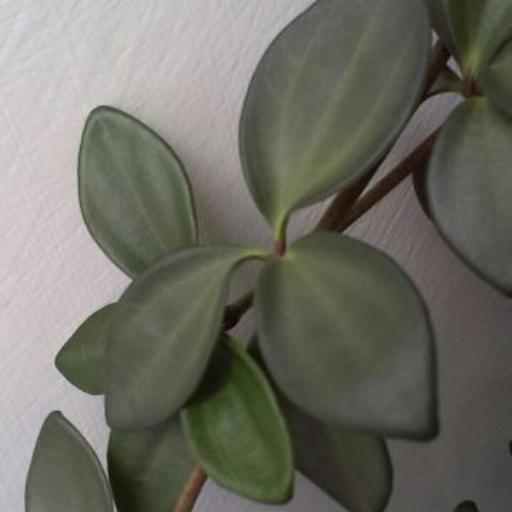
Plant Overview
Often called the Red-edged Peperomia, this South American native is a charming contradiction—it looks like a delicate tropical plant but possesses the "tough-as-nails" resilience of a succulent. Found naturally crawling through the understory of Brazilian forests, it has become a favorite for indoor gardeners who want a lush, leafy look without the high-maintenance drama of a fern.
🔍 How to Identify
- 🍃 Leaf Arrangement: Unlike many plants that grow leaves in pairs, this species features leaves arranged in "whorls," meaning groups of three or four leaves emerge from the same point on the stem.
- 📏 The Shape: The leaves are distinctively elliptic and pointed at the tips, with a thick, waxy texture that feels firm to the touch.
- 🎨 Stem Color: Keep an eye out for the stems; they often sport a beautiful reddish-maroon hue that contrasts sharply against the deep green foliage.
- 🐭 The "Rat-tail" Bloom: Like its cousins, it produces "inflorescences" that look like thin, greenish spikes or mouse tails rather than traditional colorful flowers.
🏡 In Your Garden
- 🪴 The Epiphytic Edge: In the wild, these plants often grow on trees rather than in deep soil. This means they have very shallow root systems; they prefer "snug" pots and will suffer quickly if planted in a container that is too large, as the extra soil stays wet for too long and rots the roots.
- 🌥️ Light & Texture: While it loves bright, filtered light, its thick leaves allow it to store water efficiently. It is much more likely to die from "kindness" (overwatering) than from a bit of neglect. If the leaves feel soft or bendy, it's thirsty; if they are firm, it's happy.
⚠️ Safety & Toxicity
- ✅ Pet Friendly: Good news for pet parents! Peperomia pereskiifolia is generally considered non-toxic to both cats and dogs.
- 👶 Human Safety: It is non-poisonous to humans as well. However, like any houseplant, it’s best kept out of reach of curious toddlers to avoid a choking hazard or an upset stomach from ingesting plant fibers.
✨ Fun Fact
Even though it doesn't look like it, this plant is a distant relative of the plant that gives us black pepper (Piper nigrum)! While you can't grind these leaves over your dinner, they share the same botanical family, Piperaceae.

Detailed Care Instructions
To grow a Peperomia Pereskiifolia plant, follow these steps:
- Choose a suitable location: Peperomia Pereskiifolia plants prefer bright, indirect light. Place them near a window that receives filtered sunlight or in a well-lit spot indoors. Avoid placing them in direct sunlight to prevent leaf burn.
- Provide the right temperature: These plants thrive in average room temperatures between 60-75°F (15-24°C). Avoid exposing them to extreme temperature fluctuations or cold drafts.
- Select a well-draining pot: Choose a pot with drainage holes to prevent waterlogging. It should be slightly larger than the current root ball of the plant.
- Use well-draining soil: Peperomia Pereskiifolia plants require well-draining soil. You can use a mixture of potting soil, perlite, and peat moss or purchase a commercially-made potting mix suitable for indoor plants.
- Watering: Water your plant when the top inch of soil is dry. Peperomia plants prefer slightly moist soil but are prone to root rot if overwatered. Avoid waterlogging or letting the plant sit in standing water. It is better to underwater than to overwater.
- Fertilize: Apply a balanced liquid fertilizer once a month during the growing season (spring and summer). Follow the instructions on the fertilizer packaging for proper dilution and application.
- Pruning: Peperomia Pereskiifolia plants have a bushy growth habit and benefit from occasional pruning to maintain their shape and encourage branching. Use clean, sharp scissors or pruning shears to remove any yellow or damaged leaves and to trim back leggy stems.
- Propagation: Peperomia Pereskiifolia plants can be propagated through stem cuttings. Take a cutting with at least two leaves and place it in a small pot filled with moist, well-draining soil. Keep the soil consistently moist until roots develop, usually within a few weeks.
- Re-potting: As your Peperomia Pereskiifolia plant grows, you may need to re-pot it into a larger container. Ideally, re-pot in the spring or summer when the plant is actively growing. Choose a pot only slightly larger to maintain a cozy root system. Fill the new pot with fresh, well-draining soil and carefully transfer the plant, ensuring the roots are covered.
- Monitor for pests: Occasionally, Peperomia Pereskiifolia plants can be affected by pests such as mealybugs and spider mites. Regularly inspect the plant for signs of infestation, such as webbing, damage, or sticky residue on the leaves. If you notice any pests, treat them accordingly using insecticidal soap or a natural remedy.
By following these steps, you can successfully grow and care for your Peperomia Pereskiifolia plant.

Place in a window with dappled sun or a spot in the middle of a room. Or directly in a window facing west or east.

To water this plant, first check the moisture level of the soil by inserting your finger about an inch deep into the soil. If it feels dry, then it is time to water. Use room temperature water and pour it slowly onto the soil until it starts to drain out of the bottom of the pot. Wait until the soil is completely dry before watering again, as over-watering can cause root rot. It is best to water early in the day to allow any excess moisture to evaporate before nighttime.
To fertilize your Peperomia Pereskiifolia plant, here are some instructions:
- Choose a balanced, water-soluble fertilizer with an NPK ratio of 20-20-20. This means it contains equal parts of nitrogen (N), phosphorus (P), and potassium (K), providing essential nutrients for the plant's overall growth.
- Dilute the fertilizer as instructed on the packaging. Usually, it is recommended to mix 1 tablespoon (15 ml) of fertilizer per gallon (3.8 liters) of water. Adjust the ratio accordingly if you have a smaller container.
- Apply the diluted fertilizer to the plant's soil. Slowly pour the mixture around the base of the plant, ensuring even distribution. Avoid getting any fertilizer on the foliage or flowers, as it may cause burns.
- After fertilizing, thoroughly water the plant to ensure the nutrients are absorbed into the soil.
- Repeat the fertilization process every four weeks during the growing season, which typically occurs from spring to summer. Reduce fertilization frequency to once every two months during the fall and winter when the plant tends to be less active.
- Monitor your plant for signs of over-fertilization, such as burnt or yellowing leaves, and adjust the fertilization amount or frequency accordingly. It's generally better to under-fertilize than over-fertilize to avoid damaging the plant.
Remember to always read the specific instructions on the fertilizer packaging and adjust accordingly for your Peperomia Pereskiifolia plant's needs. Regular fertilization, along with proper care and light conditions, will help promote healthy growth and vibrant foliage.
Peperomia Pereskiifolia plant prefers a moist, well-draining soil that is rich in organic matter. A recommended soil mix for this plant would include equal parts peat moss, perlite, and sand. The peat moss provides nutrients and water retention, while the perlite and sand improve drainage and aeration. A slightly acidic soil pH of 5.5 to 6.5 is also ideal for this plant.
It is important to avoid using heavy, clay-like soils that can hold too much moisture and lead to root rot. Additionally, using a pot with drainage holes will help ensure proper drainage and prevent the soil from becoming too waterlogged.
Regular fertilization with a balanced, water-soluble fertilizer can also help promote healthy growth and foliage.
Peperomia Pereskiifolia is a popular, low-maintenance houseplant that can be easily propagated through several methods. Here is a detailed guide on how to propagate Peperomia Pereskiifolia:
- Choose a healthy parent plant: Look for a mature and healthy Peperomia Pereskiifolia plant to use as a parent for propagation. Ensure that the plant is disease-free and has no signs of pests.
- Select a propagation method: Peperomia Pereskiifolia can be propagated through various methods, including stem cuttings, leaf cuttings, and division. Choose the method that suits you best or experiment with a few different methods to increase your chances of success.
- Sterilize your tools: Before you begin, it is important to sterilize your cutting tools to prevent the transfer of any diseases or fungi. Use rubbing alcohol or a diluted bleach solution to sterilize your knife or scissors.
- Stem cutting propagation:
a. Identify a healthy stem: Look for a stem on the parent plant that has multiple leaves on it. Ensure that it is free from any damage or diseases.
b. Cut the stem: Using sterilized tools, cut a stem just below a leaf node. A leaf node is where a leaf emerges from the stem.
c. Remove lower leaves: Trim away the lower leaves, leaving only a couple of leaves at the top of the stem.
d. Prepare a rooting medium: Fill a small pot or tray with a mixture of well-draining soil or a combination of peat moss and perlite. Moisten the soil lightly.
e. Plant the cutting: Create a small hole in the soil and gently insert the stem cutting, ensuring that at least one leaf node is buried in the soil.
f. Provide ideal conditions: Place the pot or tray in a warm spot with bright, indirect light. Maintain a humid environment by covering the cutting with a plastic bag or placing it inside a propagator. Mist the cutting occasionally to increase humidity.
g. Wait for roots to develop: It can take a few weeks for the cutting to develop roots. Keep an eye on the soil moisture and ensure it doesn't dry out completely.
h. Transplant into a new pot: Once the cutting has developed a healthy root system, carefully transplant it into a new pot with well-draining soil.
- Leaf cutting propagation:
a. Select a healthy leaf: Choose a mature, healthy leaf from the parent plant. Make sure the leaf is free from any damage or diseases.
b. Cut the leaf: Using a sterilized knife or scissors, cut the leaf as close to the stem as possible. Ensure that you have a clean cut without any frayed edges.
c. Prepare a rooting medium: Fill a small pot or tray with a mixture of well-draining soil or a combination of peat moss and perlite. Moisten the soil lightly.
d. Plant the leaf cutting: Insert the base of the leaf cutting into the soil, burying it about an inch deep. Make sure the whole leaf is above the soil surface.
e. Provide ideal conditions: Place the pot or tray in a warm spot with bright, indirect light. Maintain a humid environment by covering the cutting with a plastic bag or placing it inside a propagator. Mist the cutting occasionally to increase humidity.
f. Wait for plantlets to form: Over time, small plantlets will start to grow from the base of the leaf cutting. These plantlets will develop roots and eventually form a new Peperomia Pereskiifolia plant.
g. Transplant the new plant: Once the plantlets have developed a sufficient root system, carefully separate them from the parent leaf and transplant them into individual pots with well-draining soil.
- Division:
a. Remove the parent plant from its pot: Gently remove the parent plant from its pot and carefully separate the roots into multiple sections. Ensure each section has healthy roots and foliage.
b. Plant the divided sections: Plant each divided section in a separate pot, making sure they are potted at the same depth as before.
c. Provide ideal conditions: Place the pots in a warm spot with bright, indirect light. Water the divided sections appropriately, ensuring the soil remains consistently moist but not waterlogged.
d. Wait for new growth: Over time, the divided sections will develop new growth, indicating successful propagation.
By following these propagation methods, you can easily multiply your Peperomia Pereskiifolia plant and enjoy its beauty in various areas of your home or share it with fellow plant lovers.
Common pests of the peperomia include Mealybugs, fungus gnats. Make a habit of checking your peperomia frequently for pests so that any infestations can be caught and managed early.








