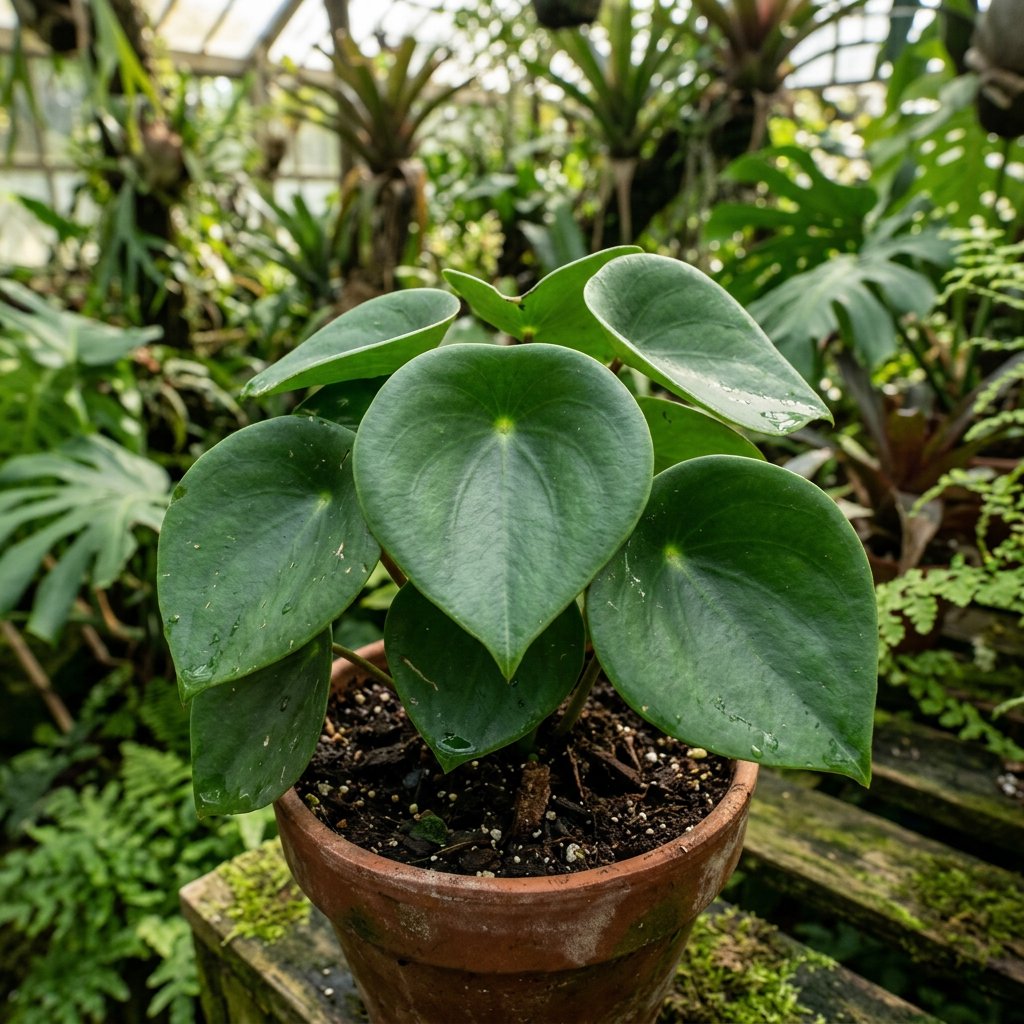
Plant Overview
Meet the Peperomia polybotrya, affectionately known as the "Raindrop Peperomia" due to its lush, teardrop-shaped foliage. Native to the tropical forests of South America, this plant is a favorite for indoor gardeners who want the aesthetic of a large tropical plant in a compact, manageable size. While it is often mistaken for the famous Chinese Money Plant, the Raindrop offers a sturdier, glossier, and more architectural presence.
🔍 How to Identify
- 💧 Leaf Shape: The most striking feature is its thick, succulent-like leaves that are broad at the base and taper to a distinct point, mimicking the shape of a falling raindrop.
- ✨ Surface Texture: The leaves have a deep emerald green color with a waxy, high-gloss finish that reflects light, making the plant appear perpetually polished.
- 🐭 The "Mouse Tail" Blooms: During the growing season, it sends up unique, greenish-white flower spikes that look like thin, upright tails rather than traditional petals.
🏡 In Your Garden
- ☁️ Indirect Light Specialist: In its natural habitat, this plant grows on the forest floor under a canopy. It thrives in bright, filtered light; direct afternoon sun will quickly scorch and "bleach" its beautiful dark green leaves.
- 🥤 Succulent Tendencies: Because its leaves are thick and store water, the Raindrop is prone to "edema" or root rot if overwatered. It is best to wait until the soil is almost dry and the leaves feel slightly flexible before giving it a soak.
- 🌡️ Temperature Sensitive: It is a true tropical soul. It hates cold drafts and will drop its leaves in protest if placed near an air conditioner or a drafty winter window.
⚠️ Safety & Toxicity
- 🐾 Pet Friendly: One of the best features of the Peperomia family is its safety profile. This plant is non-toxic to cats and dogs, making it an ideal choice for pet owners.
- 👶 Kid-Safe: It is generally non-irritating to humans, though it is always wise to keep any houseplant out of reach of curious toddlers to prevent accidental choking or plant damage.
✨ Fun Fact
The Peperomia polybotrya is often used in "Feng Shui" practices. Because of its heart-like shape and vibrant green color, it is believed by some to radiate positive energy and "wood" element vibes, symbolizing growth and renewal within the home.

Detailed Care Instructions
| Soil Ph | 6-6.6 |
| Humidity | Normal |
| Lighting | Part Sun |
| Soil Type | Loamy, Medium Moisture, Well-Draining |
| Difficulty | Easy |
| Plant Type | Herbaceous Perennial |
| Hibernation | Cold Period |
| Mature Size | Less Than 1 Foot Tall And Wide |
| Native Area | Tropical And Subtropical Regions Of Central And South America |
| Temperature | 18°C - 25°C |
| Sun Exposure | Part Shade |
| Hardiness Zones | 10-12 |
To grow a Peperomia Polybotrya plant, also known as a Coin Leaf Peperomia or Raindrop Peperomia, you can follow these steps:
- Lighting: The plant thrives in bright, indirect light. Place it near a window that receives filtered sunlight or in a spot with bright, indirect light.
- Temperature: Keep the plant in a warm environment with temperatures ranging between 65°F to 80°F (18°C to 27°C). Avoid exposing it to cold drafts or extreme temperature fluctuations.
- Watering: Allow the top inch of soil to dry out before watering. Overwatering can cause root rot, so it's important to maintain a proper watering schedule. Water the plant thoroughly and let the excess water drain away.
- Humidity: Peperomia Polybotrya prefers moderate to high humidity levels. You can increase humidity around the plant by placing a tray of water nearby or using a humidifier.
- Soil: Plant the Peperomia Polybotrya in well-draining soil. A mixture of peat moss, perlite, and coco coir is a good option. Avoid using heavy or compacted soil.
- Fertilizer: Feed the plant with a balanced, water-soluble fertilizer once a month during the growing season (spring and summer). Follow the instructions on the fertilizer package for dosage.
- Repotting: Peperomia Polybotrya typically doesn't require frequent repotting. However, if the plant outgrows its current pot and becomes root-bound, you can repot it into a slightly larger container using fresh potting soil.
- Pruning: Trim any yellow or dead leaves using clean, sharp scissors. Regular pruning will help maintain the plant's compact shape and encourage new growth.
- Propagation: You can propagate the Peperomia Polybotrya through stem cuttings or leaf cuttings. Take a healthy cutting and plant it in a small pot with moist soil. Keep the cutting warm and provide indirect light until it develops roots.
- Pest control: Monitor the plant regularly for pests such as mealybugs or spider mites. If you notice any infestation, use an appropriate insecticidal soap or horticultural oil to treat the plant.
By following these care instructions, your Peperomia Polybotrya should grow and thrive. Remember to adjust the care routine based on your specific environmental conditions and the plant's needs.

Place in a window with dappled sun or a spot in the middle of a room. Or directly in a window facing west or east.

To water this plant, first prepare a watering can or jug filled with room temperature water. Check the soil with your finger to make sure it is dry to the touch at a depth of about an inch. Slowly pour the water around the base of the plant, making sure to avoid getting water on the leaves. Keep pouring until water starts to drip out the bottom of the pot, indicating that the soil is thoroughly saturated. Allow any excess water to drain and then empty the saucer under the pot. Wait until the top inch of soil has dried out before watering again.
To fertilize this plant, dilute a balanced liquid fertilizer to half strength and feed every two weeks during the growing season (spring and summer). During the fall and winter, limit fertilizing to once a month. Avoid over-fertilizing as it can cause damage to the roots.
For Peperomia Polybotrya plant, it is ideal to use well-draining soil that retains moisture but also allows excess water to drain out. A good soil mix should include a combination of organic materials such as peat moss, coconut coir, or compost, along with perlite, pumice, or sand for added drainage. It is important to avoid using heavy soils or those that retain moisture for too long, as this can cause root rot and other issues. Depending on the size of the pot or container, the soil mix should be slightly porous but firm enough to support the plant and allow healthy root growth. Additionally, regular fertilization and proper watering practices can also help keep the Peperomia Polybotrya plant healthy and thriving.
To propagate this plant, you will need:
- A healthy Peperomia Polybotrya plant from which to take cuttings
- Clean, sharp scissors or pruners
- A small container filled with a well-draining soil mix
- Optional: rooting hormone powder or liquid
Steps: - Select a healthy stem with several leaves from the Peperomia Polybotrya plant.
- Using clean, sharp scissors or pruners, cut the stem just below a node (the point where leaves attach to the stem).
- Remove the lower leaves from the stem, leaving only a few at the top.
- If using rooting hormone, dip the cut end of the stem into the powder or liquid according to the package instructions.
- Plant the cutting into a small container filled with a well-draining soil mix, leaving the top few leaves exposed above the soil.
- Water the soil thoroughly and place the container in a bright, indirect light. Avoid direct sunlight, as it may scorch the young plant.
- Keep the soil moist but not waterlogged, and avoid letting the soil dry out completely.
- After a few weeks, new growth should appear on the cutting, indicating that roots have formed and it has successfully propagated.
Common pests of the coin leaf peperomia include Mealybugs, fungus gnats. Make a habit of checking your coin leaf peperomia frequently for pests so that any infestations can be caught and managed early.








