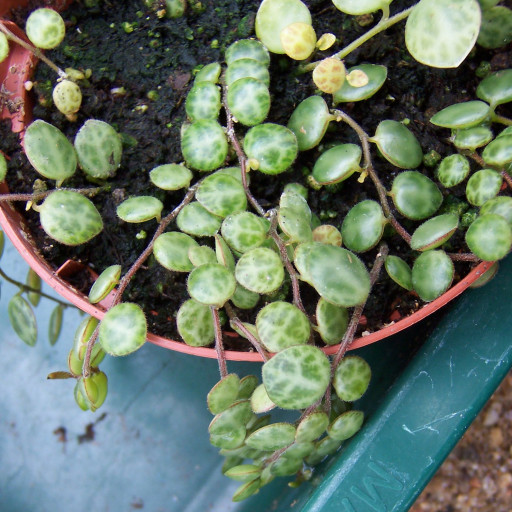
Plant Overview
Known affectionately as the String of Turtles, this Brazilian native is a miniature masterpiece of the rainforest floor. It earned its nickname from its tiny, succulent-like leaves that perfectly mimic the intricate patterns of a turtle's shell. While it looks like a desert succulent, it is actually a tropical vining plant that loves moisture and dappled light, making it a favorite for terrariums and hanging baskets.
🔍 How to Identify
- 🐢 The Leaves: Small, fleshy, and perfectly circular (coin-shaped). They feature a distinct marbled pattern of dark green and silvery-white or lime-green.
- 🌿 The Stems: Delicate, reddish-brown vines that trail downwards or creep along the soil surface, creating a dense mat.
- 🧶 The Texture: The leaves have a slightly waxy, plump feel, though they are much thinner than many other "string of" plants like the String of Pearls.
- 🐭 The Flowers: Produces upright, reddish-brown flower spikes (called spadices) that look like tiny "rat tails" rather than traditional petals.
🏡 In Your Garden
- 💧 The "Why" of Watering: Because it has a very shallow root system, it prefers consistent but light moisture. It hates "wet feet" and can suffer from root rot if the pot is too deep or the soil is too heavy; always use a shallow planter or a very airy succulent mix.
- ☁️ Humidity Needs: Unlike many succulents, this plant thrives in high humidity. If the air is too dry, the delicate vines may become brittle or the leaves might drop.
- ☀️ Light Nuance: It prefers bright, filtered light. Direct afternoon sun is its enemy and will quickly bleach the beautiful "turtle shell" patterns off the leaves, leaving them looking dull and pale.
⚠️ Safety & Toxicity
- ✅ Status: Non-toxic and generally safe.
- 🐾 Details: This plant is considered pet-friendly and safe for households with curious cats, dogs, or toddlers. However, because the vines are so fragile, it’s best kept out of reach to prevent the plant itself from being damaged by playful paws.
✨ Fun Fact
The String of Turtles belongs to the Piperaceae family, which means it is a distant relative of the plant that gives us black pepper! While it won't spice up your cooking, its botanical lineage explains why it prefers the humid, shaded environment of a tropical forest floor over a sunny windowsill.

Detailed Care Instructions
| Color | Patterned Green Leaves With Creamy-Yellow Flowers |
| Soil Ph | 5-7 |
| Humidity | High |
| Lighting | Full Sun |
| Toxicity | Non-Toxic |
| Soil Type | Loam-Based With Added Perlite Or Sand |
| Bloom Time | Mostly Spring And Summer |
| Difficulty | Easy |
| Plant Type | Succulent-Like Perennial |
| Mature Size | Height Up To 6 Inches; Stems Up To 2 Feet In Length |
| Native Area | Brazil |
| Temperature | 18°C - 24°C |
| Sun Exposure | Bright, Indirect Light |
| Hardiness Zones | 11-12 |
To grow a Peperomia Prostrata plant, follow these steps:
- Choose a suitable pot: Select a small pot with good drainage holes to prevent waterlogged soil. The pot should be slightly larger than the plant's root ball.
- Soil selection: Use a well-draining potting mix that is rich in organic matter. A mixture of perlite, peat moss, and regular potting soil works well. This will promote healthy root growth.
- Transplanting: Carefully remove the plant from its current pot, being cautious not to damage the roots. Place it into the new pot, ensuring that the roots are covered with soil but the stem is not buried. Gently firm the soil around the root ball.
- Light: Peperomia Prostrata prefers bright, indirect light. Place the plant near a bright window, but protect it from direct sunlight, especially during the hot afternoon hours. If natural light is insufficient, you can use artificial grow lights to supplement the plant's requirements.
- Temperature and humidity: These plants thrive in average room temperatures between 65-75°F (18-24°C). They also appreciate higher humidity levels, so you can increase humidity by placing a tray of water near the plant or by misting it regularly.
- Watering: Peperomia Prostrata likes slightly moist soil but is susceptible to root rot if overwatered. Water the plant when the top inch of soil feels dry. Before watering, ensure that the pot has proper drainage to prevent water from accumulating at the bottom.
- Fertilizer: Use a balanced liquid fertilizer diluted to half strength every four to six weeks during the growing season (spring and summer). Avoid fertilizing during the winter months when the plant is dormant.
- Pruning: If you notice leggy or straggly growth, you can prune the plant to encourage bushy growth. Pinch off the tips of the stems to promote branching.
- Propagation: Peperomia Prostrata can be propagated through stem or leaf cuttings. Choose healthy stems or leaves and insert them into moist soil or water until roots develop.
By following these steps, you can successfully grow a Peperomia Prostrata plant and enjoy its lovely trailing foliage.

Place in a window with dappled sun or a spot in the middle of a room. Or directly in a window facing west or east.

Peperomia Prostrata is a plant that is native to South America. This plant requires a moderate amount of water, as it is prone to root rot if overwatered. It is important to allow the soil to dry out slightly between waterings, but not to the point where it becomes completely dry.
To water this plant, it is best to use room temperature water and to water from the bottom. This can be done by placing the plant in a bowl or tray filled with water and allowing the soil to soak up the water. After a few minutes, any excess water should be drained from the bowl or tray to avoid waterlogging the plant's roots.
During the winter months or when the plant is not actively growing, reduce the amount of water given to the plant. It is also important to make sure that the plant is not placed in direct sunlight, as this can cause the leaves to burn and damage the plant.
To fertilize this plant, mix a balanced liquid fertilizer with water according to package instructions. Water the plant thoroughly with the fertilizer solution every 3-4 weeks during the growing season (spring and summer). Reduce or suspend fertilizing in fall and winter when the plant is dormant. Avoid over-fertilizing as it can lead to burn and damage the roots.
The best soil for the Peperomia Prostrata plant should have good drainage and be relatively light and airy. A mix of well-draining organic matter such as peat moss, perlite, and coarse sand is ideal. It is also recommended to mix in a small amount of slow-release fertilizer to provide necessary nutrients over time. Avoid heavy, compacted soils that can retain too much moisture and lead to root rot.
To propagate this plant, begin by selecting a mature and healthy stem with several leaves. Cut the stem just below a node, which is the point on the stem where new growth occurs. Make sure to use a sharp, clean blade or scissors to prevent damaging the stem.
Once you have your cutting, remove the lower leaves so that only a few remain on the stem. This will reduce the amount of water loss from the cutting and help it develop roots faster. If any leaves are damaged or diseased, remove them as well.
Next, dip the cut end of the stem into a rooting hormone, which will encourage root growth. You can find rooting hormone at most garden centers or online. Be sure to follow the instructions on the packaging for proper use.
Next, plant the cutting into a well-draining potting mix or soil. Water the soil thoroughly and place the pot in a warm, bright location. Keep the soil moist but not waterlogged and avoid direct sunlight.
Within a few weeks, the cutting should begin to form roots and new growth. Once the plant has established itself, you can transplant it into a larger pot or container with fresh soil. With proper care, your new Peperomia Prostrata plant will continue to thrive and produce new growth for years to come.
Common pests of the string of turtles include Mealybugs, fungus gnats. Make a habit of checking your string of turtles frequently for pests so that any infestations can be caught and managed early.








