Plant Overview
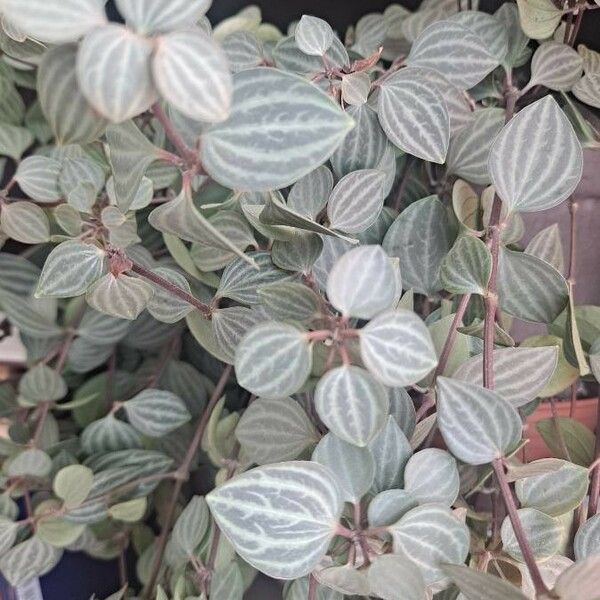
Known as the Parallel Peperomia, this South American gem is a living geometric masterpiece. It earns its nickname from the striking, perfectly straight pinstripes that run down its almond-shaped leaves, resembling the pattern of a tiny watermelon. While it starts as an upright, bushy plant, its mahogany stems eventually begin to trail, making it a sophisticated choice for bookshelves or hanging displays.
🔍 How to Identify
- 🍃 Pinstriped Foliage: The leaves are stiff, elliptical, and deep green, marked with four distinct cream or light-green parallel veins.
- 🍷 Mahogany Stems: Unlike many green-stemmed houseplants, this variety features beautiful reddish-brown, succulent-like stems that provide a sharp color contrast.
- 🕯️ Spike Inflorescence: When it blooms, it doesn't produce traditional petals; instead, it sends up greenish-white "mouse tail" spikes that are characteristic of the Peperomia family.
🏡 In Your Garden
- 💧 Succulent Sensibilities: Because its leaves are semi-succulent and store water, this plant hates "wet feet." It thrives when the soil is allowed to dry out significantly between waterings, as its delicate root system is prone to rot if kept soggy.
- ☀️ Light Navigation: It is a goldilocks plant regarding light; it needs bright, indirect rays to maintain those vivid white stripes. If the light is too low, the plant will become "leggy" and lose its compact, artistic shape.
⚠️ Safety & Toxicity
- ✅ Pet Friendly: The Parallel Peperomia is considered non-toxic to both cats and dogs, making it a "worry-free" addition to a multi-pet household.
- 👶 Child Safe: It is also safe for humans, though it is always best to keep plants out of reach of curious toddlers to prevent accidental choking or minor stomach upset from ingesting raw plant matter.
✨ Fun Fact
Peperomias are part of the Piperaceae family, meaning they are distant cousins to the plants that produce the black peppercorns sitting on your dinner table!

Detailed Care Instructions
To grow Peperomia Tetragona, follow these steps:
- Choose a suitable container: Select a pot that has drainage holes at the bottom to prevent waterlogging. The size of the pot should be slightly larger than the root ball of the plant.
- Soil: Use a well-draining potting mix that is rich in organic matter. A mix of peat moss, perlite, and coarse sand in equal parts is ideal for Peperomia Tetragona.
- Planting: Place the plant in the pot, covering the roots with the potting mix. Ensure that the crown of the plant, where the stems meet the roots, is at soil level. Gently press down the soil around the base of the plant to secure it.
- Light: Provide bright, indirect light for your Peperomia Tetragona. Avoid placing it in direct sunlight as it can scorch the leaves. A north or east-facing window is usually ideal.
- Temperature and humidity: Peperomia Tetragona prefers average room temperatures, between 65-75°F (18-24°C). It can tolerate lower temperatures but should be protected from extreme cold. Maintain normal household humidity levels around 40-50%.
- Watering: Water your Peperomia Tetragona thoroughly when the top inch of the soil feels dry to the touch. Avoid overwatering as it can lead to root rot. Always allow excess water to drain from the pot.
- Fertilizer: Feed your plant with a balanced liquid fertilizer every 4-6 weeks during the growing season (spring and summer). Follow the instructions on the fertilizer package for dosage.
- Pruning: Trim the plant regularly to maintain a compact and bushy shape. Remove any yellow or wilted leaves to prevent disease spread.
- Repotting: Peperomia Tetragona does not require frequent repotting. However, if the plant becomes rootbound or outgrows its pot, transfer it to a slightly larger container with fresh potting mix.
- Propagation: You can propagate Peperomia Tetragona through stem cuttings. Take 3-4 inch (7-10 cm) cuttings with a few leaves and place them in a jar of water or directly in moist potting mix. Provide warmth and indirect light until roots develop.
By following these guidelines, you can successfully grow Peperomia Tetragona and enjoy its unique foliage.

Place in a window with dappled sun or a spot in the middle of a room. Or directly in a window facing west or east.

To water this plant, ensure that the soil is completely dry before adding water. This type of plant prefers well-drained soil. Over-watering can lead to root rot, so it is important to avoid watering too frequently or keeping the soil too moist. When watering, add enough water so that it drips out of the drainage holes in the bottom of the pot. Allow excess water in the saucer or tray to drain away. During periods of low humidity or hot weather, the plant may require more frequent watering.
To fertilize this plant, use a balanced liquid fertilizer diluted to half strength during the growing season, which is typically spring and summer. Apply the fertilizer every two weeks when the soil is moist but not overly wet. During the winter months, stop fertilizing and reduce watering as the plant goes through a period of dormancy. Always follow the instructions on the fertilizer packaging and avoid over-fertilizing, which can lead to fertilizer burn and damage to the plant.
Peperomia Tetragona plant responds well to loose, well-draining soil that is preferably loamy in texture. It's best to use a mixture of peat moss, perlite, and a small amount of sand or vermiculite to create a well-balanced soil mix. The pH level of the soil should be slightly acidic, between 6.0 and 6.6. This plant prefers soil that is rich in organic matter and has good water retention capacity without becoming waterlogged. It is recommended to add a slow-release fertilizer to the soil mix for optimal growth. The soil should be kept moderately moist, but not wet, and should be allowed to dry out partially between waterings.
To propagate this plant, take cuttings from the stem with a sharp and sterilized knife. Cut just below a leaf node and remove the lower leaves to reveal a clean stem.
Allow the cuttings to callus over for a day or two, and then plant them in a well-draining potting mix, making sure the buried stem has good soil contact. Keep the soil lightly moist and provide high humidity by covering the pot with a plastic bag or placing it inside a clear container.
Place the cuttings in bright, indirect light and avoid direct sunlight or harsh winds. After a few weeks, the cuttings should begin to grow new roots and leaves. Once they have established a strong root system, they can be gradually acclimatized to their environment and transferred to their own pot.
Common pests of the parallel peperomia include Mealybugs, fungus gnats. Make a habit of checking your parallel peperomia frequently for pests so that any infestations can be caught and managed early.








