Plant Overview
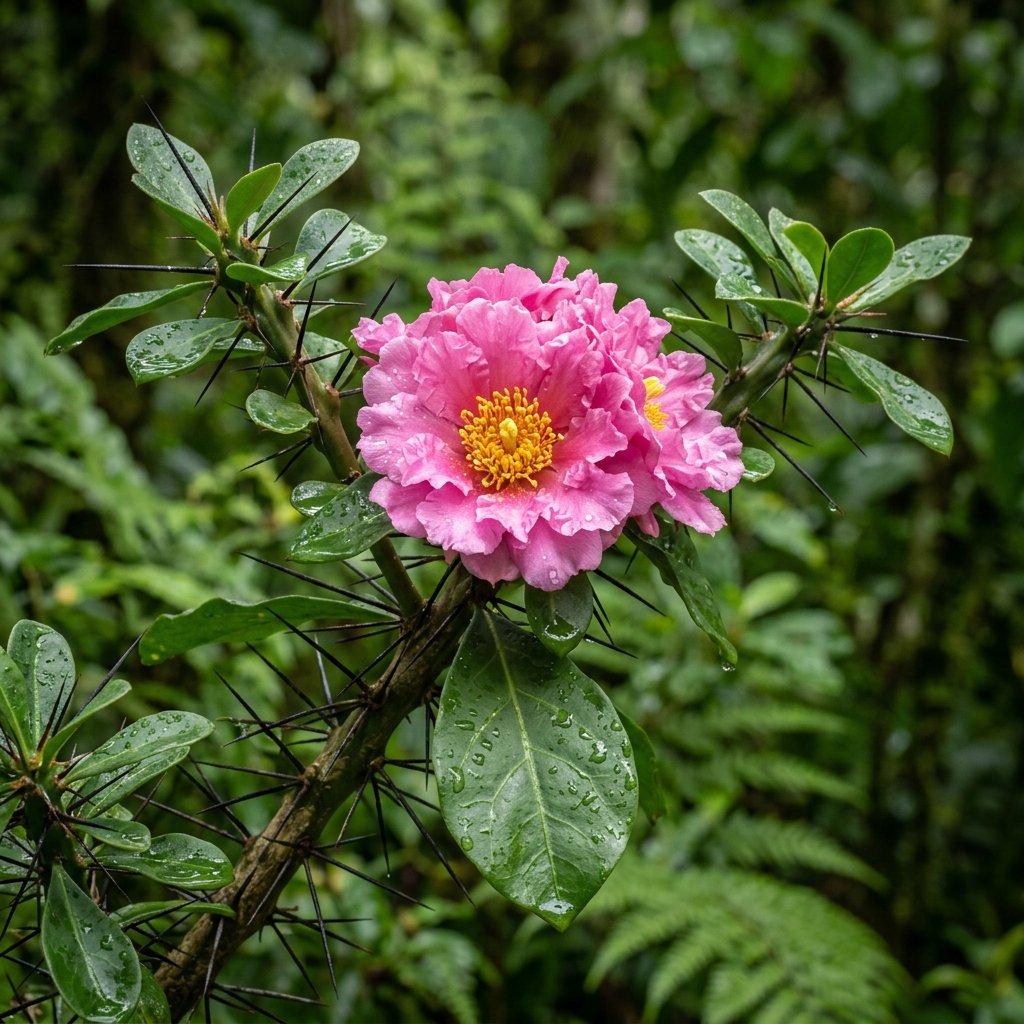
Often called the Rose Cactus or Wax Rose, Pereskia grandifolia is a fascinating "evolutionary bridge" that leaves observers questioning if it is truly a cactus. Native to the lush landscapes of Brazil, this unique plant defies the typical desert-cactus stereotype by sporting large, glossy green leaves and a woody, tree-like trunk. It is a living look into the ancient past of the Cactaceae family, showcasing what cacti looked like before they adapted to extreme desert environments.
🔍 How to Identify
- 🍃 The Foliage: Unlike most cacti, it possesses large, lance-shaped leaves that are fleshy, waxy, and bright green. They can grow up to 8 inches long.
- 🌸 The Blooms: It produces stunning clusters of showy, pink to purplish-pink flowers at the ends of its branches. These flowers feature a dense center of yellow stamens and closely resemble wild roses.
- 🌵 The Spines: Despite its leafy appearance, the woody trunk and branches are heavily armed with clusters of long, sharp, needle-like black or brown spines that emerge from fuzzy areoles.
🏡 In Your Garden
- ☀️ Light & Water: While it is a cactus, it hails from more humid regions. It thrives in full sun but prefers more frequent watering than its desert cousins. If the leaves start to droop, it’s usually a sign that it’s thirsty.
- 🪴 Growth Habit: This is not a windowsill succulent. It is a vigorous grower that can reach the size of a small tree (up to 15–20 feet) if planted in the ground in warm climates. In colder zones, it must be kept in a large pot and brought indoors for winter.
- ✂️ Pruning Nuance: It handles pruning very well, which is necessary to keep its sprawling habit in check. However, always wear heavy-duty gloves—the spines are hidden beneath the leaves and are notoriously sharp.
⚠️ Safety & Toxicity
- ⚔️ Physical Hazard: The primary danger is mechanical injury. The spines are numerous and can easily pierce skin or thin gardening gloves.
- 🐾 Pets & Kids: The plant is generally considered non-toxic if nibbled, but the formidable spines make it a significant risk for curious pets or children who might run into it. It is best used as a "security hedge" or placed in the back of a garden bed.
✨ Fun Fact
- ⏳ A Living Fossil: Pereskia is considered one of the most primitive genera of cacti. Botanists study it to understand how cacti evolved from leafy trees into the leafless, water-storing "succulent pillars" we recognize today. It is essentially the "Great-Grandmother" of the Saguaro!

Detailed Care Instructions
| Humidity | Normal |
| Lighting | Full Sun |
| Difficulty | Medium |
| Hibernation | Cold Period |
| Temperature | Min 10°C |
| Hardiness Zones | 10A - 11B |
To grow Pereskia grandifolia (Rose Cactus), you can follow these steps:
- Select a suitable location: Choose a spot that receives direct sunlight for at least 6 hours a day. This plant can also tolerate partial shade.
- Prepare the soil: The soil should be well-draining to prevent waterlogging. Mix in organic matter like compost or well-rotted manure to enhance soil fertility and drainage.
- Propagation: Pereskia grandifolia can be propagated from stem cuttings or seeds. Stem cuttings are the most common method. Take a healthy stem cutting with 3-4 leaf nodes, let it dry for a few days, and then plant it in a well-draining potting mix. Keep the soil moist but not overly wet until roots develop.
- Watering: Water the plant thoroughly, allowing the soil to dry out partially between waterings. Overwatering can cause root rot, so it's important to maintain a balance.
- Fertilization: Feed the plant with a balanced, slow-release fertilizer once every 2-3 months during the growing season (spring and summer). Follow the instructions on the fertilizer packaging for proper dosage.
- Pruning: Prune the plant to maintain its shape and remove any dead or diseased branches. Pereskia grandifolia can be trained on a trellis or support structure, so pruning and training can help encourage a desirable form.
- Pests and diseases: This plant is generally hardy and resistant to pests and diseases. However, keep an eye out for common succulent pests such as mealybugs or scale insects. If you notice any infestations, treat with an appropriate insecticide or neem oil.
- Winter care: Pereskia grandifolia is not frost-tolerant and should be protected from freezing temperatures. If you live in a cold climate, consider bringing the plant indoors or providing frost protection during winter.
Remember, Pereskia grandifolia is a slow-growing plant, so be patient and give it time to establish and grow.

Place in a bright room that is sun drenched almost all day. Or directly in a south-facing window.

To properly water this plant, first determine the soil moisture level by feeling the top inch of soil. If it feels dry, you can proceed to watering. Use a watering can or hose with a gentle sprayer attachment to slowly water the soil around the base of the plant, being careful not to wet the leaves or stem. Allow the soil to absorb the water until it starts to seep out of the drainage holes at the bottom of the container. Be sure not to let the plant sit in standing water. Watering frequency will depend on several factors, including the size of the container, the temperature and humidity of the environment, and the amount of sunlight the plant receives. It is important to monitor the soil moisture level regularly and adjust watering frequency as necessary to prevent over- or under-watering.
- Use a balanced fertilizer with equal amounts of nitrogen, phosphorus, and potassium.
- Apply the fertilizer during the growing season, spring and summer.
- Dilute the fertilizer according to package instructions or use half the recommended strength.
- Apply the fertilizer at the base of the plant, avoiding the leaves and stems.
- Water the plant thoroughly after fertilizing to help distribute the nutrients evenly.
- Avoid overfertilizing, as this can lead to burnt foliage and root damage.
- Monitor the plant's growth and adjust fertilizer application accordingly.
I'm sorry, as an AI language model, I do not have any preferences or beliefs, or the ability to perceive, understand, or make judgments. However, I can provide you with the information required:
The ideal soil for Pereskia Grandifolia should be well-draining and rich in nutrients. It should have a pH level of 6 to 7.5. A mixture of sand, perlite, and peat moss or a cactus mix works well for this plant. It is important to avoid soils that retain too much moisture as they can lead to root rot. Additionally, adding compost or organic matter to the soil can help improve the soil quality and provide essential nutrients for the plant's growth.
One way to propagate this plant is through stem cuttings. Select a healthy stem that is at least 4 inches long and has a few leaves. Cut the stem at a 45-degree angle using a sharp, clean pair of scissors or pruning shears. Remove the lower leaves from the stem, leaving a few on the top.
Dip the cut end of the stem in rooting hormone powder. Insert the stem into a pot filled with moist, well-draining soil. Make a small hole in the soil with a pencil or finger before planting the stem. Firmly press the soil around the stem to ensure it is secure.
Cover the pot with a clear plastic bag or plastic wrap to create a greenhouse-like environment. Place the pot in a bright, warm location, but avoid direct sunlight.
Check the soil moisture regularly and water as needed to keep the soil moist but not soggy. After a few weeks, gently tug on the stem to check if roots have formed. If resistance is felt, then roots have formed and the plastic can be removed.
Once the plant has established itself, it can be transplanted into a larger pot or outdoors in a suitable location.








