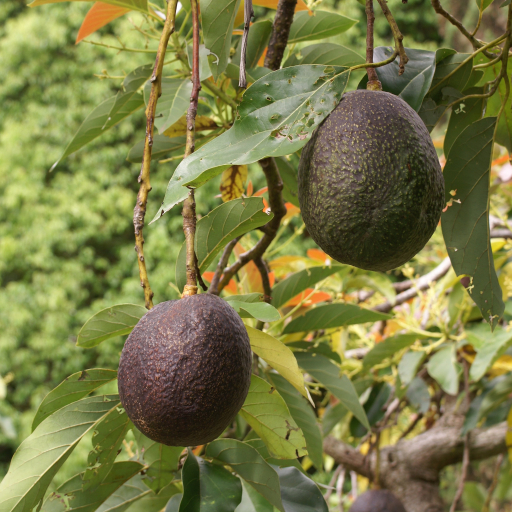
Plant Overview
Often called the "Alligator Pear" due to its bumpy green skin, the Avocado is much more than just a trendy toast topping. Originating in South-central Mexico and Guatemala, this ancient tree has been a staple of human diets for nearly 10,000 years. In a home setting, it is a rewarding—albeit slightly dramatic—addition to a tropical garden or a very sunny indoor corner.
🔍 How to Identify
- 🍃 Foliage: Large, elliptical, glossy dark-green leaves that feel leathery to the touch. When crushed, the leaves of some varieties (like the Mexican avocado) emit a subtle anise-like scent.
- 🥑 The Fruit: Technically a large berry with a single massive pit. Depending on the variety (like Hass or Fuerte), the skin can range from smooth and emerald green to dark, pebbly, and nearly black.
- 🌼 Bloom Style: Tiny, star-shaped, greenish-yellow flowers that grow in dense clusters at the tips of the branches. They aren't particularly showy, but they have a fascinating "opening schedule."
🏡 In Your Garden
- 💧 The Drainage Struggle: Avocados are notoriously picky about their "feet." They have a sensitive, shallow root system that hates standing water. If the soil stays soggy for even a short period, the tree is highly prone to root rot, which often looks like underwatering because the leaves wilt.
- 🐝 The Floral Dance: These trees exhibit a unique behavior called "synchronous dichogamy." Each flower opens twice: once as a female and once as a male at different times of the day. To get a heavy harvest, gardeners often plant "Type A" and "Type B" varieties together to ensure the male and female phases overlap for pollination.
⚠️ Safety & Toxicity
- 🐾 Pet Sensitivity: Avocado plants contain a fungicidal toxin called "Persin." While the fruit flesh is a healthy snack for humans, Persin can be extremely toxic—and even fatal—to birds, horses, goats, and rabbits.
- 🐕 Dogs and Cats: Ingestion of the leaves, bark, or pits can cause digestive upset in household pets. The large, slippery pit also poses a significant choking hazard or internal blockage risk for curious dogs.
✨ Fun Fact
The avocado is considered an "evolutionary anachronism." It originally evolved to be eaten and dispersed by extinct Ice Age megafauna, such as the Giant Ground Sloth. These massive creatures were the only ones large enough to swallow the giant pit whole and "deposit" it elsewhere with a built-in pile of fertilizer!

Detailed Care Instructions
Though avocado trees are not quick to produce fruits, growing the tree for ornamental value is easy—assuming you’re growing the tree within its growing zones.
Do you need two avocado trees to produce fruit?
While some avocado trees are self-fruiting, such as the Hass avocado, these trees will always produce a larger yield of fruit if two are grown near each other. Be sure you plant a type A and a type B avocado tree for the best results.
What is the lifespan of an avocado tree?
The lifespan of an avocado tree will depend on its environment. However, healthy avocado trees have been known to live for hundreds of years. Some have even been reported to live up to 400 years old.
| Color | Greenish-Yellow |
| Soil Ph | 6.0 To 6.5 |
| Humidity | High |
| Lighting | Part Sun |
| Toxicity | Toxic |
| Soil Type | Loose, Loamy, Sandy, Well-Draining |
| Bloom Time | Seasonal Bloomer |
| Difficulty | Hard |
| Plant Type | Perennial; Broadleaf Evergreen Fruit Tree |
| Hibernation | Cold Period |
| Mature Size | 30 To 60 Feet |
| Native Area | Mexico |
| Temperature | 10°C - 25°C |
| Sun Exposure | Full Sun |
| Hardiness Zones | 8-12; Any Zone As A Houseplant |
To grow a Persea Americana plant, also known as an avocado plant, follow these steps:
- Starting the seed: Cut an avocado in half lengthwise and remove the pit gently without damaging it. Rinse the pit thoroughly to remove any remaining fruit from it.
- Prepare the seed for planting: Pierce the seed with three toothpicks around its upper half. These toothpicks will be used to suspend the seed in water.
- Suspend the seed: Place the seed in a glass or jar with the bottom half submerged in water. Make sure to keep the top half exposed to the air. The toothpicks should rest against the rim of the jar or glass, supporting the seed.
- Provide optimal conditions: Place the glass or jar in a warm, sunny spot. Ensure it receives indirect sunlight or bright light for at least 6-8 hours a day. Keep the water level consistent by adding more water when needed.
- Wait for germination: After a few weeks, the seed will start to sprout roots and a stem. Once the stem reaches about 6 inches in length, carefully pinch off the top two sets of leaves. This will encourage the plant to grow more branches and become bushier.
- Potting the plant: When the roots have grown about 2-3 inches long, it's time to transfer the plant to a pot. Use a well-draining potting mix, and ensure the pot has drainage holes at the bottom to avoid waterlogging. Plant the seed with the top half exposed and the bottom half buried in the soil.
- Caring for the plant: Place the potted plant in a warm, sunny location or near a south-facing window. Water it regularly, ensuring the soil is moist but not saturated. Avoid overwatering as it can lead to root rot. Fertilize the plant every 4-6 weeks during the growing season with a balanced houseplant fertilizer.
- Providing support: As the plant grows, it may require support to prevent it from bending or breaking. Use a stake or trellis to provide support and guide the plant's growth.
- Pruning: Regularly trim the plant to encourage bushier growth. Pinch off the top set of leaves once the stem reaches about 6 inches again. Additionally, prune any dead or damaged branches to maintain a healthy plant.
- Patience and waiting for fruit: Growing an avocado plant from seed can take several years to reach maturity and produce fruit, if it produces fruit at all. Enjoy the process of nurturing the plant and appreciate its ornamental value even if it doesn't yield avocados.
Remember to be patient and consistent in caring for your Persea Americana plant, as it can take time to grow and mature. Enjoy the journey of discovering the wonders of nature by nurturing your own avocado plant.

Place in a bright room that is sun drenched almost all day. Or directly in a south-facing window.

The watering requirement for this plant can vary depending on its age, size, and the climate in which it is growing. As a general rule, it is best to avoid over-watering this plant as it can lead to root rot. You should allow the soil to dry out slightly between watering to prevent waterlogging. When you are ready to water the plant, be sure to give it a thorough watering, making sure to saturate the root zone. Allow excess water to drain away and avoid leaving the plant sitting in standing water. During hot and dry weather conditions, you may need to increase the frequency of watering, but be sure not to overdo it. You can also use a soil moisture meter to help you determine whether it's time to water the plant.
- Choose a nitrogen-rich fertilizer for your plant.
- Fertilize the plant every three months.
- Apply the fertilizer at the base of the plant, avoiding the leaves and stems.
- Water the plant thoroughly after fertilizing.
- Monitor the plant's growth and adjust fertilization frequency as needed.
The best soil for a certain plant that belongs to the Persea Americana species is a well-draining soil that is high in organic matter. The pH level of the soil should be slightly acidic to neutral, around 6.0 to 7.0. Avoid using heavy or compacted soils as they can prevent proper drainage and harm the roots of the plant. Adding compost or organic matter to the soil can help provide nutrients and improve soil structure. It is important to not overwater the plant as this can lead to root rot.
The best way to propagate this plant is through grafting or air layering. Grafting involves joining a branch or twig from one plant onto the rootstock of another compatible plant to create a new tree. Air layering involves making a small cut in a stem, wrapping it in moist soil or moss, and allowing it to develop roots while still attached to the parent plant. Another method is by using stem cuttings, which are taken from a healthy plant and planted in soil or a growing medium. The cutting should be about six inches long and should have at least two leaves and a node. It is important to keep the soil consistently moist and add rooting hormone to the cuttings to encourage root growth. The plant can also be propagated through seed, but this method is less reliable as the offspring may not have the desired traits of the parent plant.
Common pests of the avocado include Scale insect, mealybugs, spider mites, thrips. Make a habit of checking your avocado frequently for pests so that any infestations can be caught and managed early.








