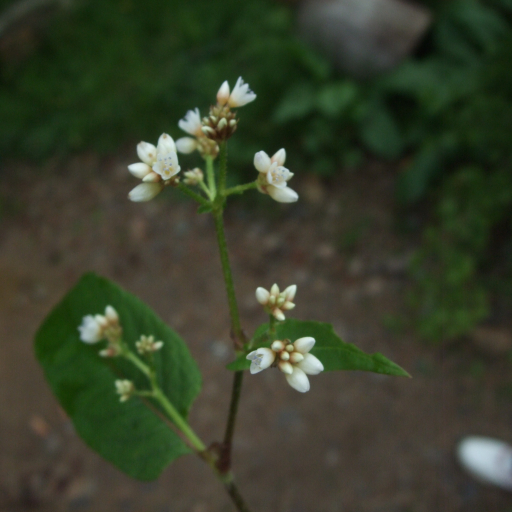
Plant Overview
Often called Chinese Knotweed or "Huo Tan Mu," this resilient perennial is a master of adaptation, frequently seen scrambling over riverbanks or cascading down garden walls. While it is native to East Asia and prized in traditional herbalism, its vigorous growth has earned it a reputation as a spirited "garden rebel" in other parts of the world. It is a plant of striking visual contrasts, pairing deep red stems with delicate, pearl-like blossoms.
🔍 How to Identify
- 🍃 Chevron Marking: The most distinctive feature is the dark, V-shaped "chevron" mark found in the center of its broad, oval-shaped leaves.
- 🔴 Zig-Zag Stems: The stems are notably jointed and often take on a deep reddish or mahogany hue, creating a "zig-zag" appearance as they grow.
- ⚪ Waxy Clusters: It produces small, round clusters of tiny white or pale pink flowers that look like miniature waxy beads or pearls.
🏡 In Your Garden
- 💧 The Moisture Master: This plant loves "wet feet." It is an exceptional choice for stabilizing soil near ponds or filling in those notoriously damp, shady corners where other plants might struggle with root rot.
- ✂️ Boundary Setting: Because it spreads via underground runners (rhizomes), it can be quite assertive. To keep it from taking over, consider planting it in a large sunken container or a dedicated area where its wandering nature can be easily managed.
⚠️ Safety & Toxicity
- 🐾 Mild Irritant: Persicaria chinensis contains calcium oxalates. While not considered deadly, it can cause mild mouth irritation or an upset stomach if large amounts are ingested by pets or small children.
- 🧤 Sap Sensitivity: Some individuals may experience a mild skin itch or "prickly" sensation when handling the sap or bruised stems, so wearing gloves during heavy pruning is recommended.
✨ Fun Fact
🌊 The Living Dye: While its cousin is the famous "Japanese Indigo," the Chinese Knotweed has its own history in rural textile production, where its leaves were traditionally fermented to create soft, earthy blue and green dyes for natural fabrics.

Detailed Care Instructions
To grow Persicaria Chinensis, also known as Chinese Knotweed, follow these steps:
- Obtain seeds or plants: You can purchase seeds or starter plants from a local nursery or online gardening stores.
- Choose a suitable location: Select a spot in your garden that receives full sun to partial shade. Chinese Knotweed can tolerate a wide range of soil types but prefers well-draining soil.
- Prepare the soil: Loosen the soil and remove any weeds or debris. Add compost or organic matter to improve the soil fertility and drainage.
- Plant the seeds or starter plant: If planting seeds, sow them directly into the soil, following the instructions on the seed packet. If using starter plants, dig a hole slightly larger than the root ball and place the plant in the hole. Backfill the hole with soil, gently firming it around the plant.
- Water regularly: Keep the soil evenly moist but not soggy throughout the growing season. Water deeply once or twice a week, depending on the weather conditions.
- Mulch: Apply a layer of organic mulch around the plant to help retain moisture, prevent weed growth, and regulate soil temperature.
- Prune if necessary: Chinese Knotweed requires minimal pruning. However, if your plant becomes overgrown or starts to spread aggressively, you can trim it back in late winter or early spring. Cut back the stems to a height of several inches above the ground.
- Fertilize: Feed the plant with a balanced, slow-release fertilizer in spring or early summer to promote healthy growth. Follow the package instructions for proper application.
- Monitor for pests and diseases: Keep an eye out for common pests like aphids or caterpillars. If necessary, treat them with organic insecticides or soapy water. Additionally, make sure the plant has good air circulation to prevent fungal diseases.
- Harvest or enjoy the flowers: Persicaria Chinensis produces small white or pink flowers in late summer. You can harvest the flowers for floral arrangements or simply enjoy their beauty in your garden.
By following these steps, you can successfully grow Persicaria Chinensis in your garden and enjoy its vibrant foliage and flowers.

Place in a bright room that is sun drenched almost all day. Or directly in a south-facing window.

1. Identify the plant: To water the Persicaria Chinensis plant effectively, you must first recognize the plant itself. Look for a perennial herbaceous plant with elongated lance-shaped leaves and small delicate flowers. Note its growth habit, overall appearance, and specific features to ensure you are correctly identifying the plant.
2. Understand the moisture requirements: Persicaria Chinensis plants prefer consistently moist soil as they are native to wet environments. They thrive in soil that retains some moisture but allows excess water to drain away. Understanding the moisture requirements of the plant will help you determine the ideal watering routine.
3. Choose an appropriate watering method: There are several ways to water plants, and selecting the most suitable method for Persicaria Chinensis will ensure proper hydration. Consider options like hand watering with a watering can, drip irrigation, or using a garden hose with a gentle flow setting. Take into account factors such as the plant's location, surrounding plants, and overall garden setup when choosing a watering technique.
4. Determine the watering frequency: Persicaria Chinensis plants need regular watering, especially during dry periods. Monitor the soil moisture level by touching the top inch of soil with your fingers. If it feels dry, it is time to water the plant. Ideally, water should be applied consistently and evenly, avoiding both excessive dryness and overwatering.
5. Watering technique: When watering the Persicaria Chinensis plant, focus on the root zone. Apply water around the base of the plant rather than overhead, as overhead watering may result in excessive moisture on the leaves, increasing the risk of fungal diseases.
6. Watering depth: Ensure the water penetrates deeply into the soil to encourage the plant's roots to grow deeper. Apply water slowly to allow it to soak into the soil rather than running off the surface. Water until the soil feels moist but not waterlogged.
7. Consider environmental factors: Take into account the weather conditions, season, and temperature changes when determining the watering frequency. Adjust the watering routine accordingly, watering more frequently during hot, dry periods and less during cooler, wet seasons.
8. Mulching: Applying a layer of organic mulch around the base of the Persicaria Chinensis plant can help retain moisture in the soil and reduce evaporation. Mulching also provides additional insulation, preventing extreme temperature fluctuations in the root zone.
9. Monitor plant health: Regularly inspect the Persicaria Chinensis plant for any signs of underwatering or overwatering. Look for visible symptoms such as wilting, yellowing leaves, or root rot. Adjust your watering routine accordingly if you notice any adverse effects on the plant's health.
10. Adapt to plant growth and needs: As the Persicaria Chinensis plant grows and changes throughout the seasons, its water requirements may also vary. Continuously assess the plant's needs and adjust your watering practices accordingly to ensure optimal growth and health.
Persicaria Chinensis, also known as ____, requires regular fertilization to promote healthy growth. Here are the fertilizing instructions for this plant:
- Use a balanced, slow-release fertilizer with an NPK ratio of 10-10-10 or similar. This provides a good balance of essential nutrients.
- Start fertilizing in the spring, when new growth begins. Repeat every 4-6 weeks throughout the growing season.
- Before applying the fertilizer, water the plant thoroughly to moisten the soil.
- Follow the packaging instructions to determine the appropriate amount of fertilizer to use based on the size of your plant or the area you want to fertilize.
- Sprinkle the fertilizer evenly around the base of the plant, avoiding direct contact with its stems or foliage.
- Gently work the fertilizer into the top layer of soil, approximately 1-2 inches deep.
- Provide ample water after fertilization to help dissolve and distribute the nutrients into the root zone.
- Monitor the plant's response to the fertilizer. If you notice any signs of nutrient deficiency or excessive fertilizer burn, adjust the amount or frequency of fertilization accordingly.
- Cease fertilization in late summer or early fall, allowing the plant to naturally enter its dormant period.
- Resume fertilization the following spring when new growth appears.
Remember, it's important to read and follow the specific instructions on your fertilizer's packaging for best results with your Persicaria Chinensis plant.
Persicaria Chinensis is a perennial plant that requires well-draining soil for optimal growth. The ideal soil type for this plant would be a loamy or sandy soil that is rich in organic matter. This type of soil provides good drainage for the plant's roots while retaining enough moisture for proper hydration.
When it comes to pH levels, Persicaria Chinensis prefers a slightly acidic to neutral soil, with a pH range between 6.0 and 7.0. This pH range ensures that the plant can absorb necessary nutrients effectively.
It is also recommended to add compost or well-rotted manure to the soil before planting Persicaria Chinensis. This helps improve soil fertility and adds essential nutrients to support healthy growth. Additionally, incorporating organic matter into the soil enhances its structure, promotes beneficial microbial activity, and aids in moisture retention.
Another essential factor to consider is soil moisture. Persicaria Chinensis thrives in soils that are evenly moist but not constantly saturated. It is crucial to avoid overwatering as it can lead to root rot or other fungal diseases. Therefore, the soil should allow excess water to drain freely.
Overall, using well-draining, loamy or sandy soil enriched with organic matter and maintaining appropriate moisture levels is vital for the successful cultivation of Persicaria Chinensis.
Persicaria chinensis, a perennial plant in the Polygonaceae family, can be propagated through several techniques such as division, stem cuttings, and seed germination. Here's how to propagate Persicaria chinensis using each of these methods:
- Division:
- Identify a well-established Persicaria chinensis plant with a healthy root system.
- Carefully dig around the base of the plant, ensuring to minimize damage to the roots.
- Gently lift the plant out of the ground, keeping the soil attached to the roots.
- Identify natural divisions or use a sharp, clean knife or spade to separate the clumps into smaller sections.
- Plant each section in a prepared bed or container, ensuring they are at the same soil level as they were before.
- Water thoroughly and provide appropriate care until the new divisions are established.
- Stem cuttings:
- Select a healthy stem from a mature Persicaria chinensis plant.
- Take a sharp, clean pair of pruners or scissors and make a clean cut below a node, which is where the leaf attaches to the stem.
- Remove any lower leaves, leaving only a few leaves at the top.
- Dip the cut end in a rooting hormone powder (optional but can enhance rooting success).
- Plant the cutting in a moist, well-draining soil mix or a container filled with water.
- Provide bright indirect light and maintain consistent moisture, avoiding waterlogging.
- After a few weeks, roots should start to develop. Keep an eye on the cutting and wait until it has a well-established root system before transplanting it into a permanent location.
- Seed germination:
- Collect seeds from mature Persicaria chinensis plants.
- Sow the seeds in a seed-starting tray or small pots filled with a well-draining soil mix.
- Cover the seeds lightly with soil (about twice their diameter in depth) and mist the surface with water.
- Place the tray or pots in a warm location with bright, indirect light.
- Maintain consistent moisture by misting or lightly watering the soil as needed.
- Germination typically takes around 1-2 weeks, although it can vary.
- Once the seedlings develop a few true leaves, they can be carefully transplanted into larger containers or directly into the garden.
Remember to provide appropriate care, including suitable lighting, water, and fertilizer, to ensure the successful establishment and growth of the propagated Persicaria chinensis plants.








