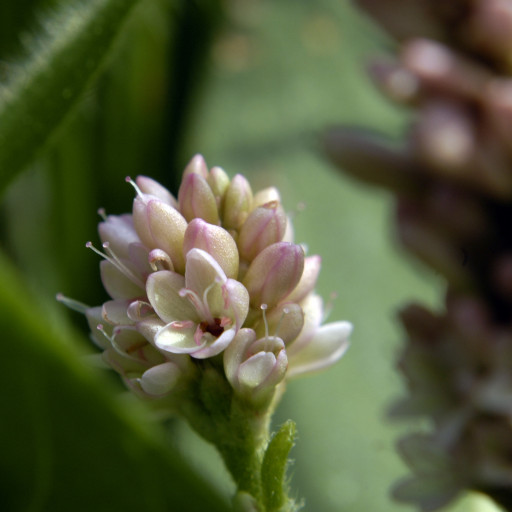
Plant Overview
Known fondly as Pennsylvania Smartweed or simply Pinkweed, this North American native is a champion of the wetlands. It is a plant that wears its heart on its "knees," featuring distinctively swollen stem joints that give it a rugged, segmented appearance. Often found dancing along the edges of ponds or in damp roadside ditches, it brings a splash of rosy color to muddy places where other plants might struggle to survive.
🔍 How to Identify
- 🌸 Floral Spikes: It produces dense, blunt clusters of tiny, bead-like flowers that range from a soft blush to a deep rosy pink. Unlike some relatives, these spikes usually stand upright.
- 🍃 Spear-Shaped Leaves: The foliage is long and lance-shaped, sometimes reaching up to six inches. You may occasionally see a faint, dark "chevron" or thumbprint mark in the center of the leaf.
- 🦵 Swollen Nodes: The stems are thick and "knobby." Each leaf attachment point is wrapped in a thin, papery sheath called an ochrea, which looks like a tiny translucent sleeve.
🏡 In Your Garden
- 💧 The Rain Garden Hero: If you have a low-lying spot in your yard that stays soggy after a storm, this plant will thrive. It loves "wet feet" and is excellent for stabilizing soil in damp areas.
- 🌱 Aggressive Growth: Because it is a prolific self-seeder, it can become "weedy" in traditional flower beds. It doesn't need much help to grow; in fact, its primary "care" involves preventing it from taking over the entire garden.
- 🐝 Pollinator Magnet: It is a fantastic choice for a wilder, naturalized garden, as it provides a late-summer nectar source for honeybees, soldier beetles, and various butterflies.
⚠️ Safety & Toxicity
- ✋ Mild Irritant: The name "Smartweed" comes from the fact that the sap contains chemicals that can cause a stinging or "smarting" sensation on sensitive skin or if it gets into the eyes.
- 🐾 Pet Watch: While not considered highly toxic, the peppery oils in the leaves can cause mild drooling or gastrointestinal upset in cats or dogs if consumed in large quantities. It is best treated as an ornamental rather than a snack.
✨ Fun Fact
The seeds of the Pennsylvania Smartweed are a high-energy "superfood" for wildlife. They are a primary food source for over 50 species of birds, including wood ducks and mallards, who rely on these protein-packed seeds during their long autumn migrations!

Detailed Care Instructions
To grow Persicaria Pensylvanica (also known as Pennsylvania smartweed), you can follow these steps:
- Choose a suitable location: Pennsylvania smartweed prefers full sun to partial shade. It can tolerate various soil conditions but thrives in moist, well-draining soil. Select an area in your garden that receives at least 6 hours of sunlight daily.
- Prepare the soil: Before planting, loosen the soil in the desired planting area. Remove any existing weeds, rocks, or debris. Mix in compost or well-rotted organic matter to improve soil fertility and drainage if needed.
- Sow the seeds: Pennsylvania smartweed can be started from seeds. Sow the seeds directly into the prepared soil in early spring when the soil is workable. Scatter the seeds evenly over the soil surface and lightly press them into the soil. Ensure that the seeds are not covered too deeply, as they need light to germinate.
- Watering: Keep the soil evenly moist throughout the germination and growth process. Water the plants regularly, especially during dry periods. Avoid overwatering, as it may lead to root rot.
- Maintenance: Pennsylvania smartweed is relatively low maintenance. Weed the area around the plants regularly to prevent competing plants from taking over. Mulching can help suppress weed growth and retain moisture.
- Pruning: Pruning is generally not necessary for this plant, but you can trim it back in late summer if it becomes leggy or unruly. This can help promote bushier growth.
- Propagation: Pennsylvania smartweed can also be propagated through cuttings or division. To propagate through division, dig up an established plant and carefully separate the clumps into smaller sections. Replant the divisions in prepared soil.
- Pests and diseases: Persicaria Pensylvanica is relatively resistant to pests and diseases. However, keep an eye out for any signs of aphids, caterpillars, or mildew. If any issues arise, treat them accordingly using organic pest control methods or consult with a local garden center.
Note: Remember to check your local regulations and consider the native status of Pennsylvania smartweed before planting, as it may be considered invasive in some areas.

Place in a bright room that is sun drenched almost all day. Or directly in a south-facing window.

To properly water this plant, you should first ensure that the soil in which it is planted is well-draining and not waterlogged. This can be achieved by adding perlite or sand to the soil mix, or ensuring that there are drainage holes in the pot.
When watering, it is important to give the plant a deep, thorough watering that reaches the roots, rather than just a light sprinkling on the surface soil. Wait until the top inch of soil has dried out before watering again, as overwatering can lead to root rot and other issues.
If the plant is in a pot, be sure to empty the saucer underneath the pot after watering to prevent the roots from sitting in standing water. Finally, avoid getting water on the leaves as this can promote fungal growth.
To fertilize your Persicaria Pensylvanica plant, follow these instructions:
- Choose a balanced, all-purpose fertilizer that is suitable for use on flowering plants.
- Dilute the fertilizer according to the package instructions, usually at a rate of 1 tablespoon per gallon of water.
- Water the plant thoroughly before fertilizing to ensure the soil is adequately moist.
- Slowly pour the diluted fertilizer around the base of the plant, taking care to avoid getting it on the leaves or stems.
- If you're growing the plant in a container, apply the fertilizer evenly across the soil surface.
- After fertilizing, water the plant again to help distribute the nutrients into the root zone.
- Repeat the fertilization process every 4-6 weeks during the growing season, which generally spans from spring to early fall.
- Monitor the plant for any signs of nutrient deficiencies or excessive fertilization, such as yellowing leaves or stunted growth. Adjust the fertilization frequency or concentration if needed.
- During the winter months, when the plant is dormant, reduce or suspend fertilization as it requires less nutrient input during this time.
Note: It's essential to follow the specific instructions and recommendations provided by the fertilizer manufacturer for optimal results.
Persicaria Pensylvanica plant grows well in a well-draining soil that is rich in organic matter. The soil should be slightly acidic to neutral, with a pH level ranging from 6.0 to 7.5. It is important to avoid soil that is too compact or heavy, as this can lead to waterlogging and root rot. A mixture of sand, peat moss, and perlite can be added to the soil to improve its drainage and aeration. The plant prefers moist soil and should be watered regularly, but avoid letting the soil become too soggy. It is recommended to fertilize the Persicaria Pensylvanica plant with a balanced, slow-release fertilizer every four to six weeks during the growing season. Additionally, a layer of mulch can be added to the soil to retain moisture and control weed growth around the plant.
To propagate Persicaria Pensylvanica, you can use the following methods:
- Division: Start by identifying a mature Persicaria Pensylvanica plant that has multiple clumps or stems. In early spring or fall, carefully dig up the plant and separate the clumps or stems. Ensure that each division has a good root system. Replant the divided sections in well-draining soil, making sure to water them regularly until they establish strong roots.
- Stem cuttings: Select a healthy stem from the Persicaria Pensylvanica plant, preferably one that is green and not woody. Cut a 4-6 inch section from the terminal end of the stem, just below a node. Remove the lower leaves from the cutting, leaving a few on the upper portion. Dip the cut end in rooting hormone powder to encourage root growth. Place the cutting in a small pot filled with moistened soil or a mixture of perlite and peat moss. Keep the cutting in a humid environment with indirect light and maintain the moisture levels until it forms roots.
- Seed propagation: Collect mature seeds from the Persicaria Pensylvanica plant in late summer or fall when they have turned brown. Prepare a seed-starting tray or small pots with a well-draining growing medium. Sow the seeds on the surface and lightly cover them with a thin layer of soil. Mist the soil with water to provide moisture without causing the seeds to dislodge. Place the tray or pots in a warm location with indirect light. Keep the soil consistently moist until the seeds germinate, which may take several weeks. Once the seedlings develop a few sets of true leaves, transplant them into individual pots or a prepared garden bed.
Remember to provide adequate care for the propagated plants, including regular watering, proper sunlight exposure, and suitable soil conditions. With patience and attention, your Persicaria Pensylvanica plants should thrive and grow into new individuals.








