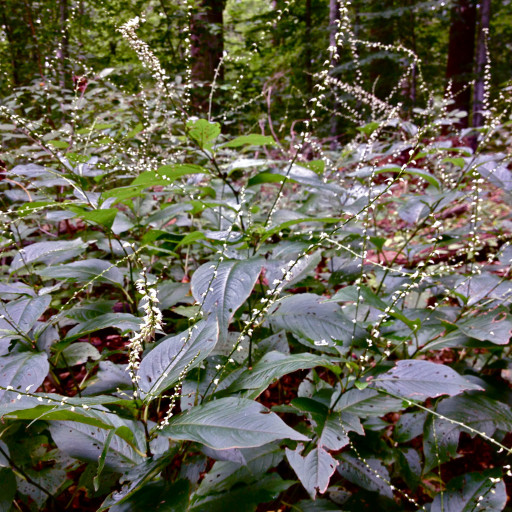
Plant Overview
Often called Jumpseed because of its explosive way of spreading seeds, Persicaria virginiana is a woodland gem that adds a touch of mystery to shady corners. While the wild version is subtle, cultivated varieties like "Painter's Palette" are beloved by gardeners for their dramatic, multicolored foliage. It’s a resilient perennial that bridges the gap between the wild forest floor and the manicured shade garden.
🔍 How to Identify
- 🍃 The Signature Chevron: Most leaves feature a distinct, dark brownish-purple "V" or chevron mark in the center, acting like a natural thumbprint.
- 🎋 Slender Spikes: It produces incredibly thin, wire-like flower stalks (racemes) that can reach up to two feet long, dotted with tiny, bead-like white or red flowers.
- 🌿 Broad Foliage: The leaves are large, oval, and pointed at the tips, often possessing a slightly fuzzy texture and prominent veining.
🏡 In Your Garden
- 🌑 Shade Specialist: Unlike many flashy plants, Jumpseed thrives in dappled sunlight or deep shade. It is the perfect solution for those "problem areas" under large trees where grass refuses to grow.
- 🚀 The "Jump" Mechanism: It earned its nickname because the ripened seeds are effectively spring-loaded. If an animal or hiker brushes against the plant in late autumn, the seeds can "jump" several feet away to colonize new ground.
- 💧 Moisture Lover: While it can tolerate some dry spells once established, it prefers consistently moist, rich soil that mimics the organic leaf litter of a natural forest.
⚠️ Safety & Toxicity
- 🐾 Pet Safety: This plant is generally considered non-toxic to dogs and cats. However, like many members of the buckwheat family, it contains oxalates which can cause mild stomach upset if a pet decides to make a meal of it.
- 🧤 Skin Sensitivity: Some individuals with highly sensitive skin may experience mild redness or itching from the fine hairs found on the stems. It is always a good idea to wear gloves when thinning out a large patch.
✨ Fun Fact
The "Painter's Palette" cultivar of this plant is so heavily variegated with splashes of cream, yellow, and red that it truly looks like an artist flicked a wet paintbrush across the foliage!

Detailed Care Instructions
| Lighting | Full Sun |
| Hardiness Zones | 4A - 8B |
Here are some steps you can follow to grow Persicaria Virginiana (Virginia Knotweed) plant:
- Choose a suitable location: Virginia Knotweed prefers partial shade to full sun. Select a well-draining area with fertile soil.
- Prepare the soil: Till the soil to a depth of 6 to 8 inches and remove any weeds or grass. Mix in organic matter, such as compost or manure, to improve soil fertility and drainage.
- Planting: Plant the Persicaria Virginiana seeds or seedlings in the prepared soil. You can sow the seeds directly in early spring or start them indoors about 6-8 weeks before the last frost date. The plant typically spreads by rhizomes, so ensure sufficient space between each plant or plan to control its spread.
- Watering: Keep the soil evenly moist. Avoid overwatering, as it can lead to root rot. Water deeply but infrequently, allowing the top inch of soil to dry out between waterings.
- Mulching: Apply a layer of organic mulch, such as wood chips or straw, around the plants. Mulching helps retain moisture, suppresses weeds, and regulates soil temperature.
- Fertilization: Optionally, you can fertilize the plants every spring with a slow-release, balanced fertilizer. This can promote vigorous growth and blooming.
- Pruning: Virginia Knotweed may benefit from a light pruning in early spring to shape and control its growth. Remove any dead or damaged branches and cut back to encourage bushier growth.
- Winter care: Virginia Knotweed is generally hardy but can benefit from a layer of mulch or leaves to protect the roots during winter.
- Pest and disease control: Overall, Persicaria Virginiana is not highly susceptible to pests or diseases. However, monitor the plants regularly and address any issues promptly. Remove any infected or damaged leaves to prevent the spread of diseases.
Remember to check your local gardening regulations before planting Persicaria Virginiana, as it can be invasive in some areas.

Place in a bright room that is sun drenched almost all day. Or directly in a south-facing window.

To properly water this plant, you should first assess the moisture content of the soil. Stick your finger about an inch into the soil and see if it feels dry or moist. If it feels dry, it's time to water.
When watering, use a watering can or hose with a gentle stream to saturate the soil evenly. Avoid getting water on the leaves as this can cause disease.
Water deeply enough so that the water reaches the roots, but do not overwater or let the soil become waterlogged. Allow the soil to dry somewhat between watering but not completely.
During particularly hot or dry periods, you may need to water more frequently. However, during periods of heavy rain, you may not need to water at all.
Overall, it's important to strike a balance with watering this plant to ensure it stays healthy and hydrated without becoming overwatered or waterlogged.
To fertilize this plant, use a balanced, all-purpose fertilizer with equal or near-equal amounts of nitrogen, phosphorus, and potassium. Apply the fertilizer in early spring before new growth appears and again in mid-summer. Follow the instructions on the fertilizer package carefully, as over-fertilization can cause damage to the plant. Water the plant well after fertilizing.
The ideal soil for the Persicaria Virginiana plant is a well-draining soil that is rich in nutrients. The soil should not be too compact or too loose, as this can affect the plant's growth and health. A pH level between 6.0 and 7.5 is optimal for the plant's growth. The soil should also retain moisture but not become waterlogged, as too much water can drown the plant's roots. A mixture of organic matter such as compost or aged manure can also be added to the soil to improve its fertility and structure. Additionally, the plant thrives in full sun to partial shade environments, making it important to place it in an area where it can receive adequate sunlight.
To propagate this plant, first, you need to select a healthy and mature plant of the species. Take a stem cutting approximately 4-5 inches long from the tip of the stem. Remove any leaves from the lower part of the stem, leaving only a few at the top.
Dip the cut end of the stem into rooting hormone powder. Then, place the cutting into a pot filled with well-draining soil mix and moisten the soil. Cover the pot with a plastic bag to create a humid environment around the cutting.
Place the pot in an area that receives bright indirect sunlight. Keep the soil moist but not waterlogged. Within a few weeks, the stem will develop roots and new growth will appear.
Once the new plant has grown strong enough, you can transplant it into a bigger container or into the ground outdoors. It is best to do this during the spring or early summer.
Common pests of the jumpseed include Spider mites, larvae. Make a habit of checking your jumpseed frequently for pests so that any infestations can be caught and managed early.








