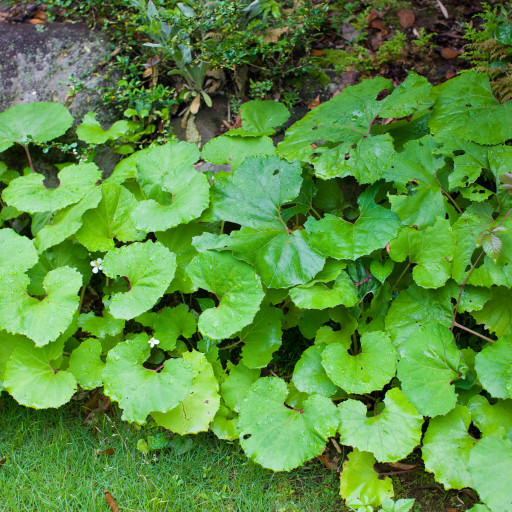
Plant Overview
Known affectionately as the "Giant Butterbur" or "Fuki," this architectural marvel is a staple of Japanese spring landscapes. It is famous for its massive, umbrella-like leaves that are so large they appear plucked from a prehistoric jungle or a Studio Ghibli film. In Japanese folklore, the Koro-pok-guru (a race of tiny earth-dwellers) are said to live beneath these leaves to hide from the rain.
🔍 How to Identify
- 🍃 Colossal Foliage: The most striking feature is the kidney-shaped leaves, which can reach nearly 3 feet in diameter on long, thick stalks.
- 🥦 Early Blooms: In late winter or early spring, weird "alien-looking" flower clusters emerge from the bare ground before the leaves even appear. They look like small, pale green heads of broccoli.
- 🌱 Rhizomatous Growth: It spreads through underground runners, quickly forming dense, lush colonies that can smother any weeds (or neighboring flowers) in their path.
🏡 In Your Garden
- 💧 Thirst for Moisture: This isn't a "set it and forget it" plant for dry areas. It thrives in boggy, wet soil or alongside ponds. If the soil dries out, those giant leaves will dramatically wilt in a matter of hours.
- 🛡️ Space Invader: Because it spreads via rhizomes, it is best suited for large gardens or areas where it can be "contained" by natural barriers. In a small garden, it will quickly try to become the main character.
- 🌑 Shade Lover: It prefers dappled light or full shade. In direct, scorching afternoon sun, the leaves may scorch or turn yellow.
⚠️ Safety & Toxicity
- 🧪 Chemical Warning: Petasites japonicus contains pyrrolizidine alkaloids (PAs), which are toxic to the liver and can be carcinogenic if ingested over long periods.
- 🍳 Culinary Note: While the young flower buds and stalks (Fuki) are a seasonal delicacy in Japan, they must be specially prepared by boiling and soaking in water to remove the toxic alkaloids before consumption.
- 🐾 Pets & Kids: It is best to discourage pets or children from chewing on the raw leaves or stalks, as the PAs can cause digestive distress or long-term liver issues.
✨ Fun Fact
If you’ve ever seen the movie My Neighbor Totoro, the giant leaf the forest spirit holds over its head as an umbrella is inspired by the Petasites japonicus! In rural Japan, these leaves were historically used as emergency umbrellas or to wrap food for transport.

Detailed Care Instructions
| Humidity | Normal |
| Difficulty | Medium |
| Hibernation | Cold Period |
| Hardiness Zones | 5 - 9 |
To grow a Petasites japonicus plant, you can follow these steps:
- Choose a suitable planting location: Petasites japonicus prefers partial shade to full shade and needs a moist or wet soil. Ensure the planting site has rich, loamy soil that retains moisture well.
- Prepare the planting area: Remove any weeds or grass from the area. Dig a hole that is slightly wider and deeper than the plant's root ball.
- Planting the rhizome: Place the Petasites japonicus rhizome (thick, fleshy root) in the planting hole with the growing tip facing up. Cover it with soil, leaving a small depression around the plant to help retain water.
- Watering: Water the plant immediately after planting to settle the soil around the root. Petasites japonicus requires constant moisture, so watering regularly is essential. Ensure the soil remains consistently damp but not waterlogged.
- Mulching: Apply a layer of organic mulch, such as straw or wood chips, around the plant to help retain moisture and suppress weed growth. Avoid mulching directly against the stem to prevent rotting.
- Regular maintenance: Petasites japonicus can spread rapidly through its creeping rhizomes. Regularly check for spreading and thin out the plants if they become overcrowded. Divide the plant every few years to control its growth and maintain vigor.
- Protection from winter frost: In colder regions, where the plant may be exposed to freezing temperatures, protect it by applying a layer of mulch in late fall to insulate the roots.
- Pests and diseases: Petasites japonicus is generally resistant to pests and diseases. However, it may occasionally attract slugs and snails. Use organic pest control methods to manage these pests if necessary.
Remember to check the specific requirements of the variety you have, as different cultivars may have slightly different needs. Happy gardening!

Place in a window with dappled sun or a spot in the middle of a room. Or directly in a window facing west or east.

One way to water this plant is to ensure that the soil is consistently damp, but not saturated. This can be achieved by checking the top inch of soil regularly and watering when it begins to feel dry. It is also important to water at the base of the plant, rather than overhead, to avoid wetting the leaves, which can cause fungal diseases. Additionally, this type of plant prefers to be kept in a shady or semi-shady area, so it may require less water than plants that receive more direct sunlight. It may be beneficial to use a well-draining soil mix and to supplement watering with drainage aids, such as rocks or gravel, to prevent waterlogging.
To fertilize Petasites Japonicus, apply a balanced, water-soluble fertilizer every two weeks during the growing season. Use a fertilizer with equal parts nitrogen, phosphorus, and potassium. Be sure to follow the manufacturer's instructions for application rates and watering requirements. Avoid over-fertilizing, as this can lead to excessive vegetative growth and reduced flowering. Apply fertilizer evenly around the plant's base, avoiding the leaves and stems.
The Petasites Japonicus plant prefers a well-draining soil that is rich in organic matter. It requires a soil pH of 6 to 7 for optimal growth and should be planted in soil that is moist but not waterlogged. The plant will thrive in a soil mixture that is composed of equal parts of compost, peat moss, and sand. It is also important to ensure that the soil is not compacted as this can affect the plant's root growth. Furthermore, the soil should be kept consistently moist to prevent the plant from drying out. Adding a layer of mulch around the plant can help to retain soil moisture and keep the roots cool.
Petasites japonicus plant can be propagated through division and rhizome cuttings. To propagate through division, gently dig up the plant in the early spring or fall and carefully separate the clumps into small sections, making sure each section has a healthy root system. These sections can then be planted in a new location with well-draining soil and kept moist until they establish.
Rhizome cuttings can also be taken in the spring. Locate a healthy, strong rhizome and cut it into sections about 4 inches long. Make sure each section has a few buds and a healthy root system. Plant the cuttings shallowly in well-draining soil and keep them moist until they develop new growth.
Propagation through seed is also possible, but it’s less reliable than propagation by division or rhizome cuttings. Collect seeds from mature plants in late summer and plant them in a well-draining soil mix. Keep the soil moist and the container in a warm, bright location. Germination can take several weeks to several months. Once the seedlings are large enough to handle, transplant them to individual pots or to a prepared garden bed.








