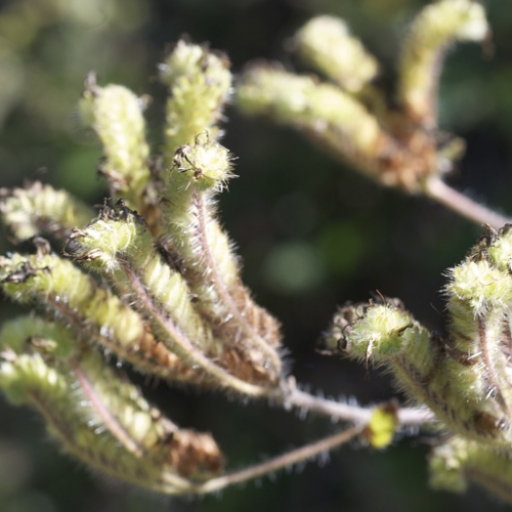
Plant Overview
Known as the Wood Phacelia or Shade Phacelia, this rugged native of western North America is a subtle master of the forest understory. Often called "Scorpion Weed" because of the way its flower spikes tightly coil like a stinger, it brings a wild, prehistoric aesthetic to shaded gardens. While it may look humble, it is a powerhouse for local biodiversity and a favorite for native bees.
🔍 How to Identify
- 🌸 The "Fiddlehead" Bloom: The tiny, creamy-white to pale lavender flowers grow along a one-sided spike that curls at the end, slowly unfurling as the blossoms open from the bottom up.
- 🧶 Long "Whiskers": Each individual flower features remarkably long stamens that poke out far beyond the petals, giving the entire flower cluster a fuzzy or "hairy" appearance.
- 🌿 Bristly Foliage: The leaves are deeply veined and covered in stiff, grayish-white hairs. These hairs are "hispid," meaning they are rough and prickly to the touch, almost like coarse sandpaper.
🏡 In Your Garden
- 🌳 Dappled Shade Lover: This plant is perfect for those "difficult" spots under large trees. It prefers the cooling shadows of a woodland canopy rather than the harsh midday sun, which can scorch its bristly leaves.
- 🌱 Low Maintenance Roots: Once established, Wood Phacelia is surprisingly drought-tolerant for a woodland plant. It doesn't need pampered soil; in fact, it often thrives in rocky or gravelly ground as long as there is some organic leaf litter.
⚠️ Safety & Toxicity
- 🚫 Contact Dermatitis: Use caution! The stiff hairs on the stems and leaves contain glandular oils that can cause a red, itchy skin rash similar to poison oak in many people. Always wear gloves when weeding or pruning.
- 🐾 Pet Protection: While not specifically listed as a deadly toxin, the irritating hairs can cause mechanical irritation to a pet's mouth or paws. It is best kept toward the back of borders where pets don't frequent.
✨ Fun Fact
The genus name Phacelia comes from the Greek word "phakelos," meaning "bundle," which refers to the crowded, bunched-up appearance of the flower clusters before they begin to uncurl!

Detailed Care Instructions
To grow Phacelia Nemoralis plants, follow these steps:
- Choose the right location: Phacelia Nemoralis prefers well-drained soil and full sun to partial shade. Select a location that receives at least 6-8 hours of direct sunlight each day.
- Prepare the soil: Phacelia Nemoralis grows best in fertile soil. Loosen the soil and remove any weeds or debris. You can amend the soil with organic matter or compost to improve its fertility and drainage.
- Sow the seeds: Phacelia Nemoralis can be grown from seeds. Sow the seeds directly into the prepared soil, following the recommended spacing mentioned on the seed packet. Lightly cover the seeds with soil, about ¼ inch deep.
- Watering: Keep the soil consistently moist but avoid overwatering, as excessive moisture can lead to root rot. Water regularly to keep the soil evenly moist until the plants are established.
- Maintenance: Phacelia Nemoralis is a low-maintenance plant. However, it is beneficial to remove any grass or weeds that compete for nutrients and water. Mulching around the plants can help suppress weed growth and conserve moisture.
- Fertilizer: Phacelia Nemoralis generally doesn't require heavy fertilization. If the soil is nutrient-deficient, you can apply a balanced slow-release fertilizer once or twice during the growing season.
- Pruning: Phacelia Nemoralis does not require much pruning. However, you can pinch back the tips to encourage bushier growth and more abundant flowering.
- Pests and diseases: This plant is generally resistant to pests and diseases. However, keep an eye out for common garden pests like aphids or snails. If needed, use organic insecticides or remedies to control pest infestations.
- Blooming and pollination: Phacelia Nemoralis produces attractive, delicate flowers that attract pollinators like bees and butterflies. The plant will naturally go through its blooming cycle, and pollinators will help in fertilizing the flowers.
- Harvesting and seed-saving: After the flowers fade, they will produce seeds. Allow the seeds to fully mature and dry on the plant. Harvest the seeds by gently collecting them and store them in a cool, dry place to sow for future plantings.
Following these steps will help you successfully grow Phacelia Nemoralis plants and enjoy their beautiful blooms.

Place in a bright room that is sun drenched almost all day. Or directly in a south-facing window.

Phacelia Nemoralis is a plant that requires regular watering to keep it healthy and thriving. It is important to water the plant deeply and not let the soil dry out completely, but also not keep it too wet. You should water the plant once or twice a week, depending on the weather conditions and the moisture level of the soil.
To water the plant, you can use a watering can or a hose with a gentle spray attachment. Make sure the water gets to the roots of the plant and does not just run off the surface of the soil. Avoid getting water on the leaves and flowers of the plant, as this can cause damage or encourage fungal growth.
It is also important to monitor the plant and adjust watering frequency as needed. If the leaves start to wilt or turn yellow, it may be an indication that the plant needs more water. On the other hand, if the soil feels constantly wet or the leaves are starting to rot, you may be overwatering the plant.
Overall, providing adequate water to Phacelia Nemoralis is essential for its growth and overall health. With proper watering and care, this plant can thrive and become a beautiful addition to your garden or landscape.
To enhance the growth rate of this plant, apply a balanced fertilizer in spring and again in mid-summer. Use one pound of fertilizer per 100 square feet of planting area. Make sure to spread the fertilizer evenly and water the plants well afterward. Avoid over-fertilizing as it can lead to excessive vegetative growth and reduce flowering.
Phacelia Nemoralis plant prefers moist, well-drained soil with a neutral pH level. The soil should be rich in organic matter, and have good soil structure to allow for healthy root growth. It is advisable to incorporate some compost or aged manure into the soil bed prior to planting. This will help to provide the necessary nutrients and microbial activity to support the plant. Additionally, it is beneficial to supplement with a balanced fertilizer throughout the growing season to maintain adequate soil fertility. The plant may not tolerate soils that are heavy or compacted, or those that are either too acidic or too alkaline. Therefore, it is important to test the soil before planting to ensure that it meets the plant's requirements.
To propagate this plant, you can collect the seeds from the flower heads once they have dried out and turned brown. Gently crush the flower heads to release the seeds and allow them to fall into a container. Remove any chaff or debris from the seeds and store them in a cool, dry place until you are ready to plant them.
In the spring, prepare a bed of moist, well-draining soil in a sunny location. Scatter the seeds thinly over the soil surface and cover with a light layer of soil. Water gently to moisten the soil and keep it consistently moist until the seedlings emerge.
As the seedlings grow, thin them to a spacing of about 6-8 inches apart to give them room to develop. Keep the soil moist and weed-free, and fertilize lightly once or twice during the growing season with a balanced fertilizer. The plants will flower in their second year and will self-seed, so be sure to remove any spent flowers to prevent unwanted spread.








