Plant Overview
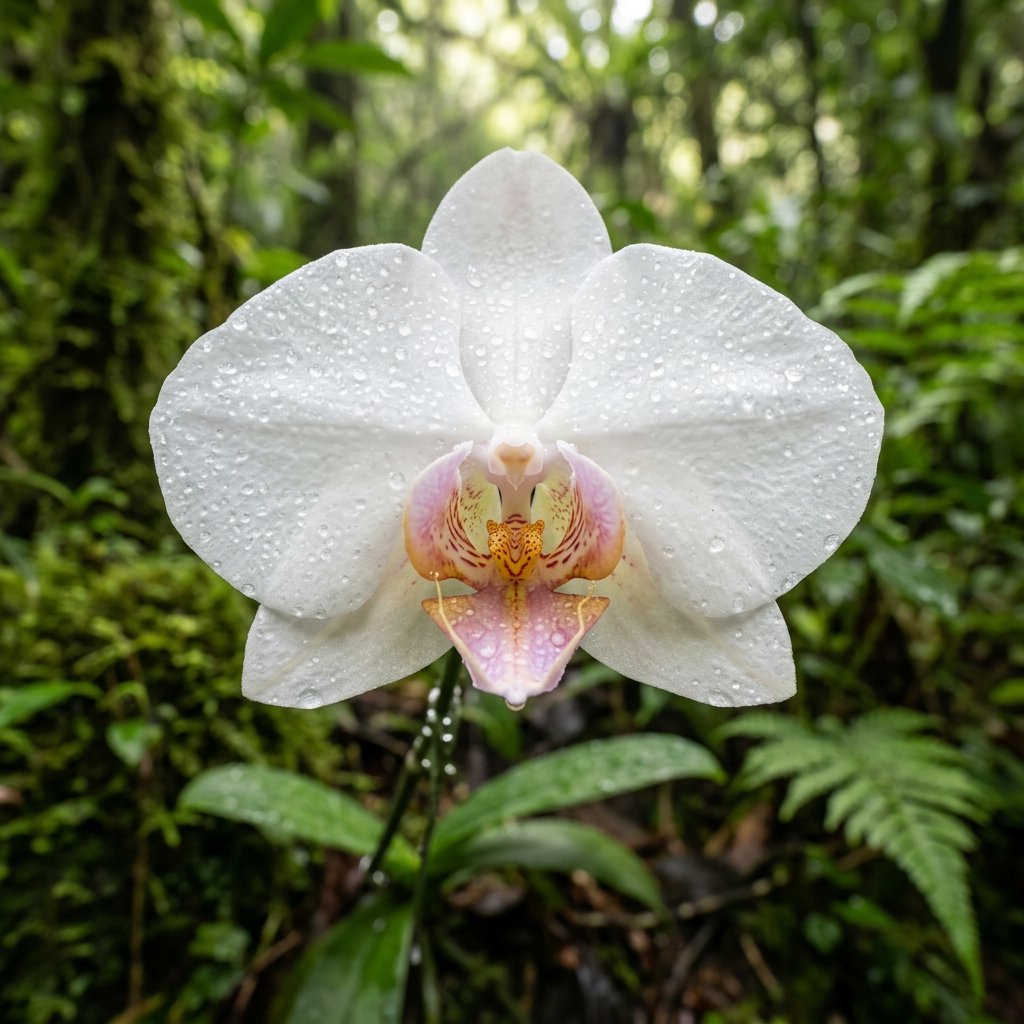
Named after the Greek goddess of love and beauty, Phalaenopsis aphrodite is the quintessential "Moth Orchid." Its elegant, snow-white blooms look like a cluster of ethereal moths in flight, bringing an air of sophisticated serenity to any space. Often found clinging to trees in the humid jungles of the Philippines and Taiwan, this species is the genetic ancestor of many of the colorful orchid hybrids found in shops today.
🔍 How to Identify
- 🌸 Heavenly Blooms: It features pure, snowy-white petals with a distinctive "lip" (labellum) that often displays subtle yellow and reddish-purple markings at its center.
- 🍃 Lush Foliage: The plant produces thick, leathery, oval-shaped leaves that are deep green and grow in a flat, alternating fan-like pattern.
- 🧬 Silver Roots: Look for thick, fleshy aerial roots covered in a silvery-grey "velamen" coating, which turns bright green instantly when the plant is watered.
🏡 In Your Garden
- 🌳 The Tree-Hugger: In its native habitat, this orchid is an epiphyte, meaning it grows on tree branches rather than in dirt. To keep it happy at home, never use standard potting soil; instead, use a specialized orchid bark or sphagnum moss to ensure the roots can "breathe."
- ☀️ Dappled Light: This orchid is a fan of "bright-indirect" light. Think of it as a forest dweller—it loves the morning sun but will suffer from "sunburn" (brown or crispy patches) if left in the direct heat of a south-facing window.
⚠️ Safety & Toxicity
- ✅ Pet-Friendly: Great news for pet parents! Phalaenopsis aphrodite is considered non-toxic to both cats and dogs, making it a safe addition to a lively household.
- 💧 Sensitive Soul: While not toxic, the plant can be sensitive to chemicals. It prefers distilled water or rainwater, as the chlorine and minerals in some tap water can cause the sensitive root tips to turn black.
✨ Fun Fact
The name Phalaenopsis literally translates to "moth-like." Legend says that when the botanist Carl Blume first discovered these orchids in the 1750s, he actually mistook them for a group of white moths resting on a tree through his binoculars!

Detailed Care Instructions
| Humidity | High |
| Lighting | Full Sun |
| Difficulty | Medium |
| Temperature | 26°C - 31°C |
| Hardiness Zones | 10A - 11B |
To grow a Phalaenopsis Aphrodite plant, follow these steps:
- Light: Place the plant in a location with bright, indirect light. Avoid direct sunlight, as it can burn the leaves. A north or east-facing window is usually ideal.
- Temperature: Phalaenopsis Aphrodite plants prefer temperatures between 65-85°F (18-29°C) during the day and slightly cooler temperatures at night.
- Humidity: These orchids thrive in high humidity. If the air in your home is dry, you may need to increase humidity around the plant. This can be done by placing a tray of water near the plant or using a humidifier.
- Watering: Water the plant regularly, but make sure to allow the roots to dry out between waterings. Overwatering can cause root rot. The frequency of watering will depend on the environment, but typically once a week is sufficient. When watering, thoroughly soak the potting medium, but avoid letting water accumulate in the crown of the plant.
- Fertilizing: Use a balanced orchid fertilizer regularly during the growing season (spring to early fall) to provide the necessary nutrients. Follow the instructions on the fertilizer package for proper dilution and frequency of application.
- Potting: Repot your Phalaenopsis Aphrodite plant every 1-2 years, typically after flowering. Use a well-draining orchid potting mix and make sure the new pot has good drainage holes. Remove any dead roots and place the plant in the new pot, burying the roots in the potting mix.
- Blooming: Phalaenopsis Aphrodite plants usually bloom once a year. To encourage blooming, provide them with a slight drop in temperature during the night for a few weeks (around 55-60°F or 13-16°C). Additionally, make sure the plant receives proper care with adequate light, water, and fertilizer.
- Maintenance: Regularly inspect and remove any dead or yellowing leaves or flowers. Keep an eye out for pests such as aphids or mealybugs and take appropriate action if you notice any infestation.
By following these guidelines and providing proper care, your Phalaenopsis Aphrodite plant should grow and thrive, rewarding you with beautiful blooms.

Place in a window with dappled sun or a spot in the middle of a room. Or directly in a window facing west or east.

Phalaenopsis Aphrodite plant prefers to be watered with room temperature water. Allow the water to be absorbed by the soil entirely before giving it another round of watering. Over-watering can be harmful to the plant, ensure that the soil is not overly saturated. Ensure that any excess water is drained from the pot to prevent root rot. It is crucial to not water the leaves of the plant and to aim the water to the soil instead. Water only when the soil is dry.
To fertilize this type of orchid, use a balanced fertilizer with an N-P-K ratio of 20-20-20 or 10-10-10. Dilute the fertilizer to one-quarter or one-half strength and apply it every two weeks during the growing season. Reduce fertilization during the winter months. Do not fertilize a plant that is experiencing stress or has no roots. Always water the plant prior to fertilization to avoid damaging roots.
The recommended type of soil to use with this specific plant species is a well-draining mixture that is composed of materials such as bark, perlite, and sphagnum moss. This type of soil allows for appropriate air circulation, water drainage, and root growth, which is essential for the health and overall growth of the plant. It is important to avoid using soil that is too dense or compact, as this can lead to root rot and other plant diseases. Additionally, adding a layer of gravel or rocks at the bottom of the pot can aid in drainage and prevent water from accumulating at the roots.
Propagation of this orchid can be achieved through division of its root system. Select a healthy, mature plant with multiple stems and carefully remove it from its container. Gently separate the roots and stems into smaller sections, making sure each division has a healthy root system and at least one stem. Trim any dead or damaged roots and pot each division into a small container filled with orchid potting mix. Water lightly and place in a bright, humid location with temperatures between 65-80°F. Regularly monitor the soil moisture level and adjust watering as needed. It may take several months for the newly propagated plants to establish and begin producing new growth.
Common pests of the aphrodite's phalaenopsis include Scale insect, mealybugs, spider mites, thrips. Make a habit of checking your aphrodite's phalaenopsis frequently for pests so that any infestations can be caught and managed early.








