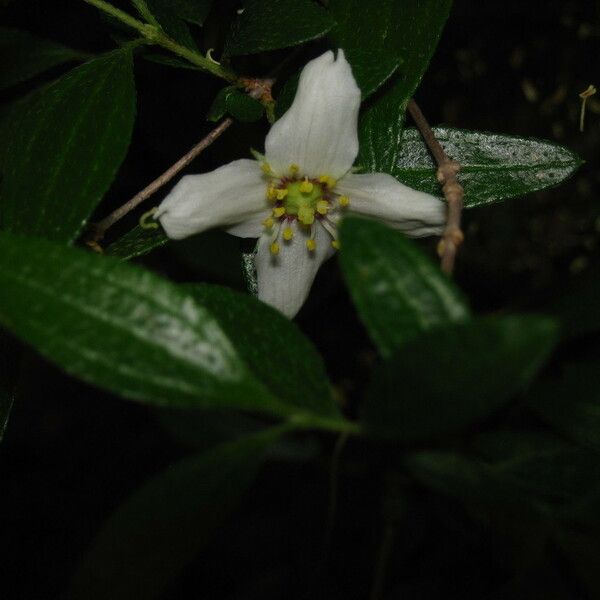
Plant Overview
Often called the Canyon Mock Orange, Philadelphus ernestii is a rare Texan treasure that brings the scent of a citrus grove to the rocky edges of the Edwards Plateau. While it looks like a delicate garden shrub, it is a rugged survivor found naturally tucked away in limestone canyons and shaded crevices. Its star-shaped white blooms are famous for a fragrance so sweet and potent it can perfume an entire patio on a still summer evening.
🔍 How to Identify
- 🌼 The Blooms: Features four-petaled, creamy white flowers with a dense cluster of bright golden-yellow stamens at the center, resembling a tiny starburst.
- 🍃 The Foliage: Small, oval-shaped leaves that are usually soft to the touch with fine hairs on the underside, arranged oppositely along graceful, arching stems.
- 🪵 The Bark: As the plant matures, the older stems develop a distinctive "shreddy" or peeling bark that gives the shrub a rustic, textured look even in winter.
🏡 In Your Garden
- 🪨 Rock Specialist: This plant is a "canyon dweller" by nature. It thrives in well-drained, alkaline soil and can handle rocky or shallow ground much better than most traditional garden shrubs.
- 🦋 Pollinator Magnet: The intense citrus scent isn't just for humans; it acts as an irresistible beacon for butterflies and native bees, making it a perfect addition to a "wildlife-friendly" corner of the garden.
- ✂️ Pruning Nuance: Because it blooms on "old wood" (growth from the previous year), it is best to prune it immediately after the flowers fade. Trimming it in late winter might accidentally remove all of your spring blossoms.
⚠️ Safety & Toxicity
- ✅ Safe Profile: Philadelphus ernestii is generally considered non-toxic and is not known to be a threat to humans, cats, or dogs.
- 👅 Not for Snacking: Despite the "Mock Orange" name and citrusy fragrance, the plant is not edible. While not poisonous, the leaves and stems are quite bitter and may cause mild stomach upset if ingested by curious pets or children.
✨ Fun Fact
🌟 Texas Exclusive: This isn't just any garden shrub; it is a true Texas endemic. In the wild, it is found naturally in only a few specific counties in the Texas Hill Country and nowhere else on Earth!

Detailed Care Instructions
To grow a Philadelphus Ernestii plant, also known as Mock Orange Ernest Wilson, follow these steps:
- Choose a suitable location: Philadelphus Ernestii prefers full sun to partial shade. Pick a spot in your garden that receives at least six hours of direct sunlight each day.
- Prepare the soil: The plant thrives in well-drained, fertile soil. Amend the soil with organic matter like compost to improve drainage and provide essential nutrients. Avoid heavy clay soils that can retain water, potentially causing root rot.
- Watering: Philadelphus Ernestii requires regular watering, especially during dry spells. Ensure that the soil is evenly moist but not waterlogged. Water deeply once a week, allowing the top inch of soil to dry out before the next watering.
- Fertilizing: Apply a balanced slow-release fertilizer in spring to promote healthy growth. Follow the instructions on the product for the correct dosage and application method. Additionally, you can supplement with an organic liquid fertilizer during the growing season to enhance flowering.
- Pruning: Prune Philadelphus Ernestii immediately after flowering in late spring or early summer. Remove dead or damaged stems and shape the plant as desired. Pruning stimulates new growth and helps maintain a compact and tidy appearance.
- Mulching: Apply a layer of organic mulch around the base of the plant to conserve moisture, suppress weeds, and insulate the roots. Leave a gap around the stem to prevent rotting.
- Protection from cold: Philadelphus Ernestii is generally hardy, but young plants might need protection from extreme cold during the first few winters. Mulching heavily around the base can help insulate the roots and prevent frost damage.
- Propagation: You can propagate Philadelphus Ernestii through semi-hardwood cuttings taken in summer. Prepare a pot with moist, well-draining potting mix, and insert the cuttings at an angle. Keep the pot in a shaded area and mist the cuttings occasionally until they develop roots.
By following these steps, you should be able to grow a healthy Philadelphus Ernestii plant. Remember to provide proper care, regular watering, and occasional fertilization to promote vigorous growth and prolific flowering.
To properly water Philadelphus Ernestii, it is important to consider the specific needs and requirements of this plant. Here are the guidelines for watering without using its common names:
- Understand the plant's water requirements: Philadelphus Ernestii prefers consistently moist soil. It is important to maintain a balance as overwatering can lead to root rot, while underwatering can cause stress and hinder growth.
- Check soil moisture: Before watering, check the moisture level of the soil by inserting your finger about one inch deep into the soil. If it feels dry at this depth, it's time to water.
- Watering frequency: Water the plant deeply but infrequently. Aim to provide a good soaking that reaches the root zone without saturating the soil. This encourages the roots to grow deeper to seek out water and promotes overall plant health.
- Watering method: Use a gentle watering method to avoid compacting the soil or damaging the plant. A soaker hose or drip irrigation system can be effective in providing a slow, deep watering. Alternatively, a watering can or gentle spray nozzle attached to a hose can be used. Ensure that the water reaches the root zone rather than just wetting the foliage.
- Morning watering: Watering in the morning is generally recommended as it allows excess moisture to evaporate during the day, reducing the risk of diseases caused by prolonged moisture on the leaves.
- Consider environmental factors: Temperature, humidity, and weather conditions affect watering requirements. During periods of high heat or drought, the plant may require more frequent watering to compensate for water loss through transpiration.
- Use mulch: Applying a layer of organic mulch around the plant can help retain moisture, regulate soil temperature, and reduce weed growth. Mulching also minimizes water loss due to evaporation from the soil surface.
Remember, the specific watering needs of Philadelphus Ernestii may vary depending on factors like climate and soil conditions. It is always beneficial to monitor the plant's response to watering and adjust accordingly to maintain its health and vitality.
Fertilizing instructions for Philadelphus Ernestii plant:
- Use a balanced, water-soluble fertilizer with equal amounts of nitrogen (N), phosphorus (P), and potassium (K).
- Dilute the fertilizer according to the manufacturer's instructions, usually at a 1:1 ratio with water.
- Apply the fertilizer around the base of the plant, avoiding direct contact with the leaves or stem.
- Water the plant thoroughly after fertilizing to help the nutrients penetrate the soil.
- Repeat the fertilization process every 4-6 weeks during the growing season, typically from spring to early fall.
- Monitor the plant's response to the fertilizer and adjust the frequency or concentration if needed.
- Avoid overfertilizing, as it can lead to excessive foliage growth and reduced flower production.
- If the leaves turn yellow or the plant appears unhealthy, it may indicate a nutrient deficiency or excess, so adjust the fertilization accordingly.
- Remember to follow any specific instructions provided by a horticulturist or expert for optimal care of Philadelphus Ernestii.
Philadelphus Ernestii, a flowering plant from the family Hydrangeaceae, thrives well in a specific type of soil that provides it with the necessary nutrients and drainage. The recommended soil for Philadelphus Ernestii is a well-draining loamy soil. Loam is a soil type that contains equal parts of sand, silt, and clay, providing a balanced composition that promotes optimal growth.
The soil should be nutrient-rich, providing the plant with essential minerals and organic matter. This promotes healthy root development and overall plant vigor. Adequate levels of nitrogen, phosphorus, and potassium in the soil are particularly important for Philadelphus Ernestii's growth, flowering, and overall health.
As Philadelphus Ernestii prefers well-draining soil, it is crucial to ensure that excess water does not accumulate around its roots, which can lead to root rot or other moisture-related issues. Therefore, the soil should have good drainage properties. This allows excess water to drain away, preventing the soil from becoming waterlogged.
Additionally, it is beneficial to incorporate organic matter into the soil, such as compost or well-rotted manure. This improves the soil's structure, fertility, and moisture-holding capacity. Organic matter also enhances microbial activity in the soil, facilitating nutrient uptake by the plant.
Overall, providing Philadelphus Ernestii with a loamy, well-draining soil enriched with organic matter ensures optimal conditions for its growth, flowering, and overall health.
Philadelphus Ernestii is a shrub that can be propagated through several methods. Here are the steps to propagate Philadelphus Ernestii:
- Choose the right time: The best time to propagate Philadelphus Ernestii is during the early spring or late autumn when the plant is dormant.
- Select healthy stems: Look for healthy, disease-free stems to use for propagation. Ideally, choose stems that are about one-year-old, as they have the best chance of rooting successfully.
- Take semi-hardwood stem cuttings: Using clean and sharp pruning shears, take cuttings from the Philadelphus Ernestii shrub. Cut a 4-6 inch (10-15 cm) section of stem just below a node. Ensure the cut is clean and not jagged.
- Prepare the cuttings: Remove the lower leaves from the stem, leaving only a few at the top. This helps reduce water loss during the rooting process. Optional: You can also dip the cuttings in a rooting hormone powder to encourage root growth.
- Prepare the planting medium: Fill a small container with a well-draining soil mix. A combination of peat moss, perlite, and sand can be used. Ensure the medium is moist, but not waterlogged.
- Plant the cuttings: Make a hole in the planting medium with a pencil or your finger and insert the stem cutting into it. Gently firm the soil around the cutting to provide support.
- Provide the right environment: Place the container in a warm and bright location, but avoid direct sunlight. The ideal temperature for rooting is between 68-77°F (20-25°C).
- Mist the cuttings: To maintain humidity around the cuttings, mist them with water using a spray bottle. Ensure that the soil remains moist but not excessively wet.
- Be patient: It can take several weeks for the cuttings to develop roots. During this time, avoid disturbing or moving the container.
- Transplanting: After the cuttings have rooted and developed a healthy root system, typically after 6-8 weeks, they can be transplanted into individual pots or directly into the garden.
Remember, each Philadelphus Ernestii cutting has the potential to grow into a new plant, so feel free to propagate multiple cuttings to increase your chances of success.








