Plant Overview
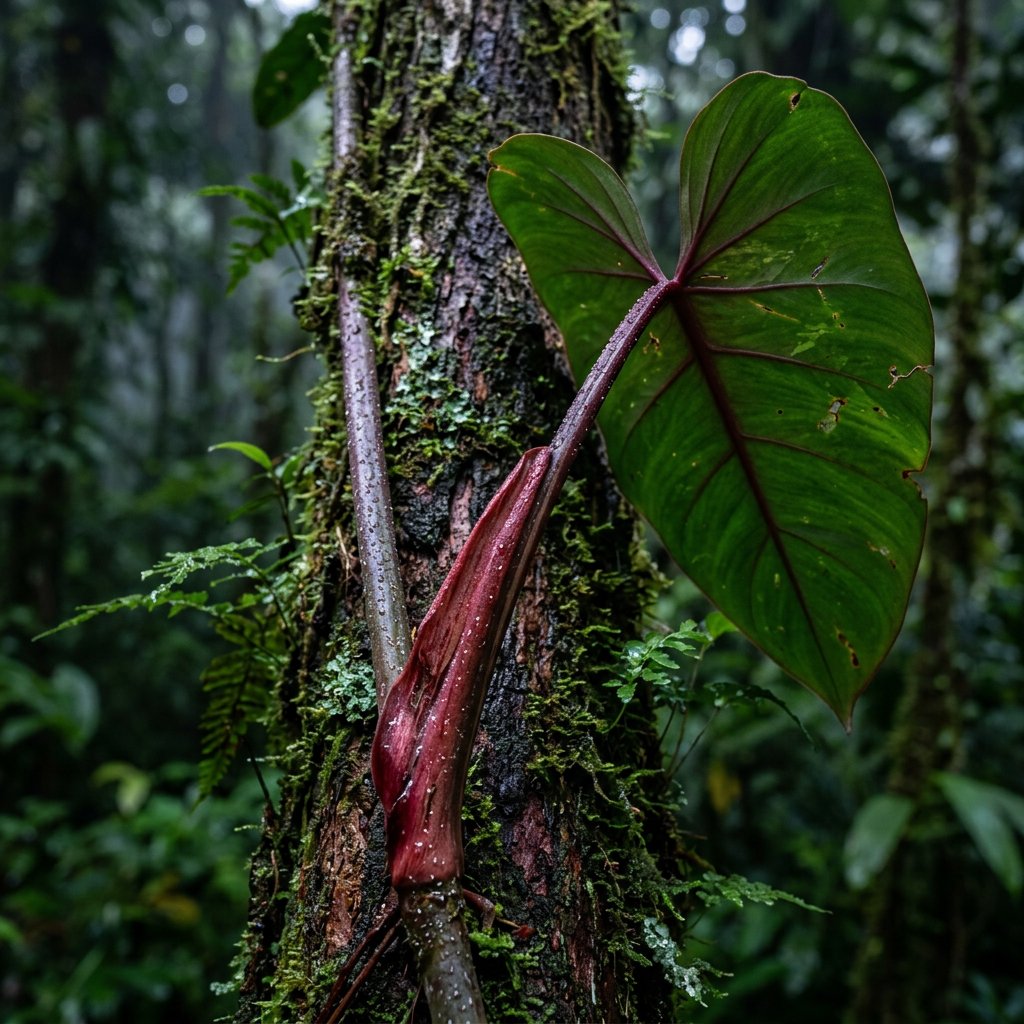
Often called the Blushing Philodendron or the Red Emerald, this Colombian native is a show-stopper in the world of tropical houseplants. It earned its "blushing" nickname from the stunning reddish-purple hues that tint its stems and the undersides of its maturing leaves. Whether it’s climbing a moss pole or acting as a centerpiece, its waxy, lance-shaped foliage brings an air of exotic drama to any indoor space.
🔍 How to Identify
- 🍃 Leaf Shape: Large, glossy, heart-shaped (or arrowhead) leaves that can grow up to 16 inches long when the plant is mature.
- 🍷 Colored Petioles: Distinctive deep red or burgundy stems (petioles) that contrast sharply with the dark green upper surface of the leaves.
- 🧗 Climbing Habit: Unlike many trailing philodendrons, this species is a "self-header" or vigorous climber that produces thick aerial roots to latch onto nearby structures.
🏡 In Your Garden
- 🪜 Vertical Ambition: Because it is a natural climber, this plant truly thrives when provided with a moss pole or trellis. Giving it vertical support encourages the leaves to grow much larger and more robust.
- 💧 The "Slightly Dry" Rule: This species is particularly prone to root rot if kept in soggy soil. It prefers to have the top half of its potting mix dry out completely before you reach for the watering can.
- ☀️ Color Maintenance: To keep those "blushing" red stems vibrant, it needs bright, indirect light. In low light, the red tones may fade to a muddy brown, and the plant will become "leggy" as it stretches for the sun.
⚠️ Safety & Toxicity
- 🚫 Toxic Status: Toxic to humans, cats, and dogs.
- 🐾 The Danger: The plant contains insoluble calcium oxalate crystals. If the leaves or stems are bitten or chewed, these crystals cause immediate oral irritation, swelling of the tongue and throat, and digestive distress. It is best kept on high shelves out of reach of curious pets and toddlers.
✨ Fun Fact
- 🧬 A Famous Parent: Philodendron erubescens is the primary ancestor of many of the most famous "designer" houseplants in the world, including the highly coveted and expensive Philodendron 'Pink Princess'!

Detailed Care Instructions
| Color | Deep Red |
| Soil Ph | 5.6-7.5 |
| Humidity | High |
| Lighting | Part Sun |
| Toxicity | Poisonous |
| Soil Type | Rich, Quick-Draining, Loamy |
| Bloom Time | Late Spring, Early Summer |
| Difficulty | Medium |
| Plant Type | Flowering Perennial |
| Hibernation | Cold Period |
| Mature Size | 60 To 90 Cm As Houseplant |
| Native Area | Central, South America |
| Temperature | 18°C - 24°C |
| Sun Exposure | Partial Shade |
| Hardiness Zones | 10 To 11 |
To grow Philodendron Erubescens successfully, follow these steps:
- Select a suitable location: Choose a spot that receives bright, indirect sunlight. Avoid direct sunlight as it can scorch the leaves. The plant can also tolerate low light conditions, but it may grow slower.
- Provide the right temperature and humidity: Philodendron Erubescens prefers temperatures between 65-85°F (18-29°C). Maintain a relatively high humidity level of around 60-70%. You can increase humidity by placing the plant on a pebble tray filled with water or using a humidifier.
- Watering: Water the plant when the top inch of soil feels slightly dry. Ensure the soil is well-draining and does not become soggy, as this can lead to root rot. Philodendrons prefer regular watering but can tolerate slight drying out between waterings. Avoid overwatering.
- Fertilization: Feed the plant with a balanced, water-soluble houseplant fertilizer during the growing season (spring and summer). Follow the instructions on the fertilizer package for proper dosage.
- Repotting: Philodendron Erubescens enjoys slightly crowded roots, so repot only when necessary. If the roots start to come out of the drainage holes or the plant becomes root-bound, repot it into a slightly larger pot. Use well-draining potting soil.
- Pruning: Remove any dead or yellowing leaves to maintain a tidy appearance. Pruning can also encourage bushier growth. Trim the stems just above a leaf node to promote new growth.
- Propagation: You can propagate Philodendron Erubescens through stem cuttings. Take a cutting with at least two nodes and place it in a jar of water or directly into a pot filled with moist soil. Keep it in a warm, humid location until new roots form.
- Pest control: Check your plant regularly for pests like mealybugs, spider mites, and aphids. If you notice any infestation, use an organic insecticidal soap or neem oil to control them.
Remember that plants may have individual preferences, so pay attention to the specific needs of your Philodendron Erubescens and adjust the care accordingly.

Place in a window with dappled sun or a spot in the middle of a room. Or directly in a window facing west or east.

Philodendron Erubescens is a tropical plant that requires a moderate amount of water. To water this plant properly, begin by selecting a container with proper drainage holes that will allow the excess water to drain away.
Before watering, check the soil's moisture level by sticking your finger about an inch deep into the soil. If it feels dry, it's time to water the plant. If the soil feels moist, wait a day or two before checking again.
When watering, pour water slowly around the base of the plant until it starts to run out of the drainage holes. Avoid watering the leaves, as this can cause water droplets to sit on the leaves, which can cause fungal diseases.
Allow the soil to dry out slightly between waterings, as over-watering can lead to root rot and other problems. In general, water Philodendron Erubescens once or twice a week, depending on the humidity and temperature of your environment.
It's also important to note that this plant prefers well-draining soil, so avoid waterlogging it by ensuring that excess water can drain from the container. Finally, consider using filtered water or distilled water as this plant is sensitive to chemicals present in tap water.
To fertilize this plant, use a balanced fertilizer with equal amounts of nitrogen, phosphorus, and potassium. Dilute the fertilizer to half strength and apply every two weeks during the growing season. Do not fertilize during the winter months. Ensure that the soil is moist before fertilizing and never fertilize a plant that is dry or stressed. Use a fertilizer that also contains micronutrients such as iron, manganese, and magnesium.
The Philodendron Erubescens plant prefers a soil mix that is well-draining and retains some moisture. A good mix can be made by combining equal parts of peat moss, perlite, and vermiculite. It is important to ensure that the soil is not too compact and has enough air circulation for the roots to breathe. Fertilizer can be added to the soil during the growing season to provide nutrients for the plant's growth. The plant prefers soil that is slightly acidic with a pH range of 5.5 to 6.5. It is important to avoid using soil that is too clayey or sandy as it can lead to poor drainage and affect the plant's growth. Overall, a suitable soil mix for the Philodendron Erubescens plant should be balanced, well-draining, and nutrient-rich.
Philodendron Erubescens can be propagated through stem cuttings. First, select a mature stem that has at least two leaves and make a clean cut below a node with a sharp, sterilized knife. Remove the bottom leaves from the stem, leaving only one or two leaves at the top.
Next, prepare a container with well-draining soil and create a hole in the soil using your finger or a pencil. Dip the cut end of the stem in rooting hormone and insert it into the hole, gently packing the soil around it.
Mist the cutting and cover it with a plastic bag or container to increase humidity. Place the container in a warm and bright spot, but avoid direct sunlight.
Check the plant regularly to ensure the soil stays moist but not waterlogged. After a few weeks, roots should begin to grow from the stem cutting. Once the roots have developed, the new plant can be transplanted into a larger container with regular potting soil.
Common pests of the blushing philodendron include Mealybugs, spider mites, thrips. Make a habit of checking your blushing philodendron frequently for pests so that any infestations can be caught and managed early.








