Plant Overview
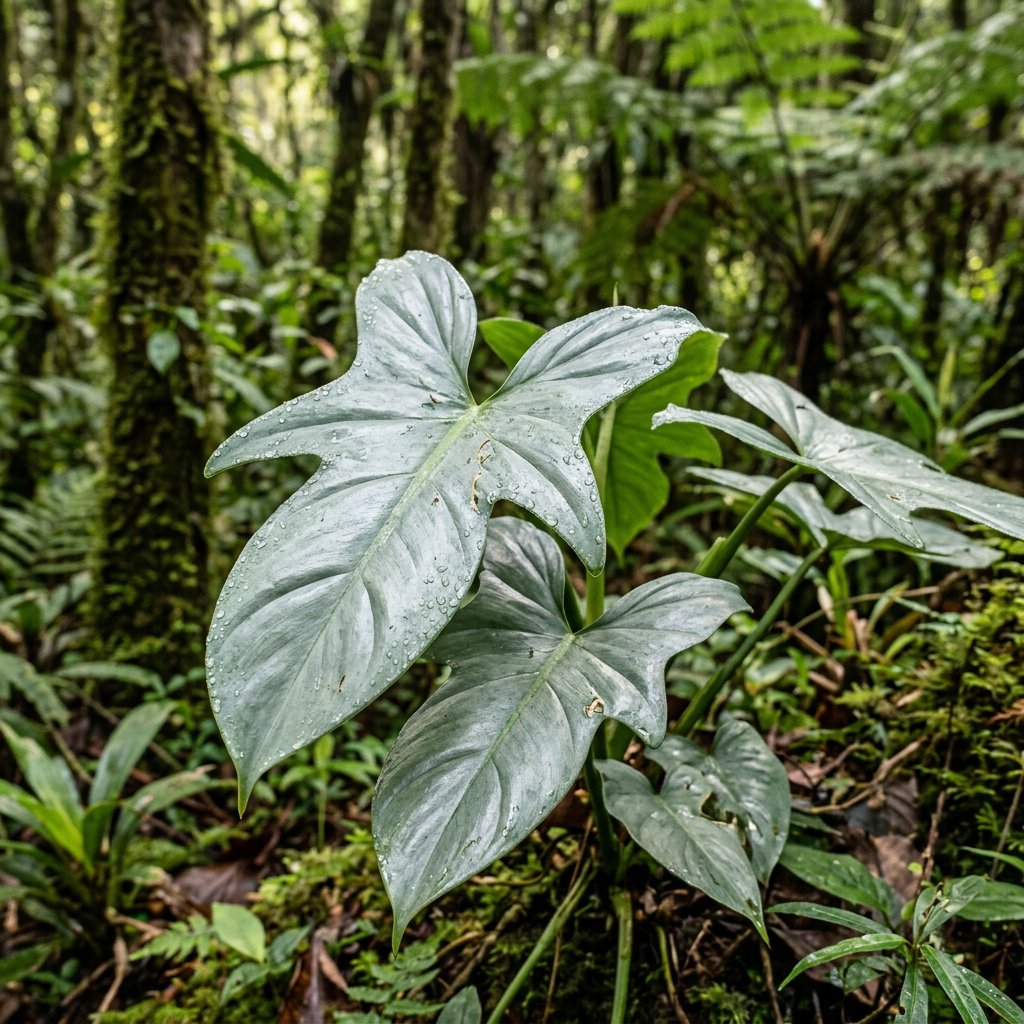
Known as the "Silver Sword," the Philodendron hastatum looks like it was forged in a celestial furnace rather than grown in the earth. Native to the vanishing rainforests of Brazil, this striking climber is beloved for its shimmering, metallic foliage that reflects light with a distinct blue-grey luster. It is an elegant, sophisticated aroid that transforms any indoor space into a high-end botanical gallery.
🔍 How to Identify
- 🗡️ The Shape: True to its name, the leaves are elongated and sword-shaped, tapering to a sharp point. As the plant matures, the base of the leaf develops prominent lobes, creating a classic "arrowhead" or hastate look.
- 💿 The Finish: Unlike the deep greens of most houseplants, this foliage boasts a unique "gunmetal" or silvery-blue sheen that feels almost metallic to the touch.
- 🧗 The Habit: It is a vigorous hemiepiphyte (a plant that spends part of its life cycle as an epiphyte). While it starts small, it has a strong desire to climb upward toward the canopy.
🏡 In Your Garden
- 🪵 The Support System: Because this plant is a natural-born climber, it thrives when given a moss pole or cedar plank. Providing vertical support isn't just for aesthetics; it actually signals the plant to produce larger, more dramatic mature leaves.
- 🌬️ Soil Nuance: It detests "wet feet" and heavy, suffocating soil. To mimic its tropical home, use a "chunky" aroid mix—incorporating orchid bark, perlite, and charcoal—to ensure the roots can breathe even after a heavy watering.
- 🌤️ Light Logic: While it can survive in lower light, its signature silver color will fade to a dull green if it's too dark. Bright, filtered light keeps the metallic sheen "polished."
⚠️ Safety & Toxicity
- 🚫 Status: Toxic to humans and pets.
- 🐾 Details: Like most members of the Araceae family, it contains insoluble calcium oxalate crystals. If leaves or stems are chewed, it can cause immediate oral pain, swelling of the throat, and digestive distress in cats, dogs, and curious toddlers.
✨ Fun Fact
Despite being incredibly popular in living rooms across the globe, the Silver Sword is actually considered an endangered species in its native Brazilian habitat due to urban sprawl and deforestation. By growing one at home, you are helping preserve the genetics of a plant that is struggling to survive in the wild!

Detailed Care Instructions
To grow Philodendron Hastatum successfully, follow these steps:
- Planting: Choose a well-draining, nutrient-rich potting mix for your Philodendron Hastatum. Select a pot with drainage holes to prevent waterlogging. Place a small layer of pebbles at the bottom of the pot for additional drainage.
- Light: This plant thrives in bright indirect light, meaning it should receive bright, filtered light without direct sun exposure. Place it near a window with a sheer curtain, or a few feet away from a window with bright light.
- Watering: Philodendron Hastatum prefers its soil to be kept steadily moist, but not soggy. Check the soil regularly and water when the top inch feels slightly dry. Avoid overwatering, as it can cause root rot. Also, misting the leaves occasionally can provide some extra humidity.
- Temperature and Humidity: Philodendron Hastatum prefers temperatures between 65-85°F (18-29°C). It appreciates higher humidity levels, so try to provide some humidity by placing a tray with water near the plant or using a humidifier.
- Fertilizer: Feed your Philodendron Hastatum with a balanced, water-soluble fertilizer at half strength every six to eight weeks during the growing season (spring and summer). Avoid fertilizing during the fall and winter months.
- Pruning: Regularly prune your Philodendron Hastatum to control its size and shape. Trim off any yellow or dead leaves, as well as leggy or overgrown stems. Pruning encourages new growth and helps the plant maintain its health and appearance.
- Repotting: Philodendron Hastatum can outgrow its pot relatively quickly. Repot the plant into a slightly larger pot with fresh potting soil when you notice that the roots are getting cramped.
- Propagation: You can propagate Philodendron Hastatum through stem cuttings. Select a healthy stem with a few leaves and nodes, and place it in a jar of water or directly in moist soil until roots develop.
Remember that plants can have individual needs, so pay attention to your Philodendron Hastatum's specific requirements and adjust care accordingly.

Place in a window with dappled sun or a spot in the middle of a room. Or directly in a window facing west or east.

To water this plant, first ensure that the soil is completely dry before watering. This plant prefers well-draining soil, so make sure there is no excess water sitting in the bottom of the pot. When watering, aim to thoroughly soak the soil until water runs out of the drainage holes. Avoid letting the plant sit in standing water. Water once every week or two, depending on the humidity levels in your home. In drier environments, the plant may require more frequent watering. Avoid over-watering, as this can lead to root rot and other issues.
To fertilize this plant, you should dilute a water-soluble fertilizer in water following the instructions on the packaging. Apply the solution to the soil once a month during the growing season, which is usually from spring to summer. Avoid over-fertilizing, as it can lead to leaf burn and other issues. Also, make sure to water the plant thoroughly before fertilizing to prevent root damage.
The Philodendron Hastatum plant prefers well-draining soil that is rich in organic matter. A soil mix that has sufficient nutrients and good drainage but is not too moist is ideal for this plant. One option is to mix equal parts of peat moss, perlite, and shredded bark for a light and airy soil. Another option is to use a mix of potting soil, sand, and peat moss. Ensure that the soil is not compacted and allows water to drain quickly. The plant also benefits from regular fertilization to promote healthy growth, so a soil mix that contains slow-release fertilizer or a balanced liquid fertilizer can be used.
To propagate this plant, start by selecting a healthy and mature stem that has at least two nodes. Nodes are the points on the stem where leaves emerge. Cut the stem just below the second node from the top, and remove any leaves on the bottom half of the cutting. Dip the cut end into rooting hormone powder and plant it in a well-draining soil mixture. Water the soil until it's moist, but not soggy.
Cover the cutting with a plastic bag or a clear plastic container to create a humid environment. Place the cutting in a bright, indirect light location and maintain a temperature around 70°F. After a few weeks, check for the growth of roots. Once the roots have developed, remove the plastic and transplant the new plant into a new pot with fresh soil. Keep the soil moist and maintain bright, indirect light.
As the plant grows, you can provide support with a stake or trellis. The new plant may take some time to establish in its new pot, but once it's established, care for it as usual by watering it when the top 1 inch of soil is dry and fertilizing it during the growing season.
Common pests of the silver sword include Mealybugs, spider mites, thrips. Make a habit of checking your silver sword frequently for pests so that any infestations can be caught and managed early.








