Plant Overview
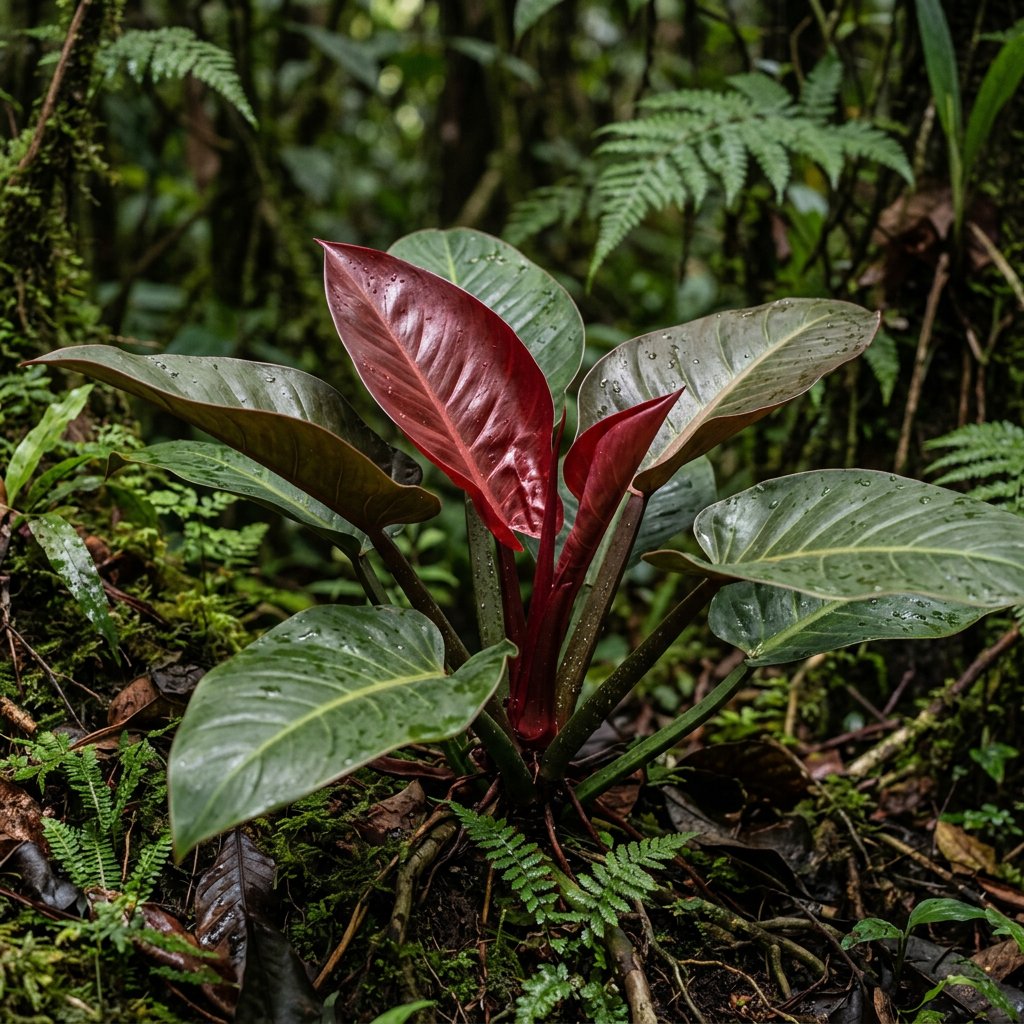
Known for its regal, wine-colored foliage, the Philodendron 'Imperial Red' is a true showstopper for indoor jungles. Unlike its trailing cousins that wander across shelves, this hybrid stands tall and proud in a dense, upright rosette, offering a sense of architectural drama. It is a man-made masterpiece, specifically bred to bring the lush, prehistoric feel of the tropical rainforest into the modern living room.
🔍 How to Identify
- 🍷 The Foliage: The most striking feature is the color transition. New leaves emerge in a deep, glossy burgundy or "imperial" red, gradually maturing into a dark, forest green with hints of chocolate.
- 🍃 Leaf Shape: The leaves are large, leathery, and broadly spade-shaped (ovate). They have a stiff, waxy texture that helps the plant retain moisture.
- 🏗️ Growth Habit: This is a "self-heading" Philodendron, meaning it grows from a central clump rather than climbing a vine. It stays relatively compact compared to vining species, though its leaves can grow quite large.
🏡 In Your Home
- ☀️ Light & Color: While it can survive in lower light, its signature red hues will fade to a dull green if it’s kept in the dark. To keep those "imperial" colors popping, give it plenty of bright, filtered sunlight—just keep it out of direct afternoon rays which can scorch the glossy finish.
- 🌬️ Humidity & Cleaning: Because the leaves are so large and waxy, they tend to collect dust. Wiping them down with a damp cloth every few weeks isn't just for aesthetics; it helps the plant breathe and prevents pests like spider mites from moving in.
- 🪴 Soil Nuance: It thrives in "chunky" mixes. Think orchid bark, perlite, and charcoal mixed with potting soil. It hates "wet feet," so the faster the water drains away from the roots, the happier the plant will be.
⚠️ Safety & Toxicity
- 🚫 Status: Toxic to humans and pets.
- 🐾 Details: Like most members of the Araceae family, this plant contains calcium oxalate crystals. If chewed or swallowed, it can cause immediate mouth irritation, swelling of the throat, and digestive upset in cats, dogs, and curious toddlers. Keep it on a high plant stand or a sturdy table.
✨ Fun Fact
The name "Philodendron" comes from the Greek words philo (love) and dendron (tree). While most "tree-loving" Philodendrons use their roots to hug giant jungle trunks, the 'Imperial Red' was bred to be its own "tree," supporting its heavy, regal crown all on its own!

Detailed Care Instructions
| Lighting | Part Sun |
| Hardiness Zones | 9B - 11 |
To grow Philodendron Imperial Red plant, you can follow these steps:
- Choose a suitable location: Philodendron Imperial Red thrives in bright, indirect light. Find a spot in your home or office that receives good amount of bright, filtered sunlight.
- Select a well-draining pot: Use a pot with drainage holes to prevent waterlogging. Philodendron plants prefer slightly moist soil, but they should not sit in water.
- Prepare the soil: Use a well-draining soil mixture, such as a combination of peat moss, perlite, and a small amount of compost. This will provide adequate drainage while retaining some moisture.
- Watering: Water your Philodendron Imperial Red plant regularly, keeping the soil slightly moist. Allow the top inch of soil to dry out between waterings to prevent overwatering, which can lead to root rot.
- Fertilize: Feed your Philodendron Imperial Red with a balanced, water-soluble fertilizer every 2-4 weeks during the growing season (spring and summer). Follow the instructions on the fertilizer packaging for the proper dilution and application.
- Support: As your plant grows, provide a support structure such as a moss pole or trellis for it to climb on. Philodendron Imperial Red has aerial roots that will attach to the support and help the plant grow upright.
- Temperature and humidity: Keep your plant in a warm environment with temperatures between 60-85°F (15-29°C). Philodendrons appreciate high humidity, so you can mist the leaves regularly or place a humidifier nearby.
- Pruning: Trim any dead or yellowing leaves to maintain the plant's appearance and overall health. You can also pinch off the tips of the plant to encourage bushier growth.
- Propagation: Philodendron Imperial Red can be propagated through stem cuttings. Take a cutting with at least two nodes and place it in water or a moist soil mix until roots develop.
- Monitor for pests and diseases: Keep an eye out for common houseplant pests like spider mites and aphids. Treat infestations promptly with natural or commercial pest control methods.
By following these guidelines, you can successfully grow and care for your Philodendron Imperial Red plant.

Place in a dark room with little light, like a dark bedroom or a spot far away from a window or directly in a north-facing window.
To water this plant, you should first ensure that the potting soil is dry to the touch before watering. Use room temperature water, and water the plant until it starts to drain out of the bottom of the pot. Do not allow the plant to sit in standing water, as this can lead to root rot. Watering frequency can vary based on the environment, but it is generally recommended to water once a week or when the top inch of soil is dry.
- Start by selecting a balanced, water-soluble fertilizer appropriate for indoor plants.
- Dilute the fertilizer according to the instructions on the package. Typically, a concentration of 1/4 to 1/2 the recommended strength is suitable.
- Water the Philodendron Imperial Red plant thoroughly before applying fertilizer to ensure the soil is moist.
- Pour the diluted fertilizer evenly onto the soil around the base of the plant, avoiding direct contact with the leaves.
- Allow the excess fertilizer solution to drain out of the pot, ensuring it does not accumulate in the bottom.
- Repeat this fertilization process every four to six weeks during the active growing season, usually from spring to late summer.
- During the plant's dormant period, which is typically in fall and winter, reduce or cease fertilization.
- Always follow the fertilizer manufacturer's instructions and adjust the frequency and strength based on the plant's response and your individual conditions.
- Regularly monitor the plant for any signs of nutrient deficiency or excess, such as yellowing leaves or burnt edges, as these may indicate improper fertilization.
- Additionally, remember to provide adequate sunlight, water, and good drainage to support the plant's overall health and growth.
Philodendron Imperial Red requires well-draining soil that is rich in organic matter. The optimal soil should be moist but not waterlogged, as this can lead to root rot. A good soil mixture for this plant should include organic matter such as peat moss or compost, as well as perlite or sand to ensure excellent drainage. The ideal pH range for the soil should be between 5.5 and 7.0. Avoid using heavy soils, like clay, that can hold onto moisture for long periods. Instead, opt for a lightweight soil mix that will allow excess water to drain away quickly, keeping the roots healthy.
To propagate the Philodendron Imperial Red plant, follow these steps:
- Select a healthy and mature Philodendron Imperial Red plant that has several stems or vines.
- Prepare a clean pair of shears or sharp scissors and disinfect them with rubbing alcohol or a bleach solution to prevent the spread of diseases or infections.
- Identify a suitable stem or vine for propagation. Look for a stem that is mature, has healthy leaves, and is at least 6 inches long. It should also have at least two or three nodes, which are small bumps on the stem where roots can develop.
- Once you have chosen a suitable stem, make a clean and diagonal cut just below a node. The diagonal cut increases the surface area available for root development.
- Remove any leaves from the lower one-third to one-half of the stem. This will create a clean stem to be inserted into the propagation medium and prevent excess moisture loss.
- Prepare a propagation medium, such as a well-draining soil mix or a mixture of perlite and peat moss. Fill a small pot or container with this medium.
- Moisten the propagation medium with water to ensure it is evenly damp but not waterlogged.
- Dip the cut end of the Philodendron Imperial Red stem into a rooting hormone powder or gel. This helps to promote root development and increase the chances of successful propagation.
- Make a hole in the prepared propagation medium using your finger or a small stick. Insert the treated end of the stem into the hole, ensuring that at least one node is buried in the medium.
- Gently firm the propagation medium around the stem to provide stability and good contact between the cutting and the medium.
- Place the potted stem in a location with bright, indirect light. Avoid direct sunlight as it can scorch the cutting.
- Maintain a warm and humid environment around the cutting by covering it with a clear plastic bag or using a propagator. This helps to create a mini-greenhouse effect and increases the chances of successful rooting.
- Check regularly to ensure the propagation medium remains slightly damp. Water lightly if necessary to keep the humidity levels up.
- After a few weeks, gently tug on the stem to check for resistance, indicating root development. Once roots have formed, remove the plastic bag or propagator.
- After several more weeks, when the new roots are well-established and the cutting is showing signs of growth, it can be gradually acclimated to a brighter location with indirect sunlight.
By following these steps, you can successfully propagate the Philodendron Imperial Red plant and enjoy more of these beautiful plants in your home or garden.







