Plant Overview
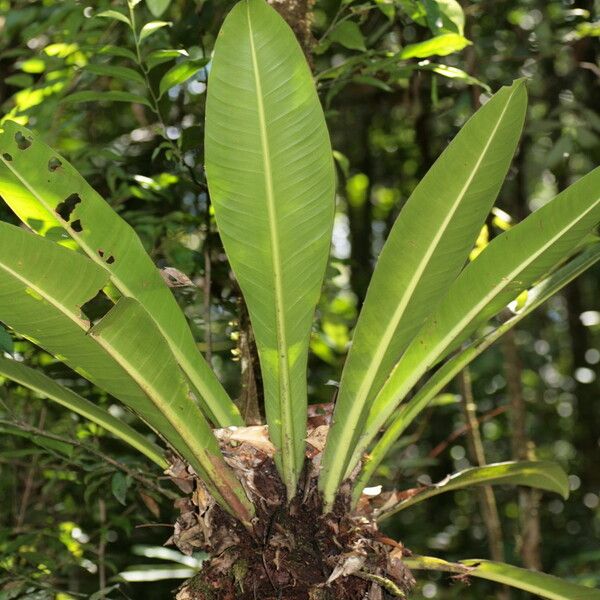
Often called the "Bird’s Nest Philodendron," Philodendron linnaei is a stunning Amazonian native that breaks the typical climbing vine mold. Named after the father of modern taxonomy, Carl Linnaeus, this plant grows in a tight, architectural rosette designed to trap falling leaves and nutrients from the rainforest canopy. It is a living piece of the deep jungle that brings a structural, prehistoric elegance to any indoor plant collection.
🔍 How to Identify
- 🍃 The Leaf Profile: Features deep green, elongated leaves that are wider toward the tip and taper gracefully into a pointed base.
- 🪺 The Rosette Shape: Unlike its trailing cousins, this species grows in a "bird's nest" arrangement, with leaves radiating outward from a central hub.
- 🪵 Stem and Roots: It has a very short, sturdy stem and thick, fleshy aerial roots adapted for gripping onto tree branches in the wild.
🏡 In Your Garden
- ☁️ Humidity is Essential: Coming from the humid lowlands of the Amazon, this plant thrives in moisture. If the air is too dry, the leaf tips may turn brown and crisp, so a humidifier or a bright, steamy bathroom is its favorite location.
- 🪴 Breathable Roots: Because it is an epiphyte (a plant that grows on trees), it hates "wet feet." Avoid heavy potting soil; instead, use a chunky, airy mix of orchid bark, perlite, and charcoal to ensure the roots can breathe.
- 🌞 Filtered Light: In the wild, it lives under the jungle canopy. Direct afternoon sun will scorch its glossy foliage, so stick to bright, indirect light to keep the leaves deep green.
⚠️ Safety & Toxicity
- 🚫 Toxic Status: High. This plant contains insoluble calcium oxalate crystals, which act like tiny needles if touched by sensitive tissues.
- 🐾 Pets & Children: If leaves are chewed or swallowed, it can cause immediate mouth irritation, swelling of the throat, and digestive distress. Always display this plant on a high shelf or stand out of reach of curious cats, dogs, or toddlers.
✨ Fun Fact
In its natural habitat, Philodendron linnaei is a famous "ant plant." It often forms a symbiotic relationship with ant colonies, which live within its dense root mass. The ants get a safe home, and in return, they protect the plant from pests and provide "fertilizer" in the form of organic waste!

Detailed Care Instructions
To grow a Philodendron Linnaei plant, you can follow these steps:
- Choose a healthy plant: Start with a healthy Philodendron Linnaei plant by selecting one that has lush green leaves, with no signs of pests or diseases.
- Select a suitable location: Philodendron Linnaei plants thrive in bright but indirect sunlight. Place them near a window or in an area with filtered light.
- Choose the right soil: Plant your Philodendron Linnaei in a well-draining potting mix that contains peat moss, perlite, and/or vermiculite. This will ensure proper drainage and prevent waterlogged soil.
- Potting the plant: Select a pot with drainage holes to prevent water accumulation. Repot the plant into a slightly larger pot, using fresh potting mix. Ensure the plant is firmly planted but not too tightly packed.
- Watering: Water the Philodendron Linnaei plant regularly, allowing the top few inches of soil to dry out between waterings. Overwatering can lead to root rot, so ensure proper drainage. It is better to underwater than overwater.
- Humidity: Philodendron Linnaei plants prefer high humidity. You can increase humidity by placing a pebble tray filled with water near the plant or by using a room humidifier. Misting the leaves can also help.
- Temperature: The ideal temperature range for the Philodendron Linnaei is between 60-80°F (15-27°C). Avoid placing the plant in locations with extreme or fluctuating temperatures.
- Fertilizing: Feed your Philodendron Linnaei plant with a balanced liquid fertilizer once a month during the growing season (spring and summer). Follow the packaging instructions for proper dilution and application.
- Pruning: Regularly remove any yellowing or dead leaves to encourage new growth. You can also prune the plant to control its size and shape.
- Propagation: Philodendron Linnaei can be propagated through stem cuttings. Take a 4-6 inch cutting below a node, remove the lower leaves, and place it in a glass of water. Once roots develop, transfer it to a pot with potting mix.
Remember to observe and adjust your plant care routine based on the specific needs and conditions of your Philodendron Linnaei, as individual plants may have different requirements.

Place in a window with dappled sun or a spot in the middle of a room. Or directly in a window facing west or east.

To water this plant, fill a watering can with room temperature water and pour it slowly over the soil until it begins to drain out of the bottom of the pot. Do not allow the plant to sit in standing water. Water when the top inch of soil feels dry to the touch. Avoid getting water on the leaves as this can lead to fungal diseases.
- Choose a well-draining soil: Philodendron Linnaei thrives in a soil mix that is airy, loose, and drains well. Use a peat-based or tropical plant-specific potting mix.
- Select an appropriate container: Use a pot with drainage holes to prevent waterlogging. Ensure that the container has enough room for the plant's roots to grow.
- Water moderately: Water the plant when the top inch of soil feels dry. Avoid overwatering, as it can lead to root rot. Allow excess water to drain out completely.
- Use a balanced fertilizer: Choose a balanced liquid fertilizer with equal NPK (Nitrogen, Phosphorus, and Potassium) ratio, like 20-20-20. This will provide the essential nutrients required for healthy growth.
- Dilute the fertilizer: Follow the instructions provided on the fertilizer package to determine the appropriate dilution ratio. Usually, mixing one tablespoon of fertilizer in a gallon of water is a standard recommendation.
- Fertilize during the growing season: Apply the diluted fertilizer to the soil around the plant's base during the active growing period, usually from spring to summer. This helps promote healthy foliage growth.
- Frequency of fertilization: Fertilize the Philodendron Linnaei once every 4-6 weeks during the growing season. Adjust the frequency based on the specific fertilizer's instructions to prevent overfeeding.
- Avoid fertilizing in winter: Reduce or completely stop fertilizing during the plant's dormant period, typically in winter. This allows the plant to rest and prevent nutrient build-up in the soil.
- Watch for signs of nutrient deficiency or excess: Keep an eye on the plant's leaves for any yellowing, spotting, or distorted growth, which may indicate either nutrient deficiency or excess. Adjust fertilizer application accordingly.
- Flush the soil occasionally: To prevent salt buildup from excessive fertilizer use, occasionally flush the soil with plain water. Allow water to flow through the soil for a few minutes to wash away any accumulated salts.
Remember, it is important to understand your specific plant's requirements and adjust the fertilization regimen accordingly. Always refer to the specific fertilizer product instructions for accurate dosage and application guidelines.
The ideal soil for Philodendron Linnaei plant is well-draining and nutrient-rich without being too dense. It should have a balanced pH level and be able to hold moisture without becoming waterlogged. Options may include a combination of soil, sand, peat moss, perlite, or vermiculite. It is important to ensure that the soil is not too compacted and allows for air circulation around the roots. Additionally, it is recommended to fertilize with a balanced liquid fertilizer monthly during the growing season to support healthy growth.
To propagate Philodendron Linnaei plants, follow these steps:
- Select a healthy mother plant: Choose a mature Philodendron Linnaei plant with strong roots and vibrant foliage for propagation.
- Prepare a sterile work area: Clean and disinfect all the equipment and tools you will be using to avoid introducing any potential pathogens to the cuttings.
- Choose the appropriate method: There are different methods to propagate Philodendron Linnaei, including stem cuttings, air layering, or division. For simplicity, we will focus on stem cuttings as the primary propagation method.
- Cut a stem: Using a clean, sharp knife or pruning shears, cut a section of stem with at least two leaves and a node. Nodes are where roots will form, and leaves are necessary for photosynthesis to support root development.
- Remove lower leaves (optional): If desired, remove the lower leaves from the cutting, leaving at least one or two sets of leaves at the top of the cutting. This step is not mandatory but can help reduce moisture loss.
- Treat the cutting (optional): Although not necessary, you may choose to apply a rooting hormone to the cut end of the stem to enhance root development. This step can promote faster and more successful rooting.
- Prepare a rooting medium: Philodendron Linnaei plants thrive in well-draining, moist soil. Prepare a container with a suitable rooting medium such as a mix of perlite, vermiculite, or a propagating mix specifically designed for rooting plants.
- Insert the cutting: Make a small hole in the rooting medium using a pencil or finger, then gently place the cut end of the stem into the hole, ensuring that the node is covered and the upper leaves are above the soil line.
- Provide proper care: Place the cutting in a warm, bright location with indirect sunlight. Keep the rooting medium consistently moist but not waterlogged. Mist the cutting occasionally to maintain humidity around the leaves.
- Wait and monitor: Over time, the cutting will develop roots. This process can take several weeks to a few months. Keep a close eye on the cutting, making sure the soil remains appropriately moist and ensuring it receives adequate indirect light.
- Transplant the rooted cutting: Once the roots have developed and are several inches long, you can safely transplant the Philodendron Linnaei cutting into a larger pot or a well-prepared garden bed using well-draining soil.
By following these propagation steps, you can successfully propagate Philodendron Linnaei plants, allowing you to expand your collection or share these beautiful plants with others.
Common pests of the philodendron linnaei include Mealybugs, spider mites, thrips. Make a habit of checking your philodendron linnaei frequently for pests so that any infestations can be caught and managed early.








