Plant Overview
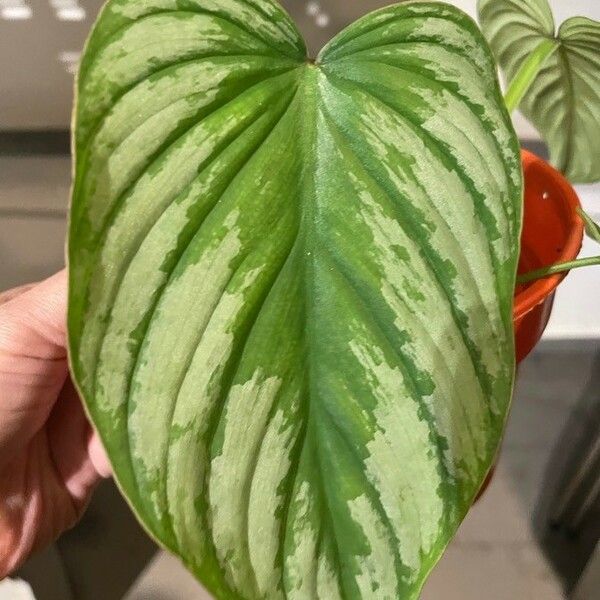
Known affectionately as the "Silver Cloud," this Ecuadorian treasure is a showstopper in any indoor jungle. Unlike many of its cousins that aim for the canopy, Philodendron mamei is a grounded beauty that prefers to "creep" along the forest floor, spreading its silver-dusted foliage like a shimmering carpet.
🔍 How to Identify
- ☁️ Silver Variegation: The most striking feature is the irregular, silvery-grey splotches that look like clouds painted onto a deep green canvas.
- 💓 Heart-Shaped Foliage: The leaves are impressively large and distinctly heart-shaped (cordate), often reaching over a foot in width when the plant is mature.
- 〰️ Quilted Texture: The leaf surface isn't smooth; it has a "pleated" or "quilted" appearance due to the deep, sunken veins that give it a rich, three-dimensional look.
- 🌿 Reddish Petioles: The stems (petioles) often sport a subtle reddish tint and are sometimes "ruffled" or slightly winged where they meet the leaf.
🏡 In Your Garden
- 👣 The Creeping Habit: Most Philodendrons want a moss pole, but the Mamei is a "prostrate" grower. It prefers a long, rectangular planter where its thick rhizome can crawl horizontally across the soil surface rather than climbing upward.
- 💧 Humidity is Key: Coming from the cloud forests of the Andes, this plant craves moisture in the air. If the air is too dry, you’ll notice the leaf tips turning brown and crispy, a sign it’s missing its misty mountain home.
- 🪴 Soil Breathing Room: Because it crawls on the surface, it is highly sensitive to "wet feet." Use a very chunky, airy mix (bark, perlite, and charcoal) to ensure the roots stay oxygenated even after a heavy watering.
⚠️ Safety & Toxicity
- 🚫 Toxic Status: Like almost all members of the Araceae family, this plant is considered toxic if ingested.
- 🐈 Pets & Kids: It contains insoluble calcium oxalate crystals. If chewed, it can cause immediate mouth irritation, swelling of the throat, and digestive upset in cats, dogs, and humans. Keep it on a high shelf or in a dedicated "green room."
✨ Fun Fact
The Philodendron mamei was first scientifically described in 1883. It is often confused with its cousin, Philodendron plowmanii, but you can tell the difference by looking at the stems: the Mamei has smooth or slightly streaked stems, while the Plowmanii has very wavy, "ruffled" edges along its petioles!

Detailed Care Instructions
To grow a Philodendron Mamei plant, you can follow these steps:
- Choose a suitable location: Philodendron Mamei prefers bright and indirect sunlight. It can tolerate some shade but avoid direct exposure to harsh sunlight. Place the plant near a window with filtered light or in a shaded spot indoors or outdoors.
- Select the right pot and soil: Use a well-draining pot with drainage holes to prevent waterlogging. You can use a peat-based potting mix or a mixture of peat moss, perlite, and compost. The soil should be loose and well-aerated.
- Planting and repotting: Gently remove the plant from its current container and place it in the new pot, ensuring that the roots are spread out. Fill the pot with soil, leaving some space at the top for watering. Repot the plant every 1-2 years or when it outgrows its current container.
- Watering: Philodendron Mamei prefers slightly moist soil. Water the plant when the top inch of soil feels dry to the touch. Avoid overwatering, as it can lead to root rot. The frequency of watering may vary depending on environmental conditions and season.
- Humidity and temperature: Philodendron Mamei thrives in high humidity. You can increase humidity by misting the plant regularly or placing a humidifier nearby. The plant prefers temperatures between 65-85°F (18-29°C).
- Fertilization: Feed the plant with a balanced, water-soluble fertilizer every 2-3 months during the growing season (spring and summer). Follow the instructions on the fertilizer packaging for the correct dosage.
- Pruning: Regularly remove any yellow or dead leaves to maintain the plant's health and appearance. Prune back overgrown vines to control the size and shape of the plant.
- Support: Provide a moss pole or trellis for the plant to climb if desired. Philodendron Mamei can grow on its own but may benefit from some support as it matures.
- Pest control: Keep an eye out for common houseplant pests such as mealybugs, spider mites, and aphids. If you notice any infestation, treat the plant with an appropriate insecticidal soap or neem oil.
- Propagation: You can propagate Philodendron Mamei through stem cuttings. Take a 6-8 inch cutting with a node, remove the lower leaves, and place it in water or moist soil. Keep it warm and in indirect light until roots develop.
Remember to research specific care requirements for Philodendron Mamei to ensure optimal growth in your specific environment.

Place in a window with dappled sun or a spot in the middle of a room. Or directly in a window facing west or east.

To water this plant, first check the soil moisture level by sticking your finger about an inch deep into the soil. If the soil feels dry at this depth, that is a sign that the plant needs watering. When watering, use room temperature water and pour it slowly onto the soil until water starts to drain out the bottom of the pot. Make sure not to water too frequently, as overwatering can lead to root rot. Let the soil dry out partially before watering again.
For best growth and health of this plant, use a balanced fertilizer with equal parts nitrogen, phosphorus, and potassium. Fertilize every two weeks during the growing season (spring and summer) and reduce to once a month during fall and winter. Dilute the fertilizer to half strength and water the plant thoroughly before applying. Avoid fertilizing a dry plant as it may cause fertilizer burn. Always follow the instructions on the fertilizer package and do not over-fertilize.
Philodendron Mamei plant requires an ideal soil that is well-draining but also retains moisture. The soil should be rich in nutrients and have a slightly acidic to neutral pH level.
A mix of peat moss, perlite, and vermiculite is an excellent choice for the Philodendron Mamei plant. The peat moss provides the necessary organic matter for growth, while perlite and vermiculite help with drainage and aeration.
Adding some worm castings or compost to the soil can also provide additional nutrients, which will keep the plant healthy and thriving. It's essential to avoid heavy, compacted soils, as they can prevent adequate root development and lead to root rot.
Overall, providing nutrient-rich, well-draining soil with adequate moisture retention is crucial for the Philodendron Mamei plant's optimal growth and health.
Propagation of this plant involves taking a cutting from its stem. Select a healthy, mature stem with several leaves on it. Make sure the cutting is at least 4-6 inches in length. Use a sterile, sharp knife to cut the stem at a 45-degree angle. Remove any leaves from the bottom one-third of the stem to prevent them from rotting. Dip the cut end of the stem in rooting hormone, then plant it in moist potting soil, burying at least one node (the bump on the stem where a leaf was attached) in the soil. Cover the cutting with a clear plastic bag or a humidity dome to keep the soil moist. Maintain consistent moisture and bright, indirect light for the cutting. After 4-6 weeks, new growth should emerge from the base of the cutting, indicating successful propagation.
Common pests of the blotched philodendron include Mealybugs, spider mites, thrips. Make a habit of checking your blotched philodendron frequently for pests so that any infestations can be caught and managed early.








