Plant Overview
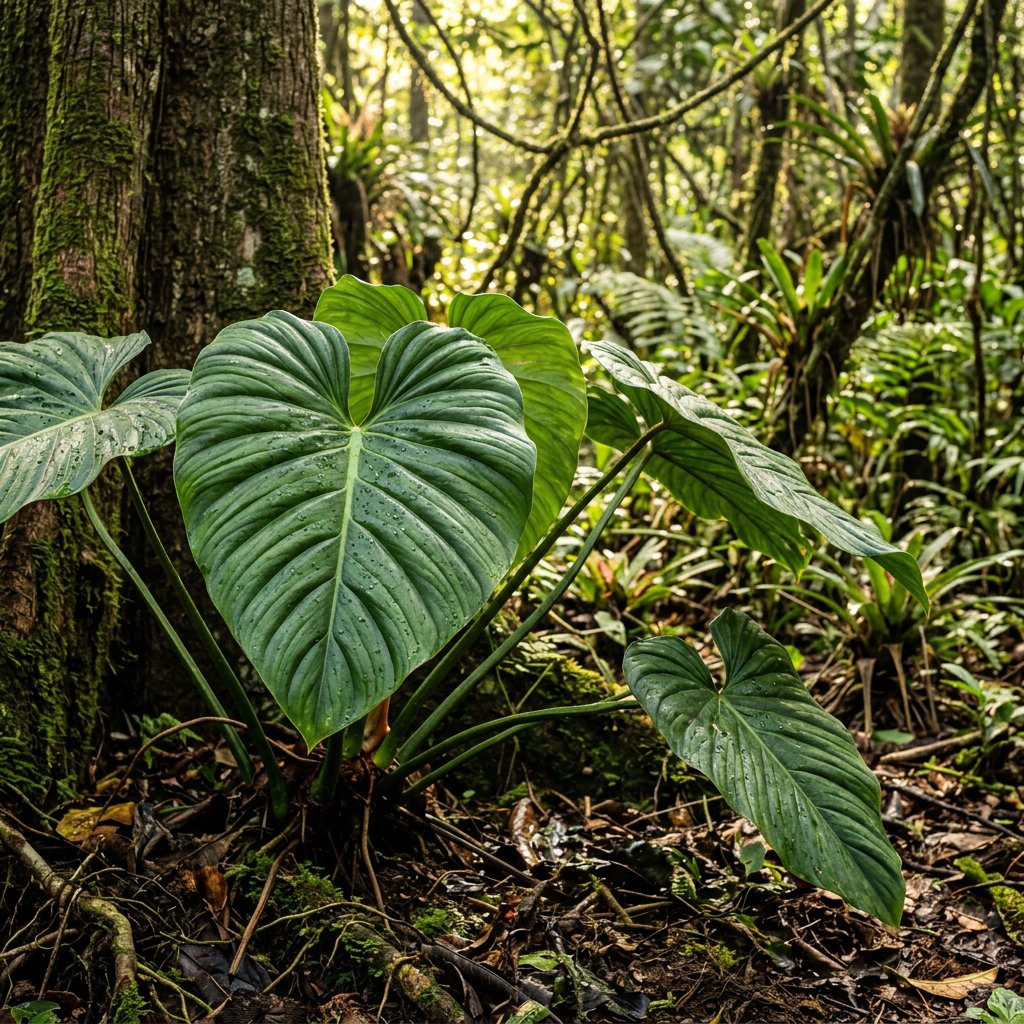
Often called the "Bird’s Nest Philodendron" due to its unique growth habit, Philodendron melinonii is a true architectural masterpiece of the plant world. Native to the canopy floor and tree branches of South America, this plant brings a prehistoric, lush vibe to any indoor space. Unlike its climbing cousins, it grows in a dramatic, sprawling rosette that makes it a perfect floor-standing statement piece for those who want a tropical jungle feel without the need for moss poles.
🔍 How to Identify
- 🍃 Massive Leaves: The foliage is broadly ovate (egg-shaped) and can reach impressive sizes, featuring a vibrant, leathery texture and deep green hue.
- 🪴 Self-Heading Habit: It does not vine or climb; instead, all leaves emerge from a thick, central base, forming a dense, "nest-like" crown that expands outward.
- 🧱 Fleshy Petioles: The leaf stalks are notably thick, semi-cylindrical, and surprisingly sturdy, often displaying a lighter green or slightly copper tint to support the weight of the heavy leaves.
🏡 In Your Garden
- 🌬️ Space and Airflow: Because of its dense growth habit, this plant needs plenty of "elbow room." Good air circulation is vital to prevent moisture from sitting in the central crown, which can lead to rot.
- 🍹 Tropical Hydration: While it loves consistent moisture, it is sensitive to "wet feet." It thrives best in a chunky, well-draining aroid mix that mimics the leaf litter of the rainforest floor.
⚠️ Safety & Toxicity
- 🚫 Toxic to Ingest: Like most members of the Araceae family, it contains insoluble calcium oxalate crystals. If leaves are chewed or swallowed, they cause immediate mouth irritation and swelling.
- 🐾 Pet Warning: This plant is considered toxic to cats and dogs. Keep it in a location where curious pets cannot nibble on the low-hanging, broad leaves.
✨ Fun Fact
In its natural habitat, Philodendron melinonii is often found growing as an "epiphyte" high up in the crooks of giant rainforest trees, where it catches falling organic debris to feed itself!

Detailed Care Instructions
To grow a Philodendron Melinonii plant, follow these steps:
- Choose the right location: Place your plant in a spot where it can receive bright, indirect sunlight. It should be shielded from direct sunlight, as it can scorch the leaves.
- Provide proper temperature and humidity: Philodendron Melinonii prefers average room temperatures between 65-75°F (18-24°C). It also appreciates slightly higher humidity levels, so consider using a humidifier or placing a tray of water near the plant.
- Select the right pot and soil: Use a well-draining potting mix that retains moisture but does not become waterlogged. Choose a pot with good drainage holes to prevent water stagnation.
- Watering: Water your Philodendron Melinonii thoroughly, allowing the top inch of soil to dry out before watering again. It's important to avoid overwatering, as it can lead to root rot. Keep the soil slightly moist during the growing season and reduce watering during winter.
- Fertilization: Apply a balanced liquid fertilizer once a month during the growing season (spring through summer). Dilute the fertilizer to half or quarter strength to avoid over-fertilization.
- Pruning: Trim any yellow or dead leaves to maintain the plant's health and appearance. You can also prune to control the size and shape of the plant.
- Provide support: Philodendron Melinonii tends to vine and climb, so provide a trellis or stake for support. You can gently tie the stems to the support using soft plant ties or fabric strips.
- Propagation: To propagate Philodendron Melinonii, take stem cuttings with two or more nodes and place them in a container with water or well-draining soil mix. Keep them in a warm and humid environment until they develop roots.
- Pests and diseases: Monitor your plant for common pests like spider mites or scale insects. Treat infestations with a natural or chemical insecticide if necessary. Avoid overwatering to prevent root rot and ensure good airflow around the plant.
By following these steps, you can successfully grow a Philodendron Melinonii plant and enjoy its beautiful foliage.

Place in a window with dappled sun or a spot in the middle of a room. Or directly in a window facing west or east.

To water this plant, first check the top inch of the soil to see if it is dry to the touch. If it is, then water the plant thoroughly until water begins to drain out the bottom of the pot. Make sure to let the excess water drain away completely before returning the plant to its saucer or decorative pot. Avoid letting the soil become completely dry or waterlogged, as both can harm the plant. It is also important to note that this plant prefers well-draining soil and should never be left standing in water.
To fertilize this tropical plant, make sure to use a balanced fertilizer with equal amounts of nitrogen, phosphorus, and potassium. Use a water-soluble fertilizer and dilute it according to the package instructions. Apply the fertilizer every two weeks during the growing season, which is typically spring and summer. Avoid fertilizing during the winter months as the plant goes into a dormant state. Additionally, make sure to water the plant thoroughly before and after fertilizing to prevent root burn.
The best type of soil to use with this plant is a well-draining soil that has a slightly acidic pH level. The soil should be rich in organic matter and should be able to retain moisture without becoming too wet or waterlogged. Adding perlite or coarse sand to the soil can help increase drainage and prevent the roots from becoming waterlogged. It is also important to ensure that the soil is fertilized regularly during the growing season to help promote healthy growth and prevent nutrient deficiencies.
Philodendron Melinonii plants can be propagated through stem cuttings. The first step is to select a healthy stem that is at least 4-6 inches long and has a few pairs of mature leaves.
Next, using a clean and sharp pair of scissors or pruners, cut the stem at a 45-degree angle just below a node. Make sure the cutting has at least one node, which is a small bump on the stem where a leaf grows from.
Remove the lower leaves from the cutting, leaving only 2-3 leaves at the top. This will help reduce moisture loss and allow the cutting to concentrate its energy on producing roots.
Dip the cut end of the stem cutting into rooting hormone powder, which can be found at most garden centers. This will help encourage root growth.
Fill a small pot with well-draining soil and make a hole in the center for the cutting. Insert the stem cutting into the soil, making sure the node is buried in the soil.
Water the cutting and cover the pot with a plastic bag or clear plastic wrap to create a mini greenhouse. This will help to maintain humidity and prevent the cutting from drying out. Place the pot in a bright, indirect light location.
Check the cutting regularly and mist the inside of the plastic bag or wrap if it appears dry. After a few weeks, gently tug on the plant to see if there's any resistance. If there is, it means roots have formed and it's time to remove the plastic bag and treat it as a mature plant.
Transplant the rooted cutting to a larger container and continue to care for it as you would a mature plant. With time, patience, and proper care, your Philodendron Melinonii cutting will grow into a beautiful new plant.
Common pests of the wave of love include Mealybugs, spider mites, thrips. Make a habit of checking your wave of love frequently for pests so that any infestations can be caught and managed early.








