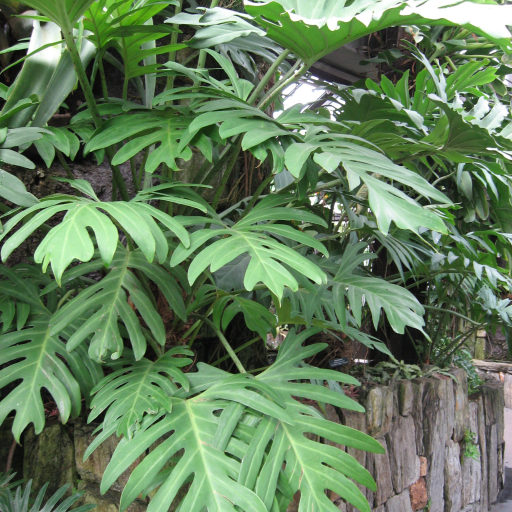
Plant Overview
Often called the Horsehead Philodendron or simply the "Pinnate Philodendron," this Brazilian native is a true architectural masterpiece of the plant world. Unlike the many Philodendrons that scramble up trees as vines, this species is "self-heading," meaning it grows upright with a sturdy, trunk-like base, making it a perfect statement piece for home interiors.
🔍 How to Identify
- 🌿 Feathered Foliage: The leaves are deeply "pinnatifid" (lobed almost to the midrib), creating a dramatic, finger-like appearance that resembles a series of green ribs or a horse's mane.
- ✨ Glossy Texture: The surface of the leaves has a high-sheen, waxy finish that helps the plant shed excess rainwater in its native jungle habitat.
- 🪵 Eye-Scarred Stem: As the plant grows taller and sheds lower leaves, it develops a thick, woody stem marked with circular "leaf scars" that look like small, watchful eyes.
🏡 In Your Garden & Home
- ☀️ Dappled Light Specialist: In the Amazon, this plant lives on the forest floor under a canopy of giants. It thrives in bright, indirect light; direct afternoon sun is its enemy and will quickly bleach or "sunburn" its dark green lobes.
- 💧 The "Drought-then-Drench" Rule: It prefers its soil to dry out halfway before being watered again. Because it has thick, fleshy roots, it is prone to rot if left sitting in soggy soil or "wet feet."
⚠️ Safety & Toxicity
- 🚫 Toxic Status: Highly toxic to pets and humans if ingested.
- 🐱 Details: The plant contains insoluble calcium oxalate crystals. If chewed, these crystals act like tiny needles, causing immediate oral pain, swelling of the throat, and digestive upset in cats, dogs, and curious children.
✨ Fun Fact
The Philodendron pinnatifidum belongs to a group of plants capable of thermogenesis. During pollination, the plant’s spadix (the flowering spike) can actually generate heat, rising several degrees above the ambient air temperature to help disperse its scent and attract specific scarab beetles!

Detailed Care Instructions
Here are steps you can follow to grow Philodendron Pinnatifidum (also known as Selloum or Bipinnatifidum):
- Choose a suitable location: Philodendron Pinnatifidum can be grown both indoors and outdoors. If growing indoors, choose a spot that receives bright, indirect sunlight. Outdoors, select a partially shaded area with protection from direct sunlight.
- Select the right soil: This plant thrives in well-draining soil that retains some moisture. Use a mixture of peat moss, perlite, and compost to create a loose and fertile soil.
- Prepare the pot or planting hole: If growing the plant in a container, select a pot with drainage holes. If planting outdoors, dig a hole slightly larger than the root ball. Ensure that the soil level is equal to or slightly below the top of the root ball.
- Plant the Philodendron Pinnatifidum: Gently remove the plant from its container or loosen the roots if planting from a nursery bag. Place it in the pot or planting hole and fill it with soil, ensuring that the base of the stem is at soil level. Pat the soil gently to remove air pockets.
- Water the plant: Give it a thorough watering immediately after planting to moisten the root zone. In the future, water the plant when the top inch of soil feels dry. Avoid overwatering, as it can cause root rot.
- Provide appropriate humidity: Philodendron Pinnatifidum appreciates high humidity levels. You can increase humidity by placing a tray of water near the plant or by misting the leaves regularly.
- Fertilize regularly: Use a balanced, water-soluble fertilizer during the growing season (spring to summer) to promote healthy growth. Follow the instructions on the label for the correct application rate.
- Prune as needed: If you observe any dead or damaged leaves, or if the plant becomes too bushy, you can prune it back. Pruning encourages new growth and can help maintain an attractive shape.
- Monitor pests: Philodendrons can be susceptible to pests like spider mites, mealybugs, or aphids. Check regularly for signs of infestation, such as sticky residue or webbing, and treat with an appropriate insecticide if necessary.
- Repot when necessary: As the plant grows, it may outgrow its container. Repot it into a slightly larger pot with fresh potting soil to provide adequate space for its roots.
Remember to research more about the specific care requirements of this plant, as different varieties of Philodendron Pinnatifidum may have specific needs.

Place in a window with dappled sun or a spot in the middle of a room. Or directly in a window facing west or east.

To properly water this plant, you should first check the top layer of soil for dryness. If the soil is dry to the touch, then it is time to water the plant. It is important to not overwater this plant, as this can lead to root rot. Once you have determined that the plant needs water, gently water the soil around the base of the plant until it is thoroughly moistened. Allow the excess water to drain out of the bottom of the pot, and then empty the saucer beneath the pot to prevent the plant from sitting in water. It is recommended to water this plant once a week, but this can vary depending on the specific growing environment.
To fertilize this plant, you can use a balanced fertilizer with equal amounts of nitrogen, phosphorus, and potassium. Dissolve the fertilizer in water according to the instructions on the package. Fertilize your plant once a month during the growing season, which is from spring to fall. Avoid fertilizing during the winter months when the plant is dormant. Apply the fertilizer to the soil around the base of the plant, being careful not to get any on the leaves. Water the plant immediately after fertilizing to help prevent fertilizer burn. Always follow the instructions on the fertilizer package and use gloves if necessary to protect your skin.
When it comes to choosing soil for the plant in question, it is important to consider a few key factors. Firstly, it is best to use well-draining soil that does not hold onto excess water. This will prevent the roots from becoming waterlogged and suffering from root rot. Additionally, the soil should be nutrient-rich, with a good balance of organic matter and minerals. A pH of around 5.5 to 6.5 is ideal for this plant. It is also important to avoid using soils that contain too much sand or clay, as these can lead to poor drainage and hinder root development. Finally, it is a good idea to mix in some perlite or vermiculite to increase the soil's porosity and aeration. Overall, a good soil mix for this plant would consist of a blend of high-quality potting soil, perlite, and organic matter such as peat moss or compost.
One way to propagate this plant is through stem cuttings. Take a healthy stem and make a cut just below a node with a clean, sharp pair of scissors or pruning shears. Remove any leaves from the bottom third of the stem. Dip the cut end of the stem in rooting hormone powder and plant it in a well-draining soil mix. Keep the soil moist and place the cutting in bright, indirect light. Ensure the temperature and humidity are suitable for the plant to root, which may take a few weeks to several months. Once roots have formed and the plant has acclimated to its new environment, it can be transferred to a larger pot or planted outside if climate permits.
Common pests of the comb-leaf philodendron include Mealybugs, spider mites, thrips. Make a habit of checking your comb-leaf philodendron frequently for pests so that any infestations can be caught and managed early.








