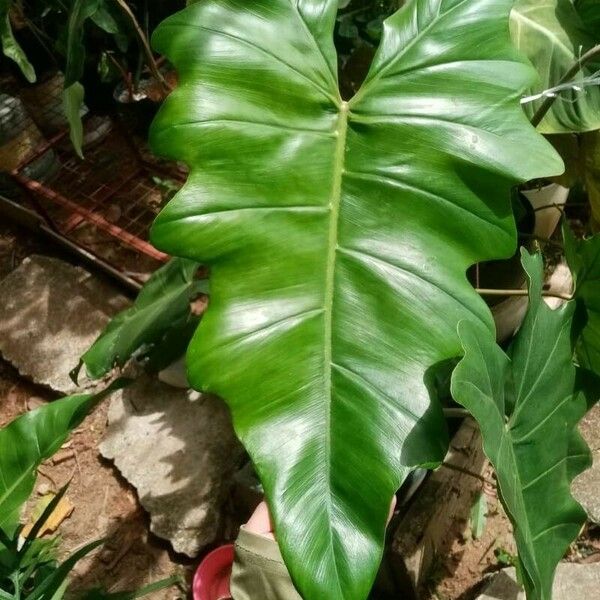
Plant Overview
Often called the Simmonds' Philodendron, this rare Caribbean beauty hails from the lush forests of Trinidad and Tobago. Unlike the broad, heart-shaped leaves of its more common cousins, Philodendron simmondsii is prized for its sleek, elongated foliage that gives it a refined, architectural look. It is a true collector's plant, bringing a touch of untamed tropical elegance to any indoor jungle.
🔍 How to Identify
- 🍃 Leaf Shape: The leaves are distinctly lance-shaped (lanceolate) and narrow, tapering to a sharp point at the tip.
- 🟢 Color & Texture: They feature a deep, glossy green hue with a smooth, leathery texture that catches the light beautifully.
- 🧗 Growth Habit: As an epiphytic vine, it produces long, slender petioles (leaf stalks) and uses aerial roots to anchor itself as it climbs toward the canopy.
🏡 In Your Garden
- 🧱 Climbing Support: Because this plant is a natural climber, it thrives best when provided with a moss pole or totem. Providing vertical support actually encourages the leaves to grow larger and more robust.
- 🌬️ Airy Roots: It hates "wet feet." Instead of standard potting soil, it requires a chunky aroid mix (bark, perlite, and charcoal) to ensure its roots can breathe and stay dry between waterings.
- ☁️ Humidity Needs: Being a native of humid island forests, it will struggle in dry indoor air. Keeping it near a humidifier or in a bright bathroom will help prevent the leaf tips from browning.
⚠️ Safety & Toxicity
- 🚫 Status: Toxic to humans and pets.
- 🐾 Details: Like almost all members of the Araceae family, it contains insoluble calcium oxalate crystals. If chewed or swallowed, it causes immediate mouth irritation, swelling of the throat, and digestive upset. Keep it on a high shelf away from curious cats or toddlers.
✨ Fun Fact
This species was named in honor of N.W. Simmonds, a famous 20th-century botanist renowned for his extensive work on the flora of Trinidad and his groundbreaking research into the evolution of the banana!

Detailed Care Instructions
Growing a Philodendron Simmondsii, a popular and attractive houseplant, can be quite rewarding. Here are some tips to help you successfully grow and care for your plant:
1. Light Requirements
- Indirect Light: Philodendron Simmondsii thrives in bright, indirect sunlight. Avoid direct sunlight, as this can scorch the leaves. A spot near a window with filtered light is ideal.
2. Watering
- Moderate Watering: Water your plant when the top inch of the soil feels dry. It’s important to avoid overwatering, as this can lead to root rot. Ensure the pot has drainage holes to allow excess water to escape.
3. Humidity and Temperature
- Humidity: Philodendron Simmondsii enjoys higher humidity levels. Try to keep the humidity around 50% or higher. You can increase humidity by misting the leaves, using a humidifier, or placing a pebble tray with water under the pot.
- Temperature: Ideal temperatures range from 65°F to 80°F (18°C to 27°C). Avoid exposing the plant to cold drafts or sudden temperature changes.
4. Soil and Potting
- Well-Draining Soil: Use a high-quality potting mix that offers good drainage. A mix designed for aroids or a combination of peat, perlite, and bark works well.
- Repotting: Repot every 1-2 years or when the plant outgrows its current pot. This helps refresh the soil and provides more space for growth.
5. Fertilization
- Balanced Fertilizer: During the growing season (spring and summer), feed your plant with a balanced, water-soluble fertilizer every 4-6 weeks. Reduce feeding in fall and winter when growth slows down.
6. Pruning and Maintenance
- Pruning: Regularly trim off any dead or yellowing leaves to encourage new growth and maintain the plant's appearance. You can also prune to shape the plant and control its size.
7. Pest Management
- Check for Pests: Common pests include spider mites, aphids, and mealybugs. Inspect your plant regularly and treat any infestations with insecticidal soap or neem oil.
8. Propagation
- Stem Cuttings: You can propagate Philodendron Simmondsii through stem cuttings. Cut a section of the stem that has a few leaves and nodes, place it in water or soil, and keep it in a warm, humid environment until roots develop.
By following these guidelines, you'll be setting yourself up for success in growing a healthy and thriving Philodendron Simmondsii. Happy gardening!
When watering the plant in question, it's important to consider its specific moisture requirements and environmental conditions. Here are detailed steps and considerations for proper watering:
- Soil Moisture Check: Before watering, check the moisture level of the soil. Insert your finger about an inch deep into the soil. If the top inch feels dry, it’s time to water; if it feels moist, wait a bit longer.
- Watering Technique: Use room temperature water to avoid shocking the roots. Water the plant slowly, allowing the water to permeate the soil evenly. This ensures that the roots receive adequate moisture without causing water stress.
- Drainage: Ensure that the pot has drainage holes. This prevents water from sitting at the bottom, which can lead to root rot. If the plant is in a decorative pot without drainage, consider removing it from the outer container when it’s time to water.
- Watering Frequency: Adjust your watering schedule based on the season. During the growing season (spring and summer), the plant may require more frequent watering due to increased evaporation and growth rates. In the dormant period (fall and winter), reduce watering, as the plant uses less moisture.
- Humidity Consideration: If the environment is very dry, misting the leaves can help maintain humidity and support the overall health of the plant. You can also use a humidity tray filled with water and pebbles beneath the plant to increase ambient humidity.
- Signs of Over or Under-Watering: Watch for signs that may indicate issues with watering. Yellowing leaves, mushy stems, or a foul smell can indicate overwatering, while wilting and dry leaves can suggest underwatering.
- Adjustment: If you notice symptoms of over or under-watering, adjust your watering practices, and allow the soil to dry out appropriately between watering sessions for a balanced approach.
By following these guidelines, you can effectively maintain the hydration levels necessary for healthy growth and vitality in the specified plant.
Fertilizing a Philodendron Simmondsii involves providing the right nutrients to support its growth. Here are the instructions you can follow:
- Frequency: Fertilize during the growing season, which typically spans from spring to early autumn. Aim to apply fertilizer every 4-6 weeks throughout this period.
- Fertilizer Type: Use a balanced, water-soluble fertilizer with an N-P-K ratio such as 20-20-20 or a formula specifically designed for foliage plants. Organic options, like fish emulsion or worm castings, can also be effective.
- Dilution: If using a synthetic fertilizer, dilute according to the instructions on the packaging. Usually, this involves mixing a specified amount of fertilizer with water. The dilution helps prevent root burn.
- Application: Water the plant a day before fertilizing to ensure that the soil is moist. This helps the roots absorb nutrients more effectively. Apply the diluted fertilizer solution to the soil, ensuring it reaches the root zone. Avoid getting the solution on the leaves to prevent potential damage.
- Post-Fertilization Care: After applying fertilizer, water the plant thoroughly to help distribute the nutrients and prevent any concentration in the soil.
- Monitor Growth: Pay attention to the plant’s growth and foliage appearance. If the leaves are yellowing or growth seems stunted, you may need to adjust your fertilization routine.
- Winter Care: Reduce or stop fertilizing during the dormant winter months, as the plant’s nutrient requirements will decrease.
By following these guidelines, you can ensure that your plant receives the necessary nutrients for healthy growth.
For optimal growth of the Philodendron Simmondsii, a well-draining and aerated soil mix is essential. The ideal soil composition should include the following components:
- Peat Moss or Coconut Coir: These materials provide organic matter and retain moisture while allowing for aeration.
- Perlite or Pumice: Incorporating perlite or pumice improves drainage and aeration, preventing excess moisture buildup which can lead to root rot.
- Orchid Bark or Pine Nugget Mulch: Adding orchid bark or pine nuggets helps increase airflow around the roots and adds some structure to the mix.
- Compost or Quality Potting Mix: Including a small amount of compost or a pre-made potting mix designed for aroids can provide nutritional benefits and enhance microbial activity in the soil.
A recommended ratio for mixing these components could be approximately 50% peat moss or coconut coir, 25% perlite or pumice, and 25% orchid bark. This combination offers an ideal balance of moisture retention and drainage, along with sufficient nutrients for healthy growth.
Additionally, ensure that the pot has drainage holes to prevent water accumulation at the bottom, which is crucial for maintaining the health of the root system.
To propagate the Philodendron Simmondsii, you can follow these steps:
1. Methods of Propagation
There are two primary methods for propagating this plant: stem cuttings and division.
A. Stem Cuttings
- Select a Healthy Stem: Choose a healthy stem with at least 2-3 nodes (the points where leaves emerge). Ensure that the stem is free of disease and pests.
- Make the Cut: Using a clean, sharp knife or scissors, cut a section of the stem below a node. Aim for a cutting that is about 4-6 inches long.
- Prepare the Cutting: Remove any lower leaves that are close to the cut end to prevent them from rotting when planted.
- Optional – Rooting Hormone: If desired, dip the cut end in rooting hormone to enhance root development.
- Planting: Place the cutting in a well-draining potting mix or directly in water, depending on your preferred method. If using soil, ensure the cutting is buried up to the node.
- Watering: Water lightly to moisten the soil or water in the container. If using water, ensure that at least one node is submerged.
- Humidity and Light: Cover the cutting with a plastic bag or a humidity dome to maintain humidity. Place it in a location with indirect sunlight for optimal growth.
- Monitoring: Check the cutting regularly to ensure it remains moist but not soggy. Roots should start developing in a few weeks.
- Transplanting: Once roots are well established (about 2-3 inches long), transplant the cutting into a larger pot with well-draining soil.
B. Division
- Choose a Mature Plant: Select a mature plant that has multiple stems.
- Remove from Pot: Carefully take the plant out of its pot, ensuring minimal disturbance to the root system.
- Identify Sections: Look for natural divisions in the root ball where stems can be separated. Each division should have roots and a few leaves.
- Separate the Portions: Use your hands or a clean knife to gently separate the sections, ensuring each one has sufficient roots.
- Re-potting: Place each division in a new pot with fresh potting soil, ensuring that the roots are well covered.
- Water and Care: Water the newly potted divisions thoroughly and keep them in a humid, warm location with indirect light.
2. Aftercare
- Lighting: Ensure that the propagated cuttings or divisions receive bright, indirect sunlight as they establish.
- Humidity: Maintain high humidity levels, especially for cuttings, until they develop roots.
- Watering: Water appropriately—allow the soil to dry slightly between waterings, as both overwatering and underwatering can lead to problems.
3. Common Problems to Watch For
- Rotting: Check for rotting in cuttings or divisions, especially if conditions are too wet.
- Pests: Keep an eye out for common pests and treat them promptly if they appear.
- Growth Stalling: If growth appears slow, consider adjusting the light conditions or humidity.
By following these steps, you can successfully propagate your plant and encourage new growth.








