Plant Overview
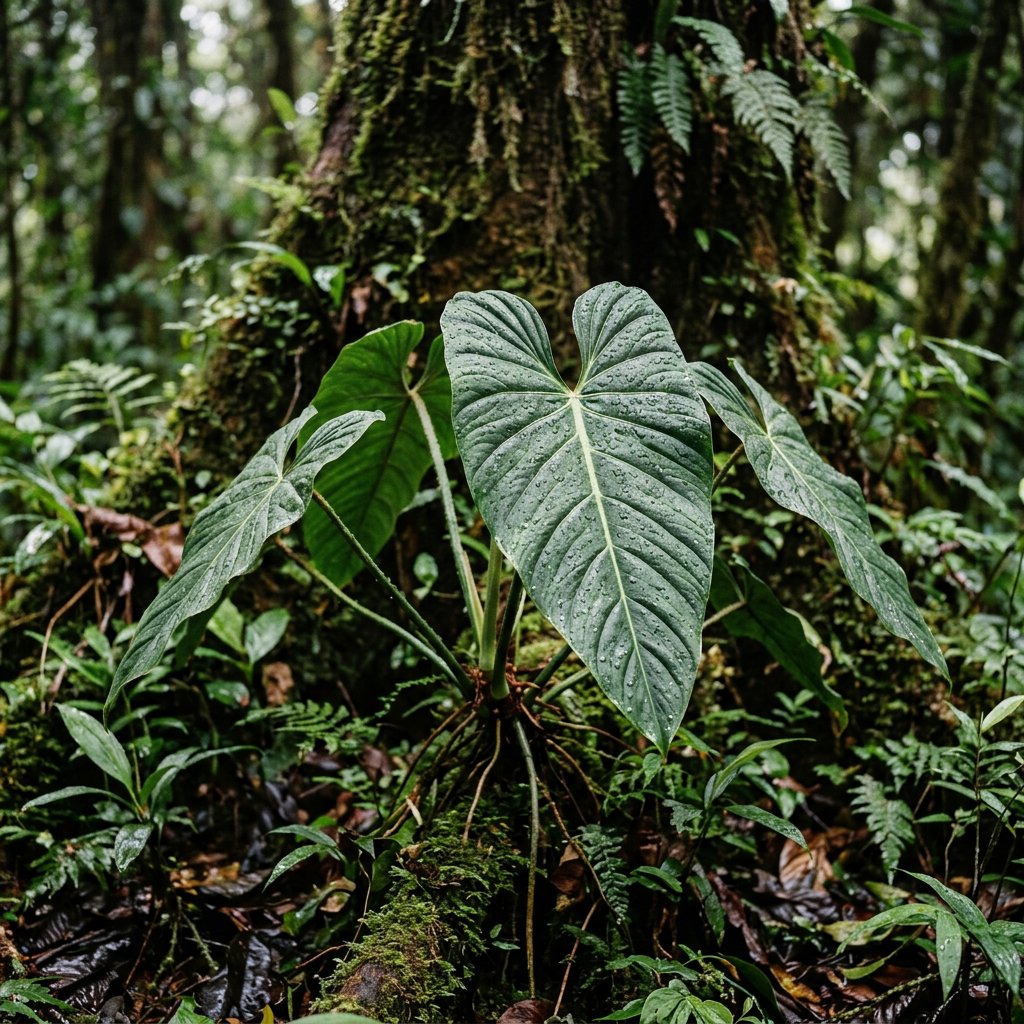
Known as the "Congo Philodendron," this tropical giant is a favorite for those who want the lush jungle look without the mess of a climbing vine. Unlike many of its cousins that scramble up trees, Philodendron tatei is a "self-heading" plant, meaning it grows in a sturdy, upright rosette. It is often celebrated as the "architectural anchor" of a room due to its bold, structural presence and glossy, oversized foliage.
🔍 How to Identify
- 🍃 Leaf Texture: The leaves are exceptionally thick, leathery, and glossy. They have an elongated oval shape that can grow quite large as the plant matures.
- 🏗️ Growth Habit: Unlike trailing heart-leaf varieties, this species grows from a central clump. It stays relatively compact and bushy rather than wandering across your walls.
- 🎨 Stem and New Growth: The petioles (leaf stems) are thick and rigid. In popular cultivars like 'Rojo Congo', the new leaves emerge in a striking deep burgundy or bronze before fading to a rich forest green.
🏡 In Your Garden
- 🪴 Root Breathing Room: Because it produces thick, fleshy roots, it is highly susceptible to "wet feet." It thrives best in a chunky aroid mix (bark, perlite, and charcoal) rather than standard dense potting soil.
- ☀️ Light Logic: While it is sold as a "low light" plant, it actually needs bright, indirect light to maintain its structural integrity. In low light, the stems become weak and "leggy," losing that iconic upright silhouette.
⚠️ Safety & Toxicity
- 🐾 Toxic to Pets: This plant contains insoluble calcium oxalate crystals. If chewed or swallowed by cats or dogs, it can cause intense oral irritation, drooling, and swelling.
- 👶 Child Safety: Keep this plant out of reach of small children. Ingestion leads to a painful burning sensation in the mouth and throat, and the sap can occasionally cause mild skin irritation for those with sensitive skin.
✨ Fun Fact
This plant was named in honor of George Tate, an intrepid American botanist who explored the mysterious "tepuis" (flat-topped mountains) of Venezuela in the early 20th century, where many unique Philodendron species were first documented.

Detailed Care Instructions
To grow a Philodendron Tatei plant, follow these steps:
- Select a healthy plant: Purchase a Philodendron Tatei plant from a reputable garden center or nursery. Make sure it has no signs of disease or damage.
- Find the right location: Philodendron Tatei prefers bright indirect sunlight. Place it in a spot where it can receive bright, filtered light but avoid direct sunlight.
- Choose the right pot: Use a well-draining soil mix and a pot with drainage holes. A pot that is slightly larger than the current root ball is suitable.
- Watering: Keep the soil evenly moist but avoid waterlogging. Water thoroughly when the top inch of soil feels dry, allowing excess water to drain away.
- Humidity: Philodendron Tatei thrives in humid conditions. You can increase humidity by misting the leaves regularly or placing the plant on a tray filled with pebbles and water.
- Fertilization: Feed your Philodendron Tatei every two to three months during the growing season with a balanced liquid fertilizer. Follow the instructions on the fertilizer packaging for the correct dosage.
- Provide support: Philodendron Tatei is a climbing plant. As it grows, provide support such as a moss pole or trellis for it to cling to.
- Pruning: Regularly trim any leggy or damaged stems to encourage bushier growth. Pinch back the tips of the stems to promote branching.
- Repotting: As the plant grows, you may need to repot it into a larger container. Repot during the spring or early summer, using fresh potting soil.
- Propagation: Philodendron Tatei can be propagated through stem cuttings. Take a cutting with at least one node, remove any leaves from the bottom, and place it in water or well-draining soil. Keep the soil or water moist until new roots form.
Remember to monitor your plant closely for any signs of pests or diseases and take appropriate measures to control them. With proper care and attention, your Philodendron Tatei plant should grow and thrive.

Place in a window with dappled sun or a spot in the middle of a room. Or directly in a window facing west or east.

To care for this plant, it is important to water it properly. First, you should check the soil moisture by inserting your finger one inch into the soil. If it feels dry, it is time to water the plant. When watering, pour water slowly onto the soil, avoiding getting water on the leaves. Allow the water to soak through to the bottom of the container. Make sure to empty any water that remains in the saucer after watering, as standing water can lead to root rot. It is important not to overwater the plant, as this can also cause root rot. It is recommended to water this plant every 7-10 days, depending on temperature and humidity levels.
To fertilize this plant, use a balanced fertilizer that contains equal amounts of nitrogen, phosphorus, and potassium. Mix the fertilizer into the soil every two to three months during the growing season (spring to fall). Do not fertilize during the winter months when the plant is dormant. Be careful not to over-fertilize, as this can lead to leaf burn and other problems. Water the plant thoroughly after fertilizing to ensure that the nutrients are absorbed properly.
To successfully grow Philodendron Tatei plant, it is essential to use a well-balanced soil mixture that provides good drainage. The soil should be rich in organic matter and should have a slightly acidic pH level of between 5.5 and 6.5.
A good soil mixture for this plant should consist of equal parts of peat moss, perlite, and vermiculite. Additionally, adding some compost or aged manure to the soil at planting time will help to improve its fertility and provide the necessary nutrients for the plant to grow healthy.
It is important to avoid using heavy and compacted soils as they can lead to poor root growth and drainage problems. To prevent waterlogging and ensure good drainage, you can add sand or gravel to the soil mix.
It is recommended to repot the plant in fresh soil every 2-3 years to provide fresh nutrients and allow better root growth. Overall, using a well-draining, fertile soil mixture is key to keep your Philodendron Tatei plant healthy and thriving.
Philodendron Tatei is a plant that can be propagated quite easily through stem cuttings. To begin, select a healthy stem of the plant with at least two leaves. Make a cut below the node where leaves are attached using sterile scissors or a sharp knife. Ensure that the cutting is approximately 5-6 inches long.
Remove the lower leaves from the stem and dip the end of the cutting in rooting hormone or powder. This helps encourage root growth. Insert the cutting into a pot filled with soilless mix or well-draining soil. Place the pot in a shaded area and maintain soil moisture.
After a few weeks, new roots should appear. Once the roots are visible, you can move the plant to a brighter location. Philodendron Tatei propagation can also be done through air layering by making a shallow cut on a stem and wrapping it with moist moss. New roots will eventually form and then can be cut from the mother plant and planted separately.
It is important to monitor the plant and ensure it receives adequate light, water, and nutrients as it grows. With proper care, your Philodendron Tatei plant should thrive and continue to grow over time.
Common pests of the rojo congo include Mealybugs, spider mites, thrips. Make a habit of checking your rojo congo frequently for pests so that any infestations can be caught and managed early.








