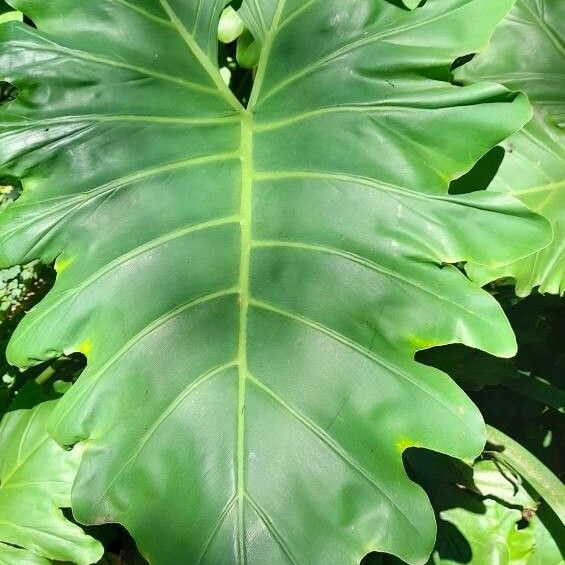
Plant Overview
Known for its dramatic, wavy foliage, Philodendron undulatum is a South American titan that brings a prehistoric, architectural vibe to any indoor jungle. Unlike its smaller climbing cousins, this "self-heading" giant grows a sturdy, trunk-like stem over time, making it feel more like a small tree than a wandering vine. It is a favorite for collectors who want a bold, sculptural statement piece that looks like it stepped straight out of a rainforest.
🔍 How to Identify
- 🌊 Wavy Margins: True to its name, the most striking feature is the "undulating" or heavily ruffled edge of the large, triangular leaves.
- 🍃 Leathery Texture: The foliage is thick, glossy, and a deep emerald green, designed to catch dappled light beneath the forest canopy.
- 🪵 Self-Heading Stem: Instead of thin vines, this plant produces a thick, upright central "trunk" marked with eye-shaped scars where old leaves have dropped.
🏡 In Your Garden
- 📐 Space Hunter: Because this Philodendron doesn't climb, it tends to spread horizontally. It needs a wide corner or a dedicated "throne" in your home where its sprawling leaves won't be frequently bumped or bruised.
- 💧 The "Goldilocks" Soil: While it loves moisture, it hates "wet feet." Use a chunky, airy aroid mix (bark, perlite, and peat) to ensure the roots can breathe. If the soil stays soggy, those dramatic leaves will quickly turn yellow.
⚠️ Safety & Toxicity
- 🚫 Toxic if Ingested: This plant contains insoluble calcium oxalate crystals, which act like tiny needles if chewed.
- 🐾 Pets & Children: Ingestion causes immediate oral pain, drooling, and swelling of the throat. It is best kept on a sturdy plant stand out of reach of curious cats, dogs, or toddlers.
✨ Fun Fact
The name "undulatum" literally translates to "wavy" in Latin. In its native habitats of Brazil and Paraguay, this plant is so hardy and large that it is often used as a structural landscape plant in tropical parks, looking like a living green fountain!

Detailed Care Instructions
To successfully grow Philodendron Undulatum (also known as Philodendron Silver Swirl), follow these steps:
- Select a suitable container: Choose a pot that has good drainage holes and is at least 2-3 inches wider than the plant's root ball. Ensure it is made of a material like terracotta or ceramic to provide stability.
- Soil: Philodendron Undulatum requires well-draining soil. A mix of equal parts peat moss, perlite, and orchid bark or sand will provide good drainage. Avoid using regular garden soil as it retains too much moisture.
- Light: Place your plant in bright, indirect light. Avoid placing it in direct sunlight, as it can scorch the leaves. Indirect light near a north or east-facing window is ideal.
- Watering: Water your Philodendron Undulatum thoroughly whenever the top inch of soil feels dry to the touch. Allow the excess water to drain out of the bottom of the pot. Avoid overwatering as it can cause root rot. The frequency of watering may vary depending on the humidity and temperature of your environment.
- Humidity: Philodendron Undulatum prefers higher humidity levels. You can increase humidity by placing the pot on a pebble tray filled with water or by using a humidifier. Alternatively, misting the leaves regularly can also help.
- Fertilizer: Feed your Philodendron Undulatum with a balanced, water-soluble fertilizer every 2-4 weeks during spring and summer. Dilute the fertilizer to half the recommended strength to avoid overfeeding.
- Pruning: Regularly prune your plant to encourage bushier growth and remove any dead leaves or stems. You can also propagate new plants from healthy cuttings.
- Temperature: Philodendron Undulatum thrives in temperatures ranging from 60-80°F (15-27°C). Keep it away from cold drafts or excessively hot areas.
- Support: Philodendron Undulatum is a climbing plant that will benefit from a moss pole, trellis, or other support structures. As it grows, gently guide the vines towards the support to help the plant climb and display its attractive foliage.
- Pest control: Occasionally inspect your plant for common houseplant pests like spider mites, mealybugs, or scale insects. If any are found, treat the infestation promptly using appropriate insecticidal soap or horticultural oil.
By following these guidelines, you should be able to successfully grow Philodendron Undulatum and enjoy its beautiful foliage.
To water this plant, you should first check the soil to determine if it is dry. Stick your finger about an inch deep into the soil – if it feels dry, it's time to water. When watering, pour water onto the soil slowly and evenly, being careful not to let it overflow from the pot. Allow the excess water to drain out of the bottom before returning the plant to its drip tray. The frequency of watering will depend on the plant's environment, as well as the time of year – in general, this plant prefers to stay slightly moist, but not overly wet. Keep this in mind when determining how often to water, and adjust accordingly.
To fertilize your plant, use a balanced liquid fertilizer and dilute it to half strength. Apply the fertilizer once a month during the growing season, which is typically spring and summer. Water the plant thoroughly before and after fertilizing to avoid burning the roots. Be sure to read and follow the instructions on the fertilizer label carefully.
To propagate this plant, first gather clean pruning shears, a clean container filled with water, and rooting hormone (optional). Locate a healthy branch that has at least two leaves and a node, which is a small bump on the stem where leaves and roots emerge. Using the pruning shears, make a clean cut just below the node. Remove any lower leaves on the stem.
If using rooting hormone, dip the cut end of the stem in the powder and tap off any excess. Fill the container with water and insert the stem into the container, making sure the node is submerged. Place the container in a bright, but not direct, light. Change the water every few days to keep it fresh.
After a few weeks, roots should begin to grow from the node and along the stem. Once the roots are a couple of inches long, the new plant can be transferred to soil. Plant the rooted stem in a small pot with fresh, well-draining soil. Water thoroughly and place in an area with bright, indirect light. Keep the soil moist, but not waterlogged, and monitor the new plant for growth and health.








