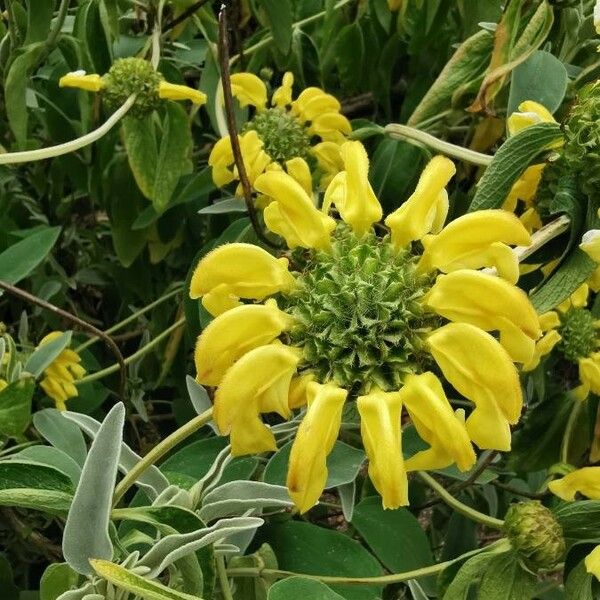
Plant Overview
Known as the Large-flowered Jerusalem Sage, this architectural powerhouse brings a touch of Mediterranean sunshine to any border. With its velvety, silver-green leaves and tiers of golden blooms, it looks less like a typical sage and more like a botanical sculpture. It is a favorite for "dry gardens" and xeriscaping, as it thrives on high heat and minimal water once established.
🔍 How to Identify
- 🍃 Felted Foliage: Large, heart-shaped leaves covered in a dense layer of fine silvery hairs, giving the plant a soft, "fuzzy" texture that helps it retain moisture.
- 👑 Tiered Blooms: Bright yellow, hooded flowers that grow in distinct circular clusters (whorls) stacked like a pagoda along the tall, square stems.
- 🪵 Shrubby Habit: Unlike smaller culinary sages, this species develops a sturdy, woody base and can grow into a substantial, rounded mound.
🏡 In Your Garden
- ☀️ The Sun Worshiper: Hailing from the rocky hillsides of Turkey and Greece, this plant requires "gritty," fast-draining soil. It is notoriously difficult to keep alive in heavy clay or boggy areas, as its roots will rot in standing water.
- 🐝 Pollinator Buffet: The deep, hooded shape of the flowers is perfectly evolved for large bees. You’ll often see bumblebees prying open the "lips" of the flower to reach the nectar inside.
- ❄️ Winter Architecture: One of its best features is its "winter skeleton." If you resist the urge to prune it in autumn, the dried, brown seed heads provide a striking silhouette in the snow and offer a perch for small birds.
⚠️ Safety & Toxicity
- ✅ Pet & Child Safe: Phlomis grandiflora is generally considered non-toxic and is safe to plant in gardens frequented by curious dogs, cats, or toddlers.
- 🧤 Tactile Sensitivity: While not poisonous, the tiny "stellate" hairs that give the leaves their velvet feel can be a mild skin irritant for some people. It’s wise to wear gloves when doing heavy pruning to avoid "the itches."
✨ Fun Fact
The name "Phlomis" comes from the Greek word for "flame." In ancient times, the fuzzy, felt-like leaves were dried and used as wicks for oil lamps because they burned slowly and held the oil exceptionally well!

Detailed Care Instructions
To grow Phlomis Grandiflora, also known as Jerusalem Sage, you can follow these steps:
- Choose the right location: Phlomis Grandiflora prefers a sunny spot with well-draining soil. Ensure that the area receives at least 6 hours of direct sunlight per day.
- Prepare the soil: Before planting, amend the soil with organic matter such as compost or well-rotted manure to improve drainage and fertility.
- Planting: Dig a hole slightly larger than the root ball of the plant. Place the plant in the hole, ensuring that the crown is at ground level. Backfill the hole with soil, firming it gently around the plant.
- Watering: Keep the soil consistently moist during the plant's first growing season. Once established, Phlomis Grandiflora is drought-tolerant and can withstand dry spells. Water deeply but infrequently to encourage deeper root growth.
- Mulching: Apply a layer of organic mulch, such as wood chips or straw, around the base of the plant to conserve moisture, suppress weed growth, and regulate soil temperature.
- Pruning: In early spring, remove any dead or damaged stems. Additionally, after the plant has finished flowering, you can trim it back to maintain a compact shape.
- Fertilization: Phlomis Grandiflora generally doesn't require frequent fertilization. However, you can apply a balanced slow-release fertilizer once a year in early spring to promote healthy growth.
- Propagation: You can propagate Phlomis Grandiflora by collecting and sowing the seeds in early spring. Alternatively, you can take stem cuttings in late spring or early summer and root them in a well-draining potting mix.
By following these steps, you can successfully grow Phlomis Grandiflora in your garden. Remember to monitor the plant's water needs and provide occasional pruning as necessary.
When watering this plant, it is important to avoid over-watering as this can cause root rot. Allow the top inch of soil to dry out before watering again and be sure to water deeply to ensure the roots receive enough water. It is also recommended to water at the base of the plant rather than from above to prevent foliage from getting wet and potentially developing fungal diseases. If grown in containers, make sure there is adequate drainage to prevent water from sitting in the bottom of the pot.
To fertilize this plant, it is recommended to use a slow-release fertilizer in early spring before new growth begins. Apply the fertilizer at the base of the plant, taking care not to get it on the foliage. Follow the instructions on the fertilizer package for the recommended amount to apply. Avoid over-fertilizing as this can lead to excessive growth and reduce the overall health of the plant.
The ideal soil for Phlomis Grandiflora should be well-draining, fertile and rich in nutrients. It should have a slightly acidic pH level within the range of 6.0 to 7.5. This plant prefers soils that are loamy, sandy, or clayey.
The soil should be friable and crumbly, with good aeration and water-holding capacity. It should provide ample room for root development and support. Additionally, the soil should be free of any toxic chemicals, heavy metals or pesticides that may inhibit the growth of the plant.
To provide the best growing conditions for Phlomis Grandiflora, it is recommended to amend the soil with organic matter such as compost, well-rotted manure, or leaf mold. This will help to improve soil structure, add nutrients, and increase soil fertility. It is important to ensure that the soil is moist but not waterlogged, as this can cause root rot and ultimately, kill the plant.
Regular soil testing will also help in monitoring the soil pH level and nutrient content. Adding appropriate amendments can help to maintain the optimal soil environment for Phlomis Grandiflora to thrive and produce beautiful, colorful flowers.
Phlomis Grandiflora plant can be propagated through cuttings. The best time to take the cuttings is in spring or summer when the plant is actively growing. Choose a healthy stem with no damage and make a clean cut below a node using a sharp, sterile knife or scissors. Remove the lower leaves from the stem, leaving a few at the top. Dip the cut end in rooting hormone and place it in a pot filled with a well-draining soil mix. Keep the soil moist but not waterlogged and place the pot in a bright, warm, and humid spot. You can cover the pot with a plastic bag or place a clear plastic container over the stem to create a mini greenhouse environment. After a few weeks, you should see roots forming. Once the new plant has established roots, you can transplant it into a larger pot or into the ground.








