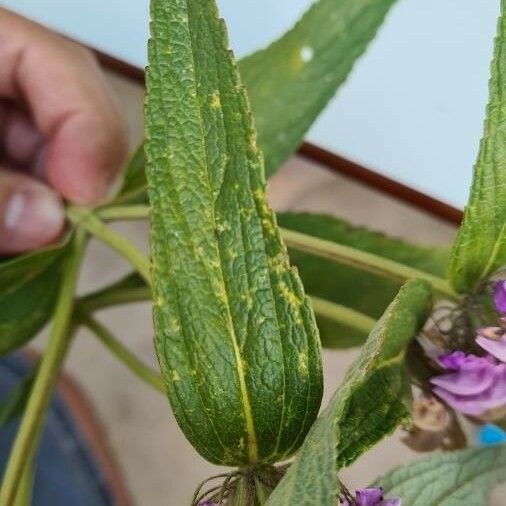
Plant Overview
Often called the Wind-herb or Sage-leaved Mullein, this Mediterranean native is a resilient beauty that thrives where other plants might wither. Its Latin name, herba-venti, literally translates to "herb of the wind," a nod to its ability to sway gracefully in coastal gales without snapping. With its velvety foliage and architectural flower spikes, it’s a favorite for those looking to add a touch of wild, silver-green elegance to a drought-tolerant landscape.
🔍 How to Identify
- 🍃 Fuzzy Foliage: The leaves are lance-shaped, grayish-green, and covered in a dense coat of fine, soft hairs that feel like felt to the touch.
- 🌸 Whorled Blossoms: The flowers are a delicate purple or dusky pink, emerging in dense, circular clusters (verticillasters) that look like pom-poms stacked along the upper stems.
- 🏗️ Structural Stems: It features square, sturdy stems characteristic of the Mint family (Lamiaceae), which remain standing even after the flowers have faded.
🏡 In Your Garden
- ☀️ Sun Seeker: This plant is a true sun-worshipper. It produces more vibrant flowers and tighter foliage when baked in full light, making it perfect for south-facing borders.
- 💧 Dry Roots: It is exceptionally drought-tolerant once established. Its biggest enemy is soggy winter soil; it requires "sharp" drainage (soil with plenty of grit or sand) to prevent its roots from rotting during the dormant season.
- ✂️ Winter Interest: Instead of pruning it back in the fall, many gardeners leave the dried seed heads intact. They provide a beautiful skeletal structure in the winter garden and serve as a "bug hotel" for overwintering beneficial insects.
⚠️ Safety & Toxicity
- ✅ Safe Status: Phlomis herba-venti is generally considered non-toxic to humans, cats, and dogs.
- 🧤 Skin Sensitivity: While not poisonous, the tiny hairs on the leaves can be slightly abrasive or irritating to individuals with very sensitive skin. Wearing gloves during heavy pruning is a good practice.
✨ Fun Fact
In ancient folk medicine, the "Wind-herb" was believed to have the power to calm more than just the weather. It was historically used in various Mediterranean cultures in poultices and teas, as it was thought to "quiet the wind" inside the body (easing respiratory or digestive distress).

Detailed Care Instructions
To grow Phlomis herba-venti, also known as wind-herb or Jerusalem sage, you can follow these steps:
- Climate and soil: Phlomis herba-venti prefers a Mediterranean climate, with mild winters and hot, dry summers. It thrives in well-draining soil that is slightly alkaline.
- Propagation: Phlomis herba-venti can be propagated from seeds or cuttings. Seeds can be sown directly in the garden in early spring or started indoors in pots. Cuttings can also be taken in early summer.
- Seed planting: If planting seeds, prepare the soil by removing any weeds and loosening it with a garden fork. Sow the seeds at a depth of 0.5 cm (1/4 inch) and cover lightly with soil. Water gently.
- Transplanting: If starting indoors, sow the seeds in pots or trays filled with well-draining soil. Transplant the seedlings outdoors once they have grown a few inches tall and all danger of frost has passed.
- Watering: Water your Phlomis herba-venti regularly during its establishment period to help it develop a strong root system. Once established, it is a drought-tolerant plant and only requires occasional watering during prolonged dry spells.
- Sunlight: Place your Phlomis herba-venti in a sunny location, as it thrives in full sun. It needs at least 6-8 hours of direct sunlight per day to grow and bloom properly.
- Pruning: Prune your Phlomis herba-venti in late winter or early spring to remove any dead or damaged branches. This will help promote new growth and maintain its shape.
- Fertilization: Phlomis herba-venti does not require much fertilization. However, you can apply a balanced slow-release fertilizer in early spring to provide essential nutrients.
- Pests and diseases: Phlomis herba-venti is generally resistant to pests and diseases. However, keep an eye out for aphids, spider mites, or powdery mildew, and treat them accordingly if needed.
- Division: Over time, your Phlomis herba-venti may become overcrowded. To maintain its vigor, you can divide the plant every few years in early spring or fall.
Remember to check your local gardening guidelines and consult with local experts to ensure the specific requirements for growing Phlomis herba-venti in your region.
Phlomis Herba-venti is a plant that requires regular watering during the growing season. The amount of water required depends on various factors such as the type of soil, temperature, and humidity levels. It is best to water the plant thoroughly, ensuring that the water reaches the root zone. This can be achieved through slow and deep watering, either by using a watering can or a garden hose. It is also recommended to water the plant early in the morning or late in the evening to reduce water loss due to evaporation. It is important not to overwater the plant as this can lead to root rot and other diseases. To ensure the plant remains healthy, it needs to be watered regularly but not excessively.
To fertilize this plant, apply a balanced, slow-release fertilizer in early spring before new growth appears. Follow the manufacturer's instructions for application rates based on the size of your plant. In addition, you can also apply compost or well-rotted manure around the base of the plant to provide additional nutrients. Avoid fertilizing in late summer or fall, as this can stimulate new growth that may not have time to harden off before winter.
Phlomis Herba-venti plant prefers a well-draining soil that is moist but not waterlogged. The ideal pH range for this plant is between 6.0 and 8.0, and it grows best in soil that is rich in organic matter. A sandy loam soil with good drainage is ideal, but it can also tolerate clay soils if they are amended with organic matter. Fertilization is generally not necessary with this plant, but a general-purpose fertilizer may be applied once a year in early spring to promote growth and healthy foliage. It is important to avoid using soil that is contaminated with chemicals or pollutants, as this plant is sensitive to environmental contaminants.
Phlomis Herba-venti plant can be propagated through seed germination or by taking stem cuttings. To propagate through seed germination, collect the seeds from a mature plant during the autumn season and sow them in well-draining soil in a shady spot. Keep the soil moist and wait for the seed to germinate.
To propagate through stem cutting, select a healthy and mature stem from the parent plant that has no flowers or buds. Cut a 2-3 inch long stem from the tip and remove any leaves from the lower half. Dip the cut end into rooting hormone powder and plant it in a well-draining potting mix. Keep the soil moist and place the cutting in a shaded area. Within 4-6 weeks, the cutting will develop roots and can be transplanted into a bigger pot or into the garden.








