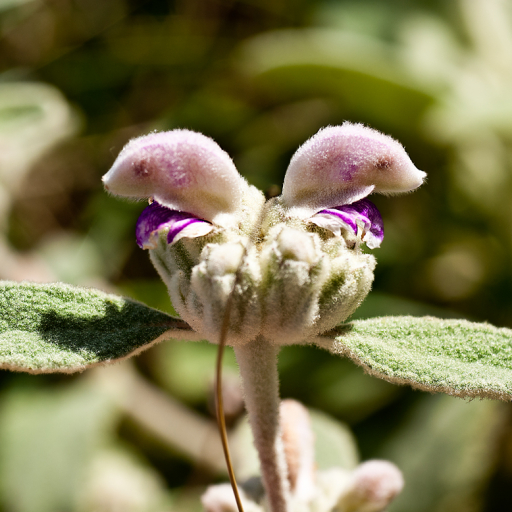
Plant Overview
Often called Italian Jerusalem Sage, this Mediterranean beauty is a bit of a traveler with a confusing name—it actually originates from the Balearic Islands of Spain, not Italy! Covered in a thick layer of silvery-white "felt," it looks like it’s been dusted with a permanent layer of frost. It is a favorite for xeriscaping and gravel gardens because it thrives where other plants might wither under the sun.
🔍 How to Identify
- ☁️ Foliage Texture: The leaves are lance-shaped and densely covered in soft, woolly white hairs, giving the entire plant a shimmering silver-grey appearance.
- 🌸 Flower Whorls: In late spring and summer, pale pink to lilac-colored flowers emerge in distinct, tiered circular clusters (whorls) along the upright stems.
- 🌿 Growth Habit: It forms a low, bushy mound that usually stays under two feet tall, making it look like a soft, silver cloud in the landscape.
🏡 In Your Garden
- ☀️ Sun-Seeker: This plant is a true child of the Mediterranean; it craves intense sunlight and will become "leggy" or sparse if tucked into the shade.
- 🏜️ Lean and Mean: It actually prefers poor, rocky, or sandy soil. If you give it too much fertilizer or rich compost, it may grow too quickly and flop over.
- ✂️ Pruning Nuance: To keep it looking neat, wait until the flowers fade and then cut the stems back slightly. This encourages a tighter, more compact shape for the next season.
⚠️ Safety & Toxicity
- ✅ Status: Non-toxic and generally safe.
- 🐾 Pets & Kids: There are no known toxic effects for cats, dogs, or humans. However, the fuzzy texture of the leaves can sometimes be a mild mechanical irritant to sensitive skin if handled excessively without gloves.
✨ Fun Fact
The genus name Phlomis is derived from the Greek word for "flame." In ancient times, the thick, velvety leaves of its relatives were dried and used as wicks for oil lamps!

Detailed Care Instructions
To grow Phlomis Italica (Italian Jerusalem sage) plants, you can follow these steps:
- Choose a location: Select a sunny spot in your garden that receives at least 6 hours of sunlight per day. The soil should be well-draining.
- Prepare the soil: Ensure the soil is well-draining by adding compost or organic matter to improve its structure and drainage. Phlomis Italica prefers slightly alkaline to neutral soil pH.
- Planting: Dig a hole that is slightly larger than the root ball of the plant. Place the plant in the hole, making sure the top of the root ball is level with or slightly above the soil surface. Backfill the hole with soil, gently firming it around the plant.
- Watering: Water the plant thoroughly after planting. Keep the soil consistently moist but not waterlogged. Once established, Phlomis Italica is known to be relatively drought-tolerant.
- Mulching: Apply a layer of mulch around the base of the plant to help retain moisture, control weeds, and insulate the roots. Be sure to keep the mulch a few inches away from the stem to prevent rotting.
- Pruning: Prune Phlomis Italica in early spring to remove any dead or damaged branches. This plant is relatively low maintenance and does not require heavy pruning.
- Fertilizing: Phlomis Italica generally does not require much fertilization. However, you can use a general-purpose organic fertilizer once or twice a year to provide some nutrients.
- Propagation: Phlomis Italica can be propagated through stem cuttings taken in late spring or early summer. Dip the cut end of the stem in rooting hormone and plant it in a well-draining potting mix. Keep the cutting consistently moist until roots develop.
With proper care, Phlomis Italica plants can grow well and produce vibrant flowers. Remember to consider the specific needs of your climate and adjust care accordingly.

Place in a bright room that is sun drenched almost all day. Or directly in a south-facing window.

To water this plant, it is important to first check the moisture level of the soil. This can be done by sticking a finger about an inch deep into the soil and feeling for moisture. If the soil feels dry, it is time to water the plant. When watering, be sure to thoroughly soak the soil around the plant, allowing the water to sink deep into the roots. Avoid getting the foliage wet, as this can lead to disease and damage to the plant. It is recommended to water this plant regularly, but be careful not to overwater as this can lead to root rot. During periods of drought, it may be necessary to water more frequently, while during periods of heavy rain or high humidity, less frequent watering may be necessary.
To fertilize this plant, wait until after the last frost in early spring and apply a slow-release granular fertilizer formulated for woody plants. Spread it around the base of the plant, being careful not to let it touch the foliage. Water deeply after fertilizing to ensure the nutrients reach the roots. Repeat this process once a year in early spring. Avoid fertilizing in fall or winter, as this can promote new growth that may be damaged by frost.
The ideal soil for growing this plant should be well-draining and rich in organic matter. A mix of sandy loam or loamy soil with compost or aged manure will provide the necessary nutrients and enhance water retention. It should have a pH range of 6.5 to 8.5, which is slightly alkaline to neutral. Avoid using heavy clay soils that retain moisture and may cause root rot. The soil should be aerated to promote healthy root growth, and the planting hole should be deep enough to accommodate the roots. Once planted, ensure to keep the soil moist, but not waterlogged, and provide adequate sunlight for optimum growth.
Phlomis Italica is a flowering plant that can be propagated by several methods including seed propagation, division, and stem cuttings. To propagate through seed, collect the matured seeds in the fall after the flowers have faded. Clean the seeds and store them in a cool and dry location until the following spring. In the spring, plant the seeds just below the soil surface and water regularly until they germinate.
To propagate through division, carefully dig up the mature plant in the early spring or fall when it is dormant. Gently separate the individual plants by dividing the root ball into smaller sections. Replant the sections in well-draining soil and water thoroughly.
To propagate through stem cuttings, take a cutting from the plant in the early summer when the new growth is still green and pliable. Cut a 4-6 inch (10-15 cm) long stem from the mother plant and remove the lower leaves. Dip the cut end of the stem in rooting hormone and place it in a pot filled with moist potting soil. Place the pot in a bright but shaded area and mist the cutting regularly. Once roots have formed, transplant the new plant into its permanent location.








