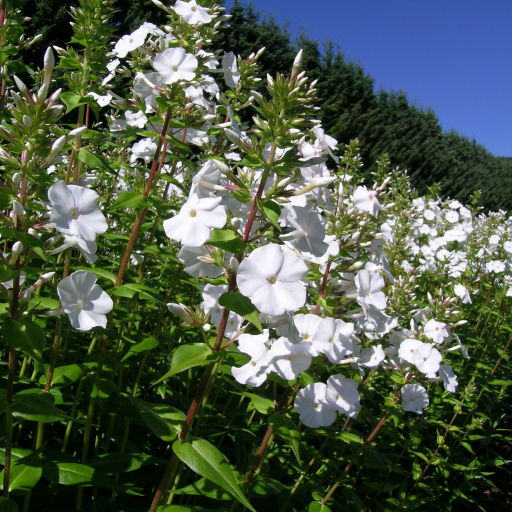
Plant Overview
Known as the "Thick-leaf Phlox," this native beauty is a staple of the American Southeast, often found gracing open woodlands with its vibrant clusters. It is the sophisticated, hardier cousin of the common garden phlox, prized by enthusiasts for its glossy foliage and incredible fragrance. In the language of flowers, Phlox symbolizes "sweet dreams" and "unity," likely because of how its individual florets huddle together to create a single, glowing orb of color.
🔍 How to Identify
- 🌸 The Blooms: Features clusters (cymes) of trumpet-shaped flowers, typically in shades of lavender, pink, or white, each with five rounded petals.
- 🍃 The Foliage: Distinguished by its thick, leathery, lance-shaped leaves that feel much sturdier than other phlox varieties.
- 📏 The Stature: Grows in upright clumps usually reaching 1 to 3 feet tall, with smooth stems that rarely require staking.
🏡 In Your Garden
- 🛡️ Mildew Resistance: One of the biggest perks of Phlox carolina is its natural resistance to powdery mildew, a fungal disease that often leaves other phlox varieties looking "dusty" and grey.
- 🦋 Pollinator Banquet: The long tubular flowers are a specialized feast for butterflies and clearwing hummingbird moths, who use their long proboscises to reach the nectar hidden deep inside.
- 💧 Moisture Balance: While it loves consistent moisture, it possesses a thick taproot that makes it slightly more drought-tolerant than the tall Garden Phlox, though it hates "wet feet" in the winter.
⚠️ Safety & Toxicity
- ✅ Non-Toxic: Good news for pet owners! Phlox carolina is generally considered non-toxic to dogs, cats, and horses.
- 👶 Kid-Friendly: It is safe for planting in areas where children play, as it lacks thorns and does not contain known poisonous alkaloids.
✨ Fun Fact
Phlox carolina was one of the very first American wildflowers to be exported to Europe in the 18th century. It became a sensation in English "Cottage Gardens" decades before it was formally embraced by gardeners back in its home territory of North America!

Detailed Care Instructions
To grow Phlox Carolina plants, follow these steps:
- Choose the right location: Phlox Carolina plants prefer full sun to partial shade. Select a spot in your garden that receives at least 6 hours of direct sunlight per day.
- Prepare the soil: Phlox Carolina plants prefer well-draining soil with a pH level between 6.0 and 7.0. Amend the soil with organic matter, such as compost, to improve its fertility and drainage.
- Planting: Dig a hole that is slightly larger than the rootball of the plant. Gently loosen the roots and place the plant in the hole. Backfill the hole with soil, ensuring that the plant is at the same level as it was in its original container. Pat down the soil around the plant to secure it.
- Watering: Keep the soil consistently moist but not waterlogged. During the first few weeks after planting, water the Phlox Carolina plant regularly to help establish its roots. Once it is established, water deeply but infrequently to encourage strong root growth.
- Mulching: Apply a layer of organic mulch around the base of the plant to retain moisture, suppress weeds, and regulate soil temperature. Keep the mulch a few inches away from the stem of the plant to prevent rot.
- Fertilizing: Phlox Carolina plants generally do not require frequent fertilization. However, you can apply a balanced slow-release fertilizer in early spring to promote healthy growth and blooming. Follow the instructions on the fertilizer packaging for proper application rates.
- Pruning: Prune the Phlox Carolina plant after it has finished blooming. Cut back the faded flowers and trim any leggy or straggly growth. This will help maintain a tidy and compact appearance and encourage better flowering next season.
- Pest and disease control: Phlox Carolina plants are generally resistant to most pests and diseases. However, they can occasionally suffer from powdery mildew. To prevent this, make sure to provide adequate air circulation and avoid overhead watering.
- Propagation: Phlox Carolina plants can be propagated through division. Every 3-4 years, dig up the plant in early spring or fall and divide it into smaller clumps using a sharp garden knife. Replant the divided clumps immediately, making sure each new plant has sufficient roots.
By following these steps, you should be able to successfully grow and maintain your Phlox Carolina plant.

Place in a bright room that is sun drenched almost all day. Or directly in a south-facing window.

Phlox Carolina is a beautiful flowering plant that requires adequate watering for healthy growth and blooming. Here are some tips on how to water this plant without mentioning its common names:
1. Check the soil moisture level regularly: To determine if the plant needs watering, check the soil moisture level by inserting your finger about an inch deep into the soil. If it feels dry, it's time to water.
2. Water deeply and infrequently: When watering, apply water directly to the soil around the plant's roots, making sure not to splash the foliage. Water deeply and infrequently to encourage deeper root growth.
3. Avoid over-watering: Over-watering can lead to root rot, so make sure not to water the plant too frequently or let it sit in standing water.
4. Water in the morning: Water the plant in the morning, allowing the foliage to dry before nighttime to reduce the risk of fungal diseases.
5. Adjust watering based on weather conditions: Adjust watering frequency based on weather conditions. During hot, dry weather, the plant may require more frequent watering, while during periods of rain or cooler temperatures, watering may need to be reduced.
By following these watering tips, you can ensure that your Phlox Carolina plant thrives and produces beautiful blooms.
To fertilize this plant, use a balanced fertilizer with equal amounts of nitrogen, phosphorus, and potassium. Apply the fertilizer in the early spring, just as the new growth starts to appear. Use a granular fertilizer and spread it evenly around the base of the plant, avoiding direct contact with the stems and leaves. Water the plant thoroughly after fertilizing to help the nutrients soak into the soil. Repeat the fertilization once or twice throughout the growing season, depending on the plant's growth rate and how often it blooms. Always follow the instructions on the fertilizer package for the correct amount and application method.
The ideal soil for the Phlox Carolina plant should be moist, well-drained, and fertile with a pH level of around 6.0 to 7.0. It should also be rich in organic matter and have good structure to promote root growth and nutrient uptake. Avoid using heavy clay or sandy soils, as these can lead to poor growth and development of the plant. Additionally, the soil should be free of any pathogens or diseases that may affect the plant's health.
The Phlox Carolina plant can be propagated through methods such as division or stem cuttings. To propagate through division, dig up the mother plant and separate the root ball into smaller sections, ensuring that each section contains a healthy tuft of foliage and roots. Plant the divided sections in separate containers or in the ground.
To propagate through stem cuttings, select a healthy cutting from a mature plant and ensure it has at least 4-6 leaves. Remove the lower leaves and dip the cut end of the stem into a rooting hormone. Plant the cutting in a pot filled with moist soil and keep it in a shaded area until it develops roots. Once roots have formed, transplant the cutting to a permanent location.








