Plant Overview
Known as a specialized mistletoe native to the tropical and subtropical regions of the Americas, Phoradendron bathyoryctum is a master of living "on the edge." Often referred to as a "Tree Thief," it doesn't grow in soil but instead perches high in the canopy of host trees. While it captures its own sunlight, it relies on its host for a refreshing drink, making it a fascinating example of nature’s parasitic hitchhikers.
🔍 How to Identify
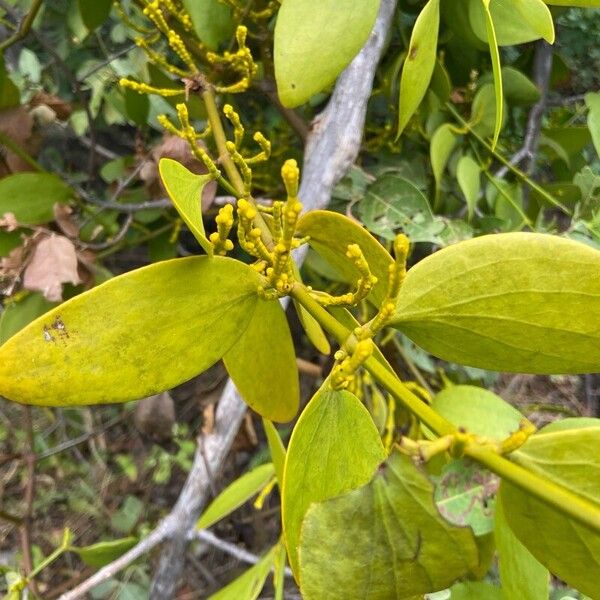
- 🌿 Waxy Foliage: The leaves are thick, leathery, and usually a deep, dull green, helping the plant retain moisture high in the windy canopy.
- 🎋 Segmented Stems: Look for woody, brittle stems that grow in opposite pairs and appear "jointed" or swollen at the nodes where they meet.
- ⚪ Sticky Berries: It produces small, translucent, fleshy berries that contain a sticky substance called viscin, which helps seeds glue themselves to new tree branches.
🏡 In Your Garden & Landscape
- 🌳 The Canopy Guest: Unlike most garden plants, you won't find this in a pot. It thrives by "tapping" into the vascular system of hardwoods (like Oaks or Legume trees) using a specialized root called a haustorium.
- 🐦 Avian Architecture: In a natural landscape, these plants are ecological hubs. They provide essential nesting materials and high-energy snacks for birds, who in turn "plant" the seeds on other branches through their droppings.
⚠️ Safety & Toxicity
- 🚫 Status: Toxic to Humans and Pets.
- 🤢 The Risk: Most members of the Phoradendron genus contain phoratoxins. If ingested, the leaves or berries can cause blurred vision, stomach cramps, and a slowed heart rate. It is best treated as an "admire from a distance" plant, especially if you have curious dogs or young children.
✨ Fun Fact
The scientific name Phoradendron literally translates from Greek as "Tree Thief" (phor meaning thief and dendron meaning tree), perfectly describing its lifestyle of stealing water and minerals from its host!

Detailed Care Instructions







