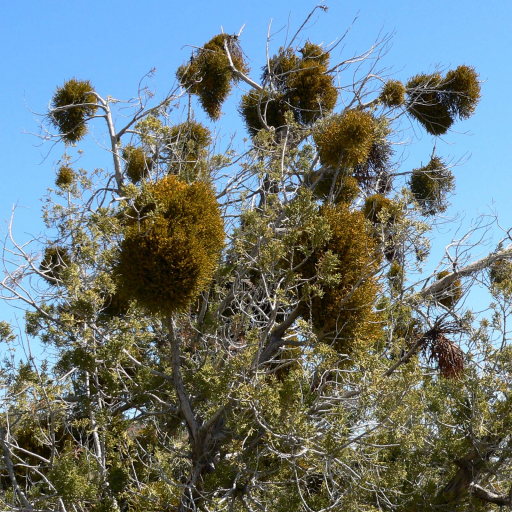
Plant Overview
Known as the Juniper Mistletoe, this plant is a fascinating desert dweller that prefers life at the top. Unlike typical plants that root in the soil, this hemiparasite hitches a ride on juniper trees across the American Southwest. It is a vital part of high-desert ecosystems, providing essential winter food for birds while slowly weaving its life into the branches of its host.
🔍 How to Identify
- 🌿 Scale-like Leaves: Instead of broad leaves, it features tiny, triangular scales that are yellowish-green to olive. This helps the plant conserve water in arid climates.
- 🪵 Woody Clumps: It grows in dense, rounded "brooms" or brittle clusters that can reach up to two feet in diameter, protruding directly from the branches of a juniper tree.
- 🍒 Translucent Berries: In late fall and winter, the female plants produce small, pearl-like berries that are white or light pink and have a sticky, gelatinous texture.
🏡 In Your Garden & Landscape
- 🌳 Host Dependency: You won’t find this plant in a pot; it requires a living Juniper host to survive. It uses specialized "roots" called haustoria to tap into the tree's plumbing to steal water and minerals.
- 🐦 Wildlife Magnet: If you have this mistletoe on your property, you have a natural bird feeder. Birds like the Phainopepla and Western Bluebird rely almost exclusively on these berries during the winter months, helping to spread the seeds to new trees.
⚠️ Safety & Toxicity
- 🚫 Toxic Status: All parts of the Juniper Mistletoe—especially the berries—are considered toxic if ingested.
- 🐾 Pets and Children: It contains phoratoxins which can cause blurred vision, nausea, abdominal pain, and a slowed heartbeat. Keep it out of reach of curious pets and toddlers, and never use wild-foraged berries for holiday decorations near food.
✨ Fun Fact
The seeds are coated in a natural "superglue" called viscin. When a bird eats a berry and later "deposits" the seed on a branch, the viscin ensures the seed sticks firmly to the bark, preventing it from falling off before it has a chance to burrow into its new host tree!

Detailed Care Instructions

Place in a bright room that is sun drenched almost all day. Or directly in a south-facing window.

When the top few inches of soil dry out, water your plants. If the top few inches of soil are still moist, do not water your plant. Wait a few days, then poke your finger into the soil to see if anything has changed. Overwatering poses a disease risk, such as the development of fungal diseases in the roots. These plants have adaptations in there leaves that allow them to survive in low water supply.








