Plant Overview
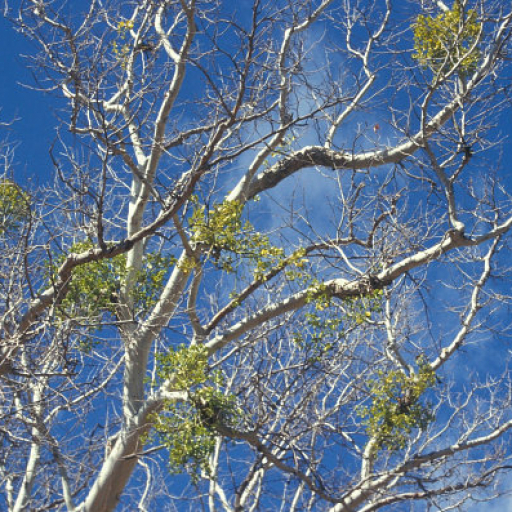
Often called the Big-leaf Mistletoe, this evergreen architect is most famous for its starring role in holiday traditions. While it looks like a lush, independent shrub, it is actually a "hemiparasite" that makes its home high in the branches of deciduous trees like Sycamores and Oaks. It stays vibrant green even when its host tree loses its leaves for the winter, making it easy to spot against a bare sky.
🔍 How to Identify
- 🍃 Leathery Leaves: The leaves are thick, oval-shaped, and a bright yellowish-green. Unlike some other mistletoes, these are broad and substantial, giving the plant a "leafy" appearance.
- ⚽ Growth Habit: It grows in distinct, rounded clusters or "burls" that can reach up to three feet in diameter, looking like green bird nests tucked into tree crotches.
- 🔮 Waxy Berries: In winter, the plant produces small, translucent white or slightly pinkish berries. They have a sticky coating that helps them cling to the beaks of birds.
🌳 Role in the Canopy
- 💧 The Gentle Thief: Because it is hemiparasitic, it produces its own energy through photosynthesis but "taps" into the host tree's plumbing to steal water and minerals. It rarely kills a healthy tree but can stress one that is already struggling.
- 🐦 Avian Apartment: While it is a parasite to the tree, it is a hero to wildlife. Many birds, such as the Phainopepla, rely almost entirely on these berries for food and use the dense clumps as safe nesting sites.
⚠️ Safety & Toxicity
- 🚫 Toxic Status: Poisonous to humans and pets. All parts of the plant, especially the berries, contain chemicals called phoratoxins.
- 🚑 The Risk: If ingested by curious children or pets (cats and dogs), it can cause blurred vision, stomach cramps, diarrhea, and a slowed heartbeat. It is best used as a high-hanging decoration where it cannot be reached.
✨ Fun Fact
The name Phoradendron literally translates from Greek as "Tree Thief." Its seeds are coated in a super-sticky substance called viscin, which acts like biological superglue, ensuring the seed sticks to a branch rather than falling to the ground when a bird poops it out!

Detailed Care Instructions
Phoradendron Macrophyllum plant prefers to have a good amount of moisture in its soil, but it is important not to overwater it as it can cause root rot. Therefore, it is best to water the plant when the top inch of soil feels dry to the touch. When watering, make sure to give the plant a thorough watering, allowing the water to drain out of the bottom of the pot. Avoid letting the plant sit in standing water. Depending on the temperature and humidity of the plant's environment, it may need to be watered once or twice a week. If the leaves start to yellow or droop, it may be a sign of overwatering or underwatering, so adjust accordingly. Additionally, misting the plant's leaves with water can help increase humidity and prevent the plant from drying out.
To grow Phoradendron Macrophyllum, use a well-draining soil mix that is rich in nutrients. The soil should have a pH level between 6.0 and 7.0. A good soil mix can be made by combining 50% peat moss, 25% perlite or coarse sand, and 25% compost. It is important to ensure that the soil mix is loose and aerated to allow good drainage and root development. Avoid using heavy soils that may cause waterlogging and lead to root rot. Additionally, it is recommended to add organic matter to the soil to improve its fertility and structure. This can be done by incorporating compost or aged manure in the soil mix before planting.








