Plant Overview
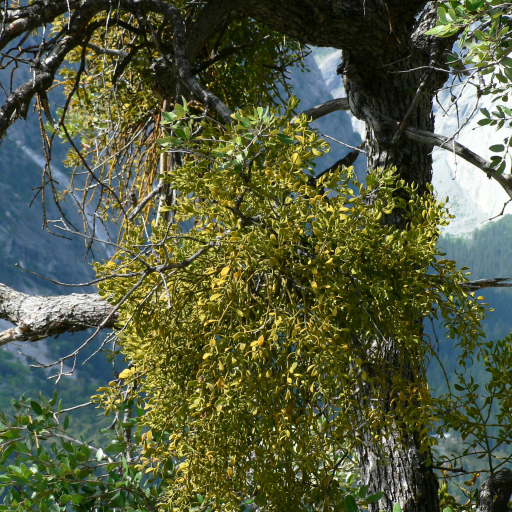
Often called the Oak Mistletoe, this plant is a fascinating partial parasite that lives high in the forest canopy. While we associate it with romantic winter holiday traditions, its scientific name Phoradendron literally translates to "thief of the tree." Unlike its smoother cousins, this variety is distinctly fuzzy, giving it a soft, silvery-green glow that stands out against the rugged bark of its host.
🔍 How to Identify
- 🌿 Velvety Foliage: The leaves are thick, leathery, and covered in fine, short hairs (trichomes) that feel like felt or velvet to the touch.
- ⚪ Pearl-like Berries: During the winter months, female plants produce clusters of translucent white or slightly pinkish berries that are incredibly sticky.
- 🌳 Growth Habit: It grows in dense, rounded "brooms" or clumps that can reach up to three feet in diameter, typically found perched on the branches of Oak trees.
🏡 In Your Garden
- 🪵 Hemiparasitic Lifestyle: You won't find this in a nursery pot! It survives by "stealing" water and minerals from its host tree through specialized roots called haustoria, although it still produces its own energy via photosynthesis.
- 🐦 Avian Architect: While it can stress a tree if the infestation is heavy, it is a vital ecological hub. Birds like the Western Bluebird rely on the berries for winter fuel and use the dense clumps as protected nesting sites.
⚠️ Safety & Toxicity
- 🚫 Toxic Status: High. All parts of the Oak Mistletoe, especially the berries, are considered toxic to humans and domestic animals if ingested.
- 🐾 Risk Details: The plant contains phoratoxins which can cause severe stomach upset, slowed heart rate, and labored breathing in pets and children. It is best enjoyed from a distance or hung high out of reach during festivities.
✨ Fun Fact
🦋 The Butterfly Connection: The Oak Mistletoe is the exclusive host plant for the caterpillars of the Great Purple Hairstreak butterfly. Without this "parasite" stealing water from oaks, this iridescent, jewel-toned butterfly would have nowhere to lay its eggs!

Detailed Care Instructions
To grow Phoradendron Villosum, also known as mistletoe cactus, you can follow these steps:
- Obtain a healthy cutting: Locate a mature Phoradendron Villosum plant or ask a friend who has one to provide you with a cutting. Make sure the cutting is at least 6 inches long and contains several sets of leaves.
- Prepare a planting medium: Phoradendron Villosum prefers well-draining soil. You can create a suitable mix by combining equal parts of potting soil, perlite, and sand.
- Root the cutting: Allow the cutting to dry out for a few days to promote callousing. Then, dip the cut end of the stem in rooting hormone powder to encourage root growth. Insert the cutting about 2 inches deep in the prepared potting mix.
- Create a favorable environment: Place the potted cutting in a warm and bright location with indirect sunlight. Maintain a temperature of around 70-75 degrees Fahrenheit (21-24 degrees Celsius). Avoid exposure to direct sunlight, as it may scorch the plant.
- Provide regular watering: Water the Phoradendron Villosum sparingly, ensuring the soil is barely moist. Overwatering can lead to root rot. Allow the top inch of soil to dry out before watering again. Mist the leaves occasionally to increase humidity.
- Fertilize occasionally: During the growing season, from spring to early fall, you can fertilize the plant every two to four weeks with a balanced houseplant fertilizer. Follow the instructions on the fertilizer package to avoid over-fertilization.
- Monitor for pests and diseases: Watch out for common houseplant pests such as mealybugs and spider mites. If detected, treat the plant with insecticidal soap or neem oil according to the product directions. Keep an eye out for any signs of disease or rot and promptly address them.
- Promote branching and growth: Once your Phoradendron Villosum has established roots and starts to grow, you can pinch off the tips of the stems to encourage branching and a more compact shape. This will promote a bushier and fuller plant.
Remember that mistletoe cactus does not require too much attention and can grow in low-maintenance conditions. With proper care and patience, your Phoradendron Villosum should thrive and grow into a beautiful plant.
Phoradendron villosum, commonly known as mistletoe cactus, is a unique and attractive plant that requires proper watering to thrive. Here's a detailed guide on how to water this species without mentioning its common names:
- Assess the moisture level: Before watering, check the moisture level of the soil. Stick your finger about an inch or two deep into the soil to see if it feels dry or moist. This will help you determine whether watering is necessary.
- Follow the general rule: In general, it is recommended to water Phoradendron villosum when the top inch of the soil feels dry. Overwatering can lead to root rot and other issues, so ensure the soil is adequately dry before proceeding.
- Watering technique: When watering, use a gentle stream of water and aim to moisten the soil evenly. Avoid excessive water pressure, as it may disrupt the delicate roots of the plant. Allow the water to soak through the soil until it reaches the drainage holes at the bottom of the pot.
- Drainage is essential: Ensure that the pot has proper drainage holes to prevent water accumulation, which can cause root rot. Excess water should be able to flow out easily from the pot.
- Frequency of watering: Depending on the environmental conditions and season, Phoradendron villosum may require watering once or twice a week during warmer months. However, reduce the frequency during colder months when the plant's growth rate slows down.
- Observe for signs of underwatering or overwatering: Regularly monitor the plant for any signs of underwatering or overwatering. Wilting, yellowing leaves, and a dry, brittle texture can indicate lack of water, while droopy, discolored, or mushy leaves may signal overwatering. Adjust your watering routine accordingly.
- Mist occasionally: Phoradendron villosum thrives in slightly humid conditions. Consider misting the plant occasionally, especially during dry weather or when you notice the leaves drying out.
- Environmental factors: Environmental factors such as temperature, humidity, and air circulation can influence the plant's water requirements. Understanding the specific needs of Phoradendron villosum in relation to your local climate will help you tailor your watering routine.
Remember, it's essential to provide adequate but not excessive moisture to Phoradendron villosum for its overall health and growth. Regularly observing and adjusting your watering practices will ensure the plant remains healthy and thriving.
Phoradendron villosum is a parasitic plant that belongs to the Santalaceae family. To fertilize this plant, follow these steps:
- Choose a balanced, slow-release fertilizer with an NPK ratio of 10-10-10 or similar.
- Dilute the fertilizer according to the package instructions; typically, you'll mix it with water.
- Water the Phoradendron villosum thoroughly before applying the fertilizer.
- Pour the diluted fertilizer mixture around the base of the plant, avoiding direct contact with the foliage.
- Ensure the fertilizer reaches the roots by gently watering the area again.
- Repeat this fertilization process once every two to three months during the growing season (spring and summer).
- Monitor the plant for any signs of over-fertilization, such as yellowing, wilting, or burning of the leaves. If detected, flush the soil with water to remove excess nutrients.
- Always follow the manufacturer's instructions on the fertilizer packaging for any specific guidelines or precautions.
Note: Before applying any fertilizer, it's advisable to research and ensure that this fertilization method is appropriate for parasites like Phoradendron villosum, as their nutritional requirements might differ from non-parasitic plants.
Phoradendron villosum is a parasitic plant that requires a specialized type of soil to thrive. It is recommended to provide it with a well-draining soil mixture that consists of a blend of organic matter such as peat moss or coco coir, perlite, and a small amount of sand. This type of soil ensures adequate moisture retention while preventing waterlogging, which can be detrimental to the plant's health.
The soil pH for Phoradendron villosum should be slightly acidic to neutral, ranging between 6.0 and 7.0. This range allows for optimal nutrient uptake and overall growth. It is advisable to regularly monitor the pH level of the soil using a pH meter or testing kit to maintain the desired range.
To promote healthy growth, it is essential to provide adequate fertility to the soil. Regularly fertilizing the plant with a balanced fertilizer that contains essential nutrients such as nitrogen, phosphorus, and potassium is recommended. You can opt for either a water-soluble fertilizer or a slow-release granular fertilizer, depending on your preference and the specific requirements of your Phoradendron villosum.
Additionally, it is crucial to ensure proper watering practices. The soil should be kept consistently moist, but not overly saturated. This plant does not tolerate drought well and requires regular watering. However, excessive water can lead to root rot, so it is essential to allow the top layer of soil to dry out slightly between waterings.
Overall, providing well-draining, slightly acidic to neutral soil, along with proper watering and fertilization, can help create optimal conditions for Phoradendron villosum to thrive and grow vigorously.
Phoradendron villosum, also known as mistletoe fig, is an evergreen parasitic plant native to the Americas. It commonly grows on the branches of various trees, such as oak, apple, and pine. Propagating this plant involves a distinctive method due to its parasitic nature. Here is a step-by-step guide on how to propagate Phoradendron villosum:
- Identify a suitable host tree: Since Phoradendron villosum is a parasitic plant, it requires a host tree to grow. Look for a healthy, mature host tree of a suitable species, which can support the mistletoe fig's growth.
- Collect mature berries: The berries of Phoradendron villosum contain the seeds required for propagation. Wait until the berries are fully ripened and turn white or translucent in color. Carefully remove the berries from the mistletoe fig plant using gloved hands.
- Prepare the seeds: To initiate germination, the hard outer coat of the seeds needs to be scratched or broken. This can be achieved by gently rubbing the seeds against a fine-grit sandpaper or by using a small knife to nick the seed coat slightly. Avoid damaging the embryo inside.
- Choose a suitable spot: Look for branches on the host tree where you want the mistletoe fig to grow. Ideally, select branches that are well-exposed to sunlight, as Phoradendron villosum requires adequate light to thrive.
- Attach the seeds to the host tree: Take the prepared seeds and press them gently against the host tree's bark. Ensure the seeds adhere firmly to the surface. You may use twine or small pieces of fabric to tie the seeds to the branches for added support.
- Provide suitable growing conditions: Mistletoe figs require warmth, humidity, and plenty of sunlight to establish themselves. The host tree should provide sufficient shade during the initial stages of growth. Ensure the mistletoe fig receives consistent moisture, but avoid overwatering.
- Monitor growth: Over time, the seeds will germinate, and the mistletoe fig will establish itself on the host tree. Monitor the progress of the plant as it develops leaves and stems. Regularly check for any signs of disease or pests, which may hinder its growth and survival.
- Maintain and trim as needed: As the plant grows, it may require occasional pruning to maintain its size and shape. Be careful not to damage the host tree while conducting any trimming or maintenance activities.
- Allow natural spread: Once established, Phoradendron villosum can spread and produce its own berries, enhancing the plant's population on the host tree. Monitor the mistletoe fig's growth and propagation, ensuring it does not negatively impact the overall health of the host tree.
Remember that mistletoe fig is a parasitic plant, meaning it derives nutrients from the host tree. If for any reason you decide to remove or control the mistletoe fig population, consult with a professional arborist or horticulturist to ensure the host tree remains healthy and unharmed.








