Plant Overview
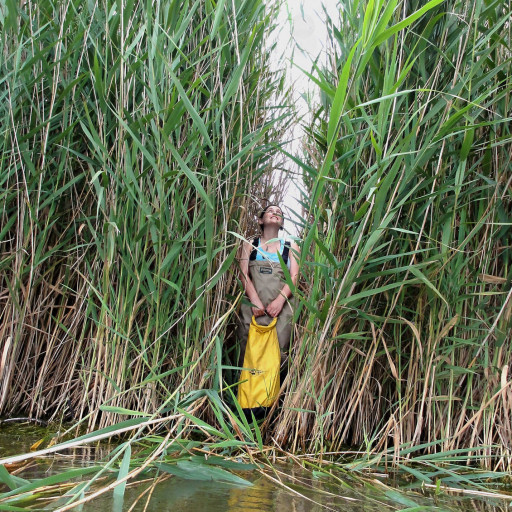
The Common Reed, or Phragmites australis, is a true global nomad, found swaying along the edges of wetlands on nearly every continent. Often called the "Ancient Voyager," this towering grass has been used for millennia by different cultures to build everything from musical instruments to entire floating islands. While it creates a picturesque, waving wall of gold in the wind, it is also a relentless conqueror that can quickly transform a diverse wetland into a single-species fortress.
🔍 How to Identify
- 🌾 Stately Stems: It grows incredibly tall, often reaching 10 to 15 feet. The stems are hollow, stiff, and smooth, resembling bamboo but much thinner.
- 🍃 Blade Shape: The leaves are long, flat, and lance-shaped, measuring up to 20 inches. They typically grow at a distinct 45-degree angle from the stem and have a dull, bluish-green hue.
- 🌬️ The Plume: In late summer, the reed develops large, feathery flower heads (panicles). These start out deep purple or chocolate brown and eventually fade into a silvery-tan, "fluffy" appearance that persists through winter.
🏡 In Your Garden & Landscape
- 🌊 Thirst for Water: This plant is an obligate wetland species. It is rarely a "choice" for a home garden unless you have a massive pond or are trying to stabilize a shoreline. It thrives in saturated soils and can even grow in several inches of standing water.
- 🚀 Aggressive Growth: Be cautious—Phragmites spreads through a massive network of underground rhizomes. It is famous for "running" and can easily choke out native flowers and ornamental grasses. Because of its deep, stubborn root system, it is famously difficult to remove once it has claimed a territory.
⚠️ Safety & Toxicity
- ✅ Non-Toxic: Phragmites australis is not known to be toxic to humans, dogs, cats, or livestock. In some cultures, the young shoots and starchy roots are even processed for food.
- 🔪 Physical Hazard: The most common safety concern is "paper cuts." The edges of the mature leaves are quite sharp and can easily slice through skin if you brush against them too quickly.
- 🔥 Fire Risk: In winter, the standing dead stalks become extremely dry and highly flammable. Large stands near homes can pose a significant fire hazard during the dry season.
✨ Fun Fact
Ancient people discovered that the hollow, sturdy stems of the Common Reed were perfect for music; it is the traditional material used to make Pan flutes and the "Duduk," a double-reed woodwind instrument from Armenia that dates back over 1,500 years!

Detailed Care Instructions
| Humidity | High |
| Lighting | Part Sun |
| Toxicity | Poisonous |
| Difficulty | Medium |
| Hibernation | Cold Period |
| Hardiness Zones | 4 - 10 |
To grow Phragmites australis, also known as common reed or giant reed, you can follow these steps:
- Choose the right location: Phragmites australis prefers wetland or marshy areas with full sun exposure. Ensure the soil is fertile and moist.
- Propagation: Phragmites australis can be propagated through seeds, rhizome division, or by planting root cuttings. Seeds can be collected from mature plants and sown in a pot or directly in the soil during the spring or fall.
- Planting: If you are using rhizome division or root cuttings, dig a hole deep enough to accommodate the roots and place the plant in it. Ensure the crown of the plant is level with the soil surface. Space each plant about 3 to 5 feet apart to allow sufficient room for growth.
- Watering: Phragmites australis requires consistent moisture, especially during the establishment phase. Keep the soil moist but not waterlogged. Regularly water the plant during dry periods or when the soil feels dry to the touch.
- Fertilization: Phragmites australis generally does not require additional fertilization, as it can extract nutrients from its surrounding environment. However, if you notice poor growth or yellowing leaves, you can apply a balanced slow-release fertilizer following the manufacturer's instructions.
- Controlling invasiveness: Phragmites australis has the potential to become invasive in some areas. To prevent its spread, consider planting it in containers or blocking its rhizome spread with barriers, such as plastic sheets buried about 2-3 feet deep around the plant.
- Maintenance: Regularly monitor the plant for any signs of disease or pest infestations. Remove any dead or damaged stems and leaves to maintain plant health. In late winter or early spring, you can cut back the Phragmites australis stalks to encourage new growth.
Please note that in certain regions, Phragmites australis is considered an invasive species and its growth may be regulated or prohibited. Ensure you are complying with local regulations and guidelines before planting it.

Place in a window with dappled sun or a spot in the middle of a room. Or directly in a window facing west or east.
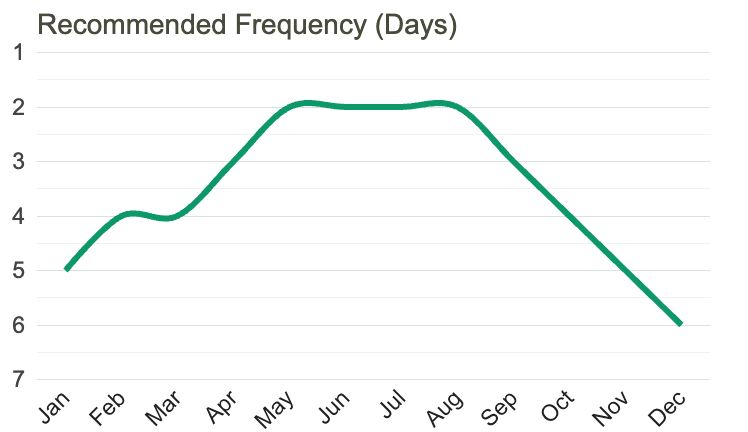
To water the tall grass plant with feathery plumes that is commonly found near wetlands, it is important to water it consistently to keep the soil moist. This plant prefers to have its roots in water as it is a water loving plant, but it can also tolerate some dryness. When watering, avoid overwatering the plant as it can lead to root rot. The best way to water this plant is to slowly soak the soil with water, allowing it to absorb the water thoroughly before watering again. It is also important to make sure that the water is able to drain out of the soil to avoid waterlogging. During the hot, dry summer months, it may be necessary to water the plant more frequently to keep it hydrated.
For best results, fertilize this plant with a slow-release, nitrogen-rich fertilizer early in the growing season. Apply the fertilizer evenly around the roots, taking care not to apply too close to the base of the plant. Water thoroughly after application. Avoid over-fertilizing, as this can lead to excessive growth and weakened plants.
The recommended soil for the plant in question should have a pH level ranging from 6.0 to 8.5, with a slightly acidic to moderately alkaline composition. It should have good drainage capabilities to avoid waterlogging, and a loose, sandy or loamy texture to facilitate root growth and nutrient absorption. The soil should also be rich in organic matter, such as compost or peat moss, which can provide essential nutrients for the plant's growth. Additionally, the plant may prefer soils with a high level of nitrogen, which can be achieved through the use of nitrogen-rich fertilizers or through the growth of nitrogen-fixing bacteria in the soil.
Phragmites Australis is a plant that can be propagated through various methods. One way is by propagating it through division. To do this, first, select a healthy mature plant with a strong root system. Then, using a sharp knife or a pair of garden shears, carefully divide the plant into smaller sections while making sure that each section has at least one healthy rhizome and a good number of roots. Plant the divided sections in moist soil, making sure to water them well, and provide them with the appropriate amount of sunlight.
Another way to propagate Phragmites Australis is through using stem cuttings. Choose young, healthy stems about 6-8 inches in length from a mature plant. Strip the lower leaves off the stem and dip the cut end into rooting hormone powder. Then, plant the stem in a pot of moist soil and cover it with a plastic bag to create a humid environment. Place the pot in a location that receives bright but indirect sunlight, making sure to keep the soil moist. After several weeks, the stem will begin to grow roots and can be transplanted into the garden or a larger planter.
Lastly, Phragmites Australis can also be propagated through seed germination. Collect the seed pods from a mature plant and let them dry out. Then, scatter the seeds over seed-starting soil and lightly cover them with more soil. Keep the soil moist, and place the container in a bright location out of direct sunlight. After several weeks, the seeds will germinate and can be transplanted into larger containers or the garden.








