Plant Overview
Often called "Frogfruit" or "Turkey Tangle," Phyla nodiflora is a resilient, low-creeping evergreen that proves beauty doesn't have to be tall. It’s a favorite for those looking to swap thirsty grass for a "living carpet" that thrives on neglect and rewards the eyes with tiny, rose-colored jewels. In folklore, its dense mats were said to provide the perfect hiding spot for small amphibians, earning it its whimsical common name.
🔍 How to Identify
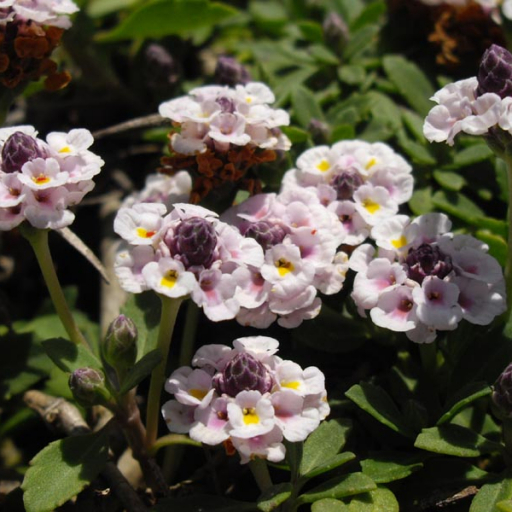
- 🌸 The "Matchhead" Blooms: Tiny, white-to-lavender flowers are clustered in dense, cylindrical heads on stalks. As the outer flowers bloom first, they look like miniature rings or crowns surrounding a dark purple center.
- 🍃 Toothed Foliage: The small, oval green leaves have a unique "half-and-half" look; they are smooth near the base but have distinct "teeth" or serrations along the outer half of the leaf edge.
- 🏃 Creeping Habit: It spreads via horizontal stems (stolons) that root wherever they touch the soil, creating a thick, springy mat that rarely grows taller than 3 to 6 inches.
🏡 In Your Garden
- 🦋 Pollinator Powerhouse: This plant is a vital nectar source for tiny bees and serves as a primary host plant for the larvae of the Phaon Crescent and White Peacock butterflies. If you want a "living" garden, this is your best friend.
- 💪 The "Tough Love" Groundcover: Unlike traditional turf, Frogfruit is incredibly drought-tolerant once established. It’s perfect for "hellstrips"—those dry, difficult areas between the sidewalk and the street—because it can handle both heavy foot traffic and occasional flooding.
⚠️ Safety & Toxicity
- ✅ Non-Toxic: Phyla nodiflora is generally considered safe and non-toxic for humans, dogs, and cats. It is a popular choice for pet-friendly landscapes.
- 🐝 Sting Awareness: Because it produces a carpet of nectar-rich flowers right at foot level, it attracts honeybees and native bees. If you plan to walk on it barefoot, do so mindfully to avoid accidental stings.
✨ Fun Fact
Frogfruit is an ecological superhero; it is so hardy that it can survive being completely submerged under water for several days during heavy rains, yet it can also thrive in the scorching heat of a Texas or Florida summer without a drop of extra water.

Detailed Care Instructions
| Humidity | Normal |
| Lighting | Part Sun |
| Toxicity | Poisonous |
| Difficulty | Easy |
| Temperature | 21°C - 30°C |
| Hardiness Zones | 10 - 11 |
To grow Phyla Nodiflora plant, also known as Turkey Tangle Fogfruit or Frogfruit, you can follow these steps:
- Choose the right location: Turkey Tangle Fogfruit is a groundcover plant that thrives in full sun to partial shade. Select an area in your garden or yard that receives at least 6 hours of direct sunlight daily.
- Prepare the soil: The plant can tolerate a wide range of soil conditions, but well-draining soil is essential to prevent waterlogging and root rot. Amend the soil with organic matter, such as compost, to improve drainage if needed.
- Planting: Dig a hole in the prepared soil that is slightly larger than the plant's root ball. Place the plant in the hole, making sure it is level with the ground. Backfill the hole with soil and gently firm it around the plant.
- Watering: After planting, water the Phyla Nodiflora thoroughly to settle the soil around the roots. Water regularly, especially during the first few weeks, but be careful not to overwater as it can lead to root rot. Allow the top inch of soil to dry out between waterings.
- Mulching: Apply a layer of organic mulch, such as wood chips or shredded bark, around the base of the plant. Mulching helps retain soil moisture, suppress weed growth, and regulate soil temperature.
- Maintenance: Phyla Nodiflora is a low-maintenance plant that requires minimal care. Trim back any dead or damaged stems as necessary. It spreads by runners, so you may need to thin or divide the plant occasionally to prevent overcrowding.
- Fertilizing: Phyla Nodiflora generally does not require much fertilization. However, you can provide a slow-release balanced fertilizer during the growing season to promote healthy growth. Follow the manufacturer's instructions for the appropriate application rate.
- Pests and diseases: Phyla Nodiflora is relatively resistant to pests and diseases. However, keep an eye out for common garden pests like aphids or snails. If necessary, treat with organic pesticides or other appropriate control methods.
By following these steps, you can successfully grow Phyla Nodiflora and enjoy its attractive groundcover appearance and small white flowers.

Place in a bright room that is sun drenched almost all day. Or directly in a south-facing window.

To water this plant, first, ensure that the soil is dry to the touch. Then, gradually pour water at the base of the plant until the soil is moist but not waterlogged. Avoid getting water on the leaves and stems, as this can cause damage and promote fungal growth. Water the plant once a week or when the soil feels dry to the touch. Additionally, make sure the plant is located in an area with good drainage to prevent waterlogging.
To fertilize this plant, use a balanced fertilizer with equal amounts of nitrogen, phosphorus, and potassium. Apply the fertilizer in early spring and mid-summer, following the manufacturer's instructions for dosage. Avoid over-fertilizing, which can burn the roots. Water the plant before and after fertilizing to help activate the nutrients.
Phyla Nodiflora plant prefers to grow in well-drained soil that is slightly acidic. The soil should be rich in nutrients and organic matter to support healthy growth. It is recommended to use a mixture of garden soil, peat moss, and perlite or vermiculite for optimum growth. Avoid using heavy clay soils or soils with poor drainage, as they can cause root rot and harm the plant. The plant can also benefit from a layer of mulch around the base to help retain moisture and suppress weeds.
To propagate this plant, you should first identify healthy stems with several leaves and roots.
Next, cut these stems at a point where they are about 4-5 inches long.
Remove the leaves from the lower half of the stem and place it in a container filled with moist soil.
Keep the container in a warm and bright area but not in direct sunlight.
Mist the soil regularly to keep it moist.
Within a few weeks, the stem will start to develop roots and new growth.
Once the stem has established roots and new growth, it can be transferred to a larger pot or planted in the garden.








