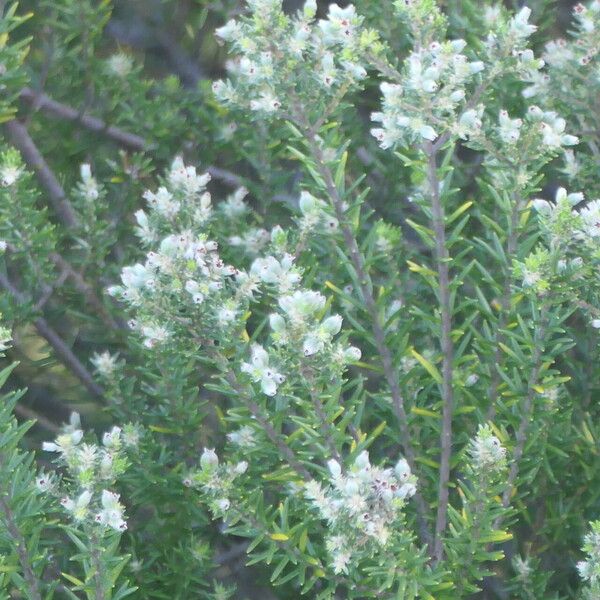
Plant Overview
Often found clinging to the rocky slopes of South Africa’s Cape region, Phylica axillaris is a resilient gem of the Fynbos biome. Known colloquially as the "Hard-leaf Phylica," this evergreen shrub is a master of survival, thriving in nutrient-poor soils where other plants might wither. Its name, axillaris, refers to the way its delicate flowers nestle in the "axils" or crooks of its leaves, creating a unique, textured appearance.
🔍 How to Identify
- 🌿 The Foliage: Look for tiny, needle-like leaves that are densely packed along the stems. They are typically dark green on top with a soft, silvery-white underside that feels slightly felt-like.
- ☁️ The Blooms: Small, creamy-white or grayish flower heads that look like tiny pom-poms. Unlike many plants, these flowers lack true petals and instead consist of feathery sepals.
- 🏗️ Growth Habit: It maintains a compact, woody structure, usually growing into a rounded shrub about one meter tall, looking almost like a miniature, rugged pine tree from a distance.
🏡 In Your Garden
- 🌊 Coastal Warrior: This plant is incredibly salt-tolerant and wind-resistant. It’s an ideal choice for seaside gardens where harsh sprays often kill more delicate ornamentals.
- 🏜️ Drainage is Key: Because it evolved in rocky, sandy terrain, it has a deep taproot that hates "wet feet." Plant it in acidic, well-draining soil and avoid over-fertilizing, as it is sensitive to high phosphorus levels.
⚠️ Safety & Toxicity
- ✅ Low Risk: Phylica axillaris is generally considered non-toxic and safe for home gardens.
- 🌵 Mechanical Irritation: While not poisonous, the stiff, needle-like leaves can be quite prickly. Wear gloves when pruning to avoid minor scratches, and keep it away from narrow pathways where it might snag the fur of passing pets.
✨ Fun Fact
The Phylica genus is a true "fire-follower." In its wild South African home, the seeds often stay dormant in the soil for years, only germinating after the heat and smoke of a bushfire clear away the competition!

Detailed Care Instructions

Place in a bright room that is sun drenched almost all day. Or directly in a south-facing window.

Some plants require more regular watering than others, which should be done every few days. It's critical to maintain the soil moist all of the time. The water requirements of the same plant placed in pots with varying sizes will differ. Because the water in the smaller pot evaporates faster than the water in the larger pot, it will require more watering. Regardless of pot size, the surface should constantly be maintained moist.








