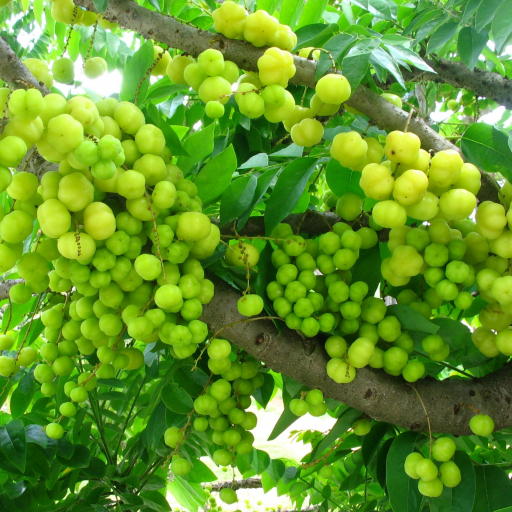
Plant Overview
Often called the Otaheite Gooseberry or Star Gooseberry, this tropical beauty is famous for its uniquely ribbed, pale-yellow fruits that look like faceted jewels. While it carries "gooseberry" in its name, it isn't related to the common European variety; instead, it is a member of the Phyllanthaceae family. In many cultures, its intense, mouth-puckering sourness makes it a prized ingredient for spicy pickles, preserves, and cooling summer drinks.
🔍 How to Identify
- 🍃 The Leaves: Small, pointed, ovate leaves grow in two rows along thin branches, creating a feathery appearance that mimics a single large compound leaf.
- 🌸 The Flowers: Look closely at the woody branches to find tiny, pinkish-to-reddish flowers. They often grow in dense, drooping clusters directly from the older wood.
- ⭐ The Fruit: The most striking feature—waxy, pale-green to yellow fruits with 6 to 8 deep ribs. They look like miniature pumpkins or "stars" and grow in heavy, crowded bunches.
🏡 In Your Garden
- ☀️ Sun & Warmth: As a tropical native, this tree craves full sun and high temperatures. It is very sensitive to frost; even a light chill can cause it to drop its leaves and go into a protective dormancy.
- 🌱 Growth Habit: It can grow into a medium-sized tree reaching up to 30 feet. Because it has a vigorous root system and drops a lot of fruit, it is best planted away from delicate walkways or structural foundations.
- 💦 Moisture Needs: It prefers consistent moisture but is surprisingly drought-tolerant once established. However, if you want a heavy harvest of juicy berries, regular watering during the dry season is essential.
⚠️ Safety & Toxicity
- 🍏 Status: The fruit is safe and widely consumed by humans, though it is extremely acidic and usually eaten with salt or sugar.
- 🐾 Pets & Kids: The fruit is generally safe, but the bark and roots contain certain tannins and compounds that should not be ingested. The milky sap (latex) can occasionally cause mild skin irritation for those with sensitive skin.
- 🦷 Dental Note: Because the fruit is exceptionally high in acid, eating large quantities of raw Star Gooseberries can temporarily soften tooth enamel.
✨ Fun Fact
In some Southeast Asian cultures, the Star Gooseberry is considered a "lucky tree." It is often planted in the front of a house because the local name for the plant sounds similar to the word for "fame" or "honor," believed to bring a good reputation to the family living there.

Detailed Care Instructions
To grow a Phyllanthus Acidus plant, also known as the Otaheite gooseberry, follow these steps:
- Plant selection: Obtain a healthy Phyllanthus Acidus plant or seeds from a reputable nursery or online supplier. Choose a well-established plant or seeds that are fresh and viable.
- Location: Select a suitable location for planting the Phyllanthus Acidus plant. It requires full sunlight to thrive, so choose a spot that receives at least 6 hours of direct sunlight. The plant can also tolerate some shade.
- Soil preparation: Prepare the soil by ensuring it is well-draining and rich in organic matter. Phyllanthus Acidus prefers slightly acidic soil with a pH range of 5.5-6.5. If required, amend the soil with compost or peat moss to improve drainage and fertility.
- Planting: Dig a hole that is twice as wide and deep as the plant's root ball. Place the plant in the hole, ensuring the top of the root ball is level with the ground. Backfill the hole gently, firming the soil around the plant to remove any air pockets.
- Watering: Water the plant immediately after planting to help settle the soil and eliminate any air pockets. Phyllanthus Acidus requires regular watering, especially during the initial establishment period. Water deeply but avoid overwatering, as this can cause root rot.
- Mulching: Apply a layer of organic mulch around the base of the plant to help conserve moisture, suppress weed growth, and regulate soil temperature. Keep the mulch a few inches away from the stems to prevent rotting.
- Fertilization: Phyllanthus Acidus benefits from regular fertilization. Use a balanced, slow-release fertilizer or organic compost in early spring and late summer. Follow the package instructions or consult a local horticulturist for appropriate dosage.
- Pruning: Regular pruning helps maintain the shape of the plant and encourages new growth. Prune any dead, damaged, or overcrowded branches. Avoid heavy pruning during the fruiting season.
- Pest and disease control: Keep an eye out for common pests such as aphids, scale insects, and mealybugs. Treat any infestations promptly with appropriate insecticides or natural remedies. Monitor the plant for signs of diseases like leaf spot, powdery mildew, or root rot, and take necessary actions if detected.
- Harvesting: Phyllanthus Acidus usually bears fruit in about 3-4 years after planting. The green gooseberry-like fruits turn bright yellow when ripe and are ready for harvesting. Gently twist or cut the fruits from the branches. Avoid damaging the plant during the harvesting process.
Remember to research and follow any specific care instructions for Phyllanthus Acidus in your region, as climate and growing conditions may vary.

Place in a bright room that is sun drenched almost all day. Or directly in a south-facing window.

To properly water this plant, we need to consider its specific needs. First, it is important to note that this plant prefers to be kept consistently moist, but not waterlogged. Therefore, we should ensure that the soil is well-draining and never let it completely dry out.
One way to water this plant is to use the "soak and dry" method. This involves watering the plant until water runs out of the drainage holes in the bottom of the pot, allowing it to thoroughly soak up the water. Then, we wait until the top inch of soil is dry before watering again. This method ensures that the plant gets enough water without risking overwatering.
Another way to water this plant is to mist its leaves and stem regularly. This can help to increase humidity around the plant, which it also enjoys. However, misting alone should not be the only method of watering, as it will not reach the roots, and the soil will still need to be kept moist.
Overall, we should aim to keep the soil consistently moist and never let it completely dry out or become waterlogged. By following these guidelines, we can keep this plant healthy and thriving.
To fertilize this plant, you will need a balanced fertilizer with equal amounts of nitrogen, phosphorus, and potassium. Use the fertilizer once every two to three months during the growing season, which should be from spring to fall. Make sure to dilute the fertilizer according to the instructions on the package before applying it to the soil. Water the plant well before and after fertilizing to prevent root burn. Additionally, you can add compost or organic matter to the soil to help improve soil fertility. Avoid over-fertilizing as it can damage the roots and cause leaf burn.
When growing the plant species Phyllanthus Acidus, it is recommended to use a well-draining soil mix that is fertile and rich in organic matter. The ideal pH range for the soil is slightly acidic, with a range of 5.5-6.5. The soil mix should have good moisture retention capabilities, but should also allow air to circulate freely to prevent waterlogging.
The soil mix can be prepared by mixing together equal parts of garden soil, aged compost, and perlite or sand. This will create a soil mix that is well-draining but with enough organic matter to support healthy plant growth.
Before planting the Phyllanthus Acidus, it is also recommended to amend the soil with a slow-release fertilizer to provide the plant with the necessary nutrients for growth. Regular fertilization during the growing season can also help ensure healthy growth and fruit production.
Overall, when selecting a soil mix for Phyllanthus Acidus, it is important to ensure good drainage, acidity, and nutrient availability to support healthy growth and fruit production.
To propagate this plant, select healthy stems that are about 6-8 inches long. Cut the stem just below a node, which is where a leaf meets the stem. Remove the leaves from the bottom half of the stem, leaving only a few leaves at the top. Dip the cut end of the stem in rooting hormone powder, which will help it develop roots more quickly.
Fill a pot with a well-draining soil mixture and create a hole in the soil using a pencil or similar tool. Insert the stem into the hole and press the soil around it gently. Water the cutting thoroughly and cover the pot with a plastic bag to create a humid environment.
Place the pot in a bright location but not direct sunlight. Keep the soil moist but not waterlogged. After a few weeks, check the stem for any signs of new growth or root development. Once the plant has established roots, remove the plastic bag and continue to care for it as usual.








