Plant Overview
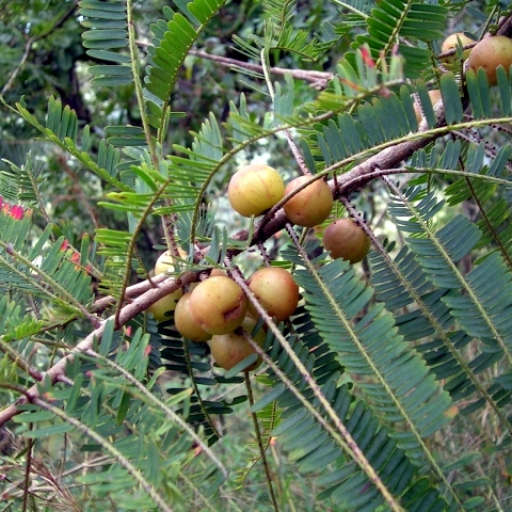
Known across Southeast Asia as "Amla" or the "Indian Gooseberry," this tree is considered a sacred gift from the gods in Hindu mythology. It is celebrated not just for its translucent, jade-colored fruits, but as a "superfruit" that has anchored traditional medicine for millennia. With its delicate, feathery foliage, it adds a touch of ethereal, fern-like beauty to any subtropical landscape.
🔍 How to Identify
- 🌿 The Foliage: The leaves are small, oblong, and arranged so closely along the branchlets that they look like large, feathery compound leaves, though they are actually individual simple leaves.
- 🟢 The Fruit: The berries are nearly spherical, hard, and a pale greenish-yellow, typically featuring six faint vertical stripes or grooves.
- 🪵 The Bark: The trunk is often crooked with smooth, grayish-brown bark that peels off in irregular patches, revealing a lighter color underneath—much like a Guava tree.
🏡 In Your Garden
- ☀️ Sun & Space: Amla thrives in full sun and requires plenty of room to branch out. It is remarkably hardy and can withstand intense heatwaves that would wilt more delicate fruit trees.
- 💧 Watering Wisdom: While the tree is drought-tolerant once established, consistent moisture is vital during the flowering and fruiting stages to prevent the berries from dropping prematurely.
- 🌱 Soil Nuance: It prefers well-draining, slightly acidic to neutral soil. Avoid heavy clay or "wet feet," as stagnant water around the roots can lead to fungal issues and stunted growth.
⚠️ Safety & Toxicity
- ✅ Edibility: The fruit is highly edible and world-renowned for its Vitamin C content. Be prepared for the taste—it is famously sour and astringent, often followed by a surprising sweetness after drinking water.
- 🐾 Pet Safety: There are no widespread reports of toxicity to dogs or cats. However, because the fruit is very acidic and contains a hard stone, it’s best to keep pets from snacking on them to avoid digestive upset or choking.
✨ Fun Fact
In Indian folklore, the Amla tree is said to have sprouted from the tears of Brahma (the creator god) while he was meditating. Because of this divine origin, it is the only tree worshipped during the festival of Amalaka Ekadashi, where devotees even share a meal under its branches.

Detailed Care Instructions
To grow Phyllanthus Emblica, also known as Indian gooseberry or amla, you can follow these steps:
- Obtain fresh amla seeds or buy seedlings from a nursery. Amla seeds are readily available online or in specialized plant stores.
- Select a suitable planting location. Amla prefers a well-draining soil with a pH level between 6 and 7. It grows well in full sun but can tolerate partial shade.
- Prepare the soil by loosening it and removing any weeds or rocks. If the soil is heavy clay, add some compost or organic matter to improve its drainage.
- Soak the amla seeds in water for about 24 hours before planting. This will help to speed up germination.
- Plant the amla seeds 1-2 inches deep in the soil, either directly in the ground or in pots if you prefer container gardening.
- Water the seeds regularly to keep the soil moist but not waterlogged. Amla plants require consistent moisture, especially during the first few months of growth.
- Within 2-3 weeks, the seeds will start to germinate, and small seedlings will emerge from the soil. Continue watering the seedlings regularly.
- Once the seedlings are around 6-8 inches tall, you can transplant them to their permanent location if you started them in pots.
- Space the plants about 10-15 feet apart to allow for their mature size and adequate airflow.
- Continue to provide sufficient water, especially during dry periods. Mulching around the plants can help retain moisture and control weeds.
- Fertilize the amla plant every 2-3 weeks during the growing season. You can use a balanced, slow-release fertilizer or organic compost.
- Prune the branches of the amla plant to maintain its shape and encourage bushier growth. Regular pruning also helps to improve fruit production.
- Protect the plant from extreme temperatures, especially during cold winters. Amla is sensitive to frost, so providing some protection or moving potted plants indoors can help prevent damage.
- Be patient, as amla plants take several years to bear fruit. With proper care and patience, your Phyllanthus Emblica plant will grow and produce delicious and nutritious fruits.

Place in a bright room that is sun drenched almost all day. Or directly in a south-facing window.

1. Determine the soil type of the plant: Phyllanthus Emblica grows best in well-draining soil that retains moisture but does not become waterlogged.
2. Check the moisture levels of the soil: Before watering, use your finger or a moisture meter to determine whether the soil is too dry or too wet.
3. Water thoroughly: When you water, make sure to apply enough water so that it penetrates the soil several inches, but avoid overwatering.
4. Water less frequently in winter: During the winter months, the plant requires less water, so water it less frequently and reduce the amount of water you use.
5. Water deeply and infrequently: It is better to water deeply and infrequently than to water shallowly and frequently. This helps the roots grow deeper, which makes the plant more tolerant of drought.
6. Use a watering can or soaker hose: When applying water, use a watering can or soaker hose to apply water slowly and evenly to avoid washing away the soil.
7. Avoid getting water on the leaves: Water the plant at the base, and avoid getting water on the leaves, as this can cause them to rot.
8. Adjust watering based on environmental conditions: Adjust your watering routine based on the season, temperature, and humidity levels in your area.
To properly fertilize the plant, ensure that it is well-watered before the application of fertilizer. Use a balanced, slow-release fertilizer that is high in nitrogen and potassium. Apply the fertilizer evenly around the base of the plant and water it well afterwards. Fertilize the plant once every two to three months during the growing season, but avoid over-fertilization as this can lead to burning of the roots. Lastly, ensure that the plant is situated in a well-draining soil that is kept evenly moist.
Phyllanthus Emblica plant requires soil that is well-drained, fertile, and has a slightly acidic pH level between 5.5 to 6.5. The soil should be rich in organic matter and have a good water-holding capacity to ensure adequate moisture for the plant's growth and development. A mixture of sand, loam, and peat moss or compost makes a suitable soil for Phyllanthus Emblica plant. Additionally, the soil should be free of any toxic substances and pathogens that may harm the plant. Regularly monitoring the soil pH and supplementing with natural fertilizers like compost tea or fish emulsion can help maintain soil quality and ensure healthy plant growth.
There are several ways to propagate this plant. One method is through seeds. Gather the ripe fruits and remove the seeds. Soak the seeds in warm water for 24 hours before planting them in well-draining soil. Water the soil regularly and keep it moist until the seeds germinate.
Another method is through cuttings. Select a healthy stem and cut a 6-inch piece. Remove the leaves from the bottom half of the stem. Dip the cut end into rooting hormone and plant it in a well-draining soil mix. Keep the soil moist and place the cutting in a warm, humid area with indirect sunlight. The cutting should root in about 3-4 weeks.
Finally, the plant can also be propagated through layering. Bend a healthy stem down to the ground and cover a section of it with soil. Keep the soil moist and wait for roots to develop. Once the roots have grown, cut the stem from the parent plant and transplant it to a new location.








